
Discover Strzyżów: Culture, the Wisłok and Routes
Accommodation in Strzyżów
In Strzyżów, you can combine cultural history with activities on the Wisłok and along marked routes. To plan your trip, it helps to first decide whether historic sites, art, water or exercise will shape your stay.
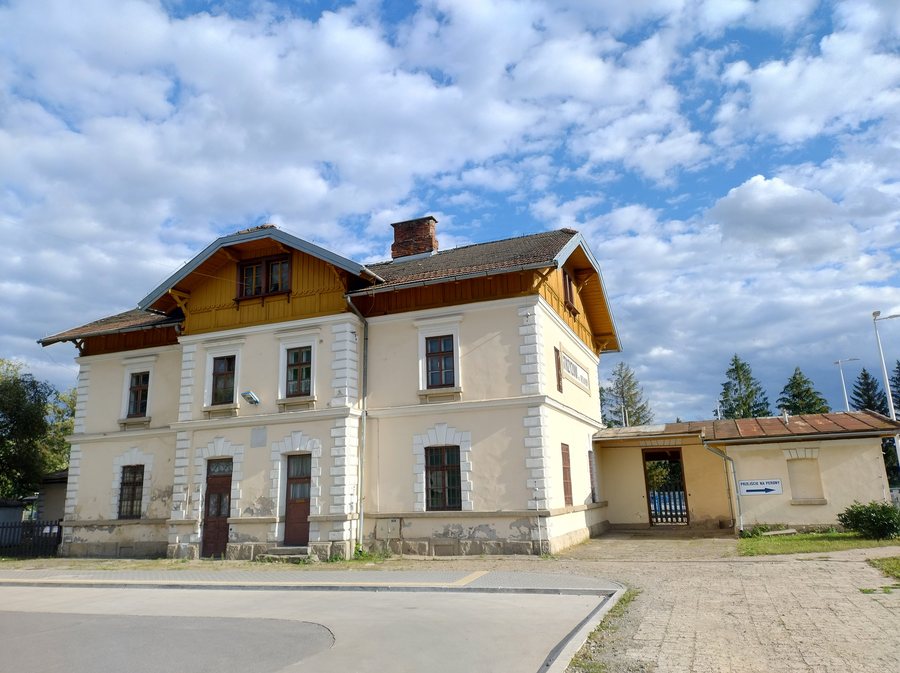 Strzyżów railway station — station building
Photo: Patryk Duszkiewicz via Wikimedia Commons, CC BY-SA 3.0
Strzyżów at a glance
- The Church of the Immaculate Conception of the Blessed Virgin Mary and Corpus Christi is a Gothic church dating from the second half of the 15th century; its altar houses the locally venerated image of Our Lady of Strzyżów.
- A former synagogue dating from the late 18th century is now home to the public town and municipal library. The Jewish cemetery was established in 1850.
- The 438-metre-long protective tunnel lies in the eastern part of the town and is temporarily closed to visitors.
- The Wisłok flows through the centre of Strzyżów; canoeing is one way to enjoy an active break. The Park Wodny has sports and leisure pools.
- A green hiking trail heads south via Godowa and Brzeżanka. The Strzyżów–Żarnowa–Strzyżów cycling route is about 10 kilometres long.
Which cultural sites define Strzyżów?
The Gothic church combines a long building history with a distinctive religious detail: its altar houses the locally venerated image of Our Lady of Strzyżów. If you are interested in architecture, you can view the church as an example of sacred architecture from the second half of the 15th century. Its dedication to the Immaculate Conception of the Blessed Virgin Mary and Corpus Christi is also part of its identity.
Jewish history is reflected in two other sites with different connections to the past. The former synagogue, built in the late 18th century, is now home to the Miejsko-Gminna Biblioteka Publiczna im. Juliana Przybosia. Established in 1850, the Jewish cemetery is the only surviving one of the town’s three former Jewish cemeteries. Art lovers can see drawings and prints by Wojciech Weiss, created in Strzyżów, at the Muzeum Samorządowe Ziemi Strzyżowskiej. In this way, architectural history, former religious use and locally connected art stand side by side as distinct cultural highlights.
What should you know about the protective tunnel?
The underground railway protective tunnel was built beneath Żarnowska Góra. It is 438 metres long, lies in the eastern part of Strzyżów and includes bunkers for technical infrastructure. Access is key when planning a visit: the tunnel is temporarily closed to visitors. Check its visitor status again before your trip, as this closure is not stated to be permanent.
What activities are available by the water?
The Wisłok flows through the centre of Strzyżów. Canoeing on the river is one way to enjoy an active break in nature; water conditions and the availability of an operator may vary. If you plan to do this, adjust your expectations according to local conditions and what is on offer.
Park Wodny Strzyżów combines sports and leisure areas. The sports pool is 25 metres long and has six lanes; next to it is a separate swimming-instruction pool with a variable depth of 0.9 metres. The leisure area includes a wild-water channel with a strong current, underwater geysers, whirlpools for six and twelve people, and a 60-metre waterslide. Check the latest operating information before you go.
How do the hiking and cycling routes differ?
The green hiking trail leads south from Strzyżów via Godowa and Brzeżanka. Check local signage before setting out. The Strzyżów–Żarnowa–Strzyżów cycling route starts and ends in Strzyżów, is about 10 kilometres long, is considered easy and is marked in purple. The routes therefore differ in the way they are described: for the hiking trail, the direction and route via two places are given; for the cycling route, an approximate length and difficulty rating are also provided.
How can you plan your hotel search?
If you are looking for hotels in Strzyżów, first decide what will shape your trip. Cultural sites, art, activities by the water and routes offer different starting points for planning.
Discover more destinations: Nowa Wieś, Cieszyna, Czudec, Frysztak, Pstrągowa, Brzeżanka.
FAQ
Is the protective tunnel in Strzyżów open to visitors?
The protective tunnel is temporarily closed to visitors. Check its visitor status again before your trip.
How long is the Strzyżów–Żarnowa–Strzyżów cycling route?
It is about 10 kilometres long, starts and ends in Strzyżów, is considered easy and is marked in purple.
What does Park Wodny Strzyżów offer?
Its facilities include a 25-metre sports pool with six lanes, a separate swimming-instruction pool and several leisure attractions, including a 60-metre waterslide. Check the latest operating information before you go.
What cultural sites are there in Strzyżów?
The cultural sites mentioned include the Gothic church, the former synagogue, which now houses the public town and municipal library, the Jewish cemetery and the Muzeum Samorządowe Ziemi Strzyżowskiej.
Go to the main travel overview: Strzyżów.

