
Gorzyce: Pączek and History
Accommodation in Gorzyce
Gorzyce combines a clearly defined location with church architecture and regional history. Pączek Hill, the parish church and historical events offer different points of reference for putting the town in context for your trip.
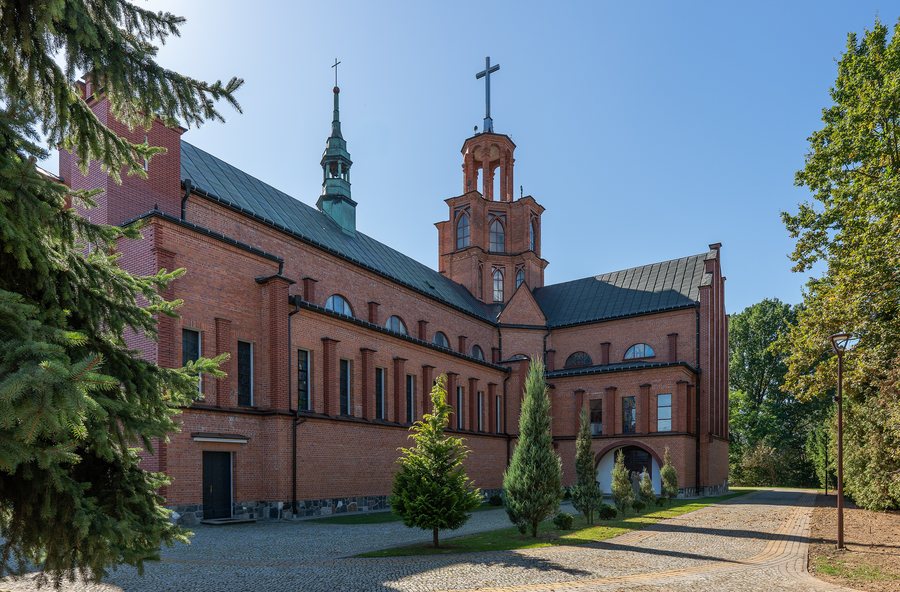 File:Gorzyce gm. Gorzyce kościół św. Andrzeja Boboli 296A (4).jpg
Photo: Januszk57 via Wikimedia Commons, CC BY-SA 4.0
Gorzyce at a glance
- Gorzyce is located on Pączek Hill, near the Vistula.
- The parish church of St. Francis de Sales and St. Andrew Bobola was built from 1947 to 1950 to plans by architect and engineer Wawrzyniec Dayczak.
- The last church on Gorzyce’s Pączek Hill burned down in 1794.
- In June 1819, a battle took place in the fields of Gorzyce and Wrzawy between troops of the Duchy of Warsaw and Austrian troops.
- The war memorial and the 1809 military cemetery in Wrzawy are located on the historic battlefield where the army of the Duchy of Warsaw, under Prince Józef Poniatowski, fought the Austrian army.
How should Gorzyce’s location be understood?
Gorzyce is located on Pączek Hill, described as being near the Vistula. This brings together a named topographic reference point and proximity to the Vistula. When comparing destinations, you can weigh this location alongside the cultural and historical themes. Pączek provides a topographic point of reference; the church and battlefields offer other ways to explore the town and its surroundings.
What can we learn about the church and the town’s history?
The parish church of St. Francis de Sales and St. Andrew Bobola was built between 1947 and 1950 to plans by Wawrzyniec Dayczak, who worked as an architect and engineer. This gives both a construction period and the name of a specific planner. The history of Pączek offers another point in time: the last church on Gorzyce Hill burned down in 1794. These two details concern different historical matters—the construction period of the named parish church and the destruction by fire of the last church on the hill. Those interested in architecture can focus on the years of construction and the planner; those putting the town’s history in context can also consider the earlier connection to Pączek.
How do the historical connections of Gorzyce and Wrzawy differ?
The year and location matter when considering the military history. In June 1819, a battle took place in the fields of Gorzyce and Wrzawy between troops of the Duchy of Warsaw and Austrian troops. The war memorial and military cemetery in Wrzawy, dating from 1809, are connected to a different event: both are located on the historic battlefield where the army of the Duchy of Warsaw, under Prince Józef Poniatowski, fought the Austrian army. Wrzawy is a separate place in the vicinity of Gorzyce. Thus, the account of 1819 refers to the fields of both towns, while the memorial and cemetery are associated with the historic battlefield of 1809. The two dates therefore represent different historical contexts.
What does this mean for your accommodation choice?
If you are looking for a hotel in Gorzyce, you can first consider whether the town’s topographic and cultural-historical points of interest fit your travel plans. Choosing a destination and selecting a particular place to stay are two separate decisions: take your own requirements into account when choosing accommodation, and consider the topics that interest you when choosing a destination.
Discover more destinations: Tarnobrzeg, Zalesie Gorzyckie, Baranów Sandomierski, Nowa Dęba, Skopanie and Grębów.
FAQ
What is Pączek?
Pączek is the hill near the Vistula on which Gorzyce is located. The name provides a specific topographic reference for the town’s location.
When was the parish church built?
The parish church of St. Francis de Sales and St. Andrew Bobola was built from 1947 to 1950 to plans by architect and engineer Wawrzyniec Dayczak.
What historical events are associated with Gorzyce and Wrzawy?
A battle took place in the fields of Gorzyce and Wrzawy in June 1819. The war memorial and military cemetery in Wrzawy are located on the historic battlefield where the fighting of 1809 took place.
For the broader travel overview: Tarnobrzeski.

