
Wilczeta – Church, History and Landscape
Accommodation in Wilczeta
Wilczeta combines a historically shaped rural village layout with a Gothic church and a parkland ensemble rich in trees. If you are looking for accommodation for a stay focused on local history and nature, you will find concrete themes here to help plan your trip.
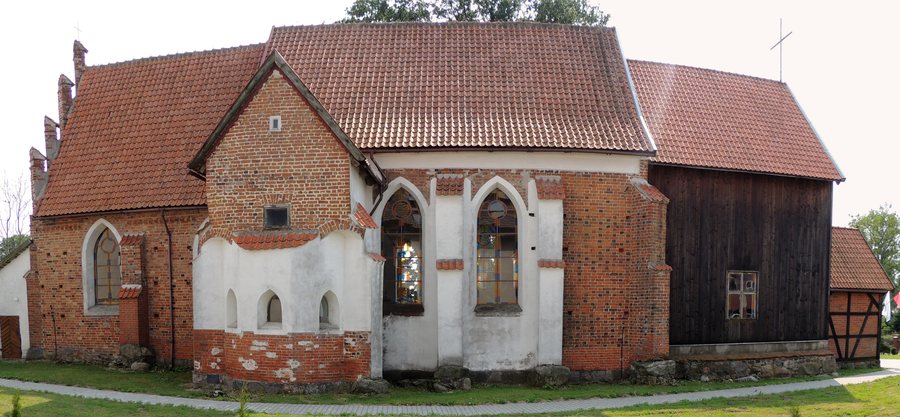 File:Wilczęta kościół par. p.w. św. Katarzyny.JPG
Photo: Jacek Bogdan via Wikimedia Commons, CC BY-SA 3.0 pl
File:Wilczęta kościół par. p.w. św. Katarzyny.JPG
Photo: Jacek Bogdan via Wikimedia Commons, CC BY-SA 3.0 pl
Wilczeta at a glance
Wilczeta was founded between 1304 and 1312 by settlers from the area of present-day Germany. The rural settlement layout retains its historic character to this day. The village’s main road connection is Provincial Road 509.
Notable historic buildings include the parish church of St Catherine. The historic church in Wilczeta is recorded as having been built in the Gothic style from stone and brick between 1330 and 1340. The parish church is listed in the heritage register with a date of 1330 and construction phases from the 16th to the 18th century; the listing bears number 597/69 and is dated 12 March 1968.
What traces of history can you discover in Wilczeta?
The church offers several specific points of interest for exploring its furnishings and building history. Its pulpit was made in 1681 by carpenter Richter and sculptor Johan Christoph Dobel. The altar also dates from 1681; its sculpture has been preserved in black, white and gold. This allows you to view two works from the same year in terms of their different functions and designs.
The church tower was built in 1655. After suffering war damage, its spire was later replaced by a flat roof. The largest bell is among the oldest surviving Gothic bells in Wilczeta: it was cast in the Netherlands and bears the coat of arms of the Dohna family. The churchyard is covered by the same heritage listing as the parish church.
Historic memorials and buildings can also be found beyond the church complex. An obelisk commemorating the residents of Wilczeta who fell in the First World War stands in front of the Church of the Transfiguration of the Lord. A historic school building that has been preserved was built in 1872. Together, these places offer different perspectives on religious life, remembrance and the history of the village.
What shapes the landscape around the village?
Wilczeta has numerous small bodies of water. They help retain water and also enhance the village’s aesthetic appeal. The parkland ensemble is distinguished by its many tree species and is considered the most valuable area in Wilczeta from a natural history perspective. If you would like to take in the local landscape as well as the historic buildings, you can include both of these features in your stay.
The historic village layout, bodies of water and parkland ensemble describe different aspects of the area’s rural character. The details about the water and the park relate to different characteristics: the bodies of water serve water retention and landscaping purposes, while the parkland ensemble is noted for its tree species and natural history value.
What travel interests make Wilczeta a place to stay?
Wilczeta may appeal to travellers interested in historic architecture, church furnishings and the rural village landscape. The parkland ensemble and small bodies of water offer a specific point of interest for those with an interest in nature. These features can help you decide whether Wilczeta suits your own travel plans, without reducing the village to a single attraction.
Provincial Road 509 is the main reference point for road access. If you would like to compare other destinations, you can also find Frombork, Zagaje, Stegna, Nowica, Pieniężno, Rodowo, Maciejewo and Bogdany.
FAQ
When was the historic church in Wilczeta built?
The historic church was built between 1330 and 1340 in the Gothic style, from stone and brick.
Which church furnishings date from 1681?
The pulpit was made in 1681 by carpenter Richter and sculptor Johan Christoph Dobel. The altar also dates from that year; its sculpture has been preserved in black, white and gold.
Which church feast days are listed for Wilczeta?
The parish’s church feast days are listed as 6 August and 3 May, Mary, Queen of Poland.
For the wider travel overview: Braunsberg.

