
Wydminy: Beach, Bridge and History
Accommodation in Wydminy
Wydminy combines swimming and leisure opportunities at Plaża Przy Moście Garbatym with a distinctive wooden bridge and a layered local history. The town therefore offers both time by the water and points of historical interest to help you plan your trip.
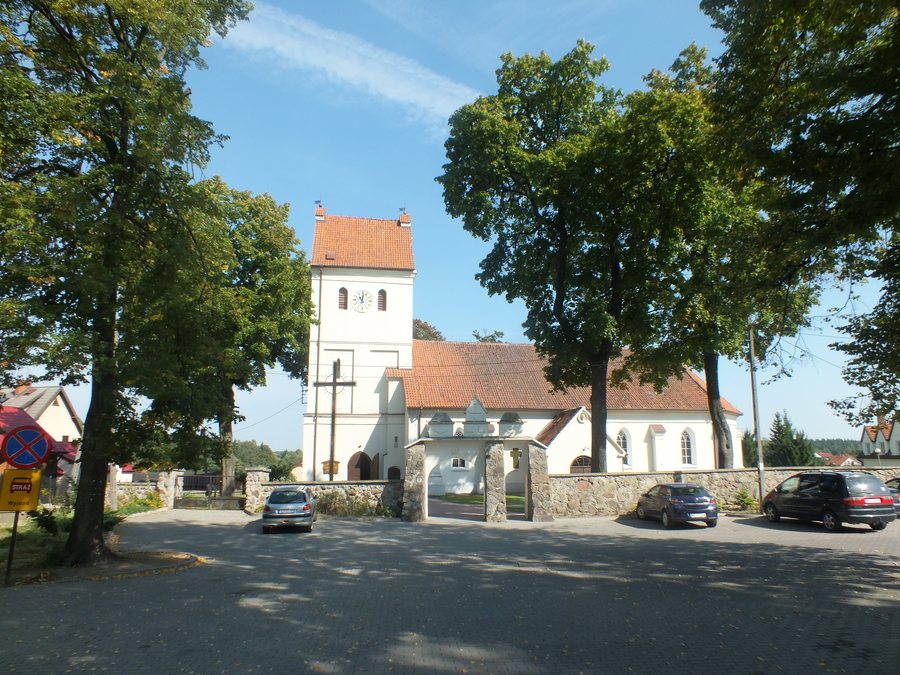 File:Wydminy, kościół Chrystusa Zbawiciela - DSCF6175.jpg
Photo: Aw58 via Wikimedia Commons, CC BY-SA 4.0
File:Wydminy, kościół Chrystusa Zbawiciela - DSCF6175.jpg
Photo: Aw58 via Wikimedia Commons, CC BY-SA 4.0
Wydminy at a glance
Plaża Przy Moście Garbatym offers convenient access to the water for swimming. It has beach volleyball and basketball courts, as well as a playground; walking paths and picnic spots are located next to the beach. Most Garbaty is a wooden, arched bridge. It connects the largest island in Lake Wydmińskie with the mainland. The lake is a glacial ribbon lake and meltwater lake, and lies in a quiet zone.
What activities does the beach offer?
The facilities at Plaża Przy Moście Garbatym cater to a range of interests: those who want to be active can use the beach volleyball or basketball courts, and there is a playground for children. Walking paths and picnic spots offer more ways to enjoy time outdoors. Convenient access to the water makes swimming another option. Depending on your interests, you can choose between sports, play, a walk, a picnic and time in the water, so these activities are not all alike.
What makes Most Garbaty and the lake special?
Most Garbaty gives the beach its name and also provides a crossing over Lake Wydmińskie: the bridge leads from the lake’s largest island to the mainland. Its wooden construction and arched shape set it apart from a mere crossing point. At Plaża Przy Moście Garbatym, it allows you to travel between the lake’s shores. Visitors to the beach will therefore also find a tangible connection to the island and shoreline landscape of the lake.
Lake Wydmińskie was formed as a glacial ribbon lake and meltwater lake, and lies in a quiet zone. This geological background describes a different side of the area than the leisure facilities at the beach: Wydminy is associated not only with swimming and sports, but also with a landscape shaped by the Ice Age.
What history can you discover in Wydminy?
The church in Wydminy is a valuable architectural monument dating from the mid-16th century. After the village fire of 1572, it was rebuilt around the turn of the 18th century, using the old perimeter walls. Its construction history thus links the monument’s origins with a later rebuilding. For visitors interested in cultural history, this is a reason in its own right to see Wydminy as more than just the lake and beach.
The town’s development in the 20th century was also shaped by destruction and rebuilding. During the hostilities of 1914, 75 percent of Wydminy was destroyed. The town was rebuilt during the war and given an urban appearance, with houses grouped around a spacious market square.
The town’s history also includes an earlier railway connection: in 1868, Wydminy became a railway station on the newly opened Królewiec–Korsze–Kętrzyn–Giżycko–Ełk line. This is a historical reference to the town’s connections at the time, not a statement about current rail services.
If you would like to compare other town pages, you can find Lipińskie, Talki, Orlowo, Fuleda, Giżycko, Wężówka, Ryn and Pierkunowo here.
FAQ
What leisure facilities are available at Plaża Przy Moście Garbatym?
There are beach volleyball and basketball courts, a playground and convenient access to the water for swimming. Walking paths and picnic spots are located next to the beach.
What does Most Garbaty connect?
The wooden, arched bridge connects the largest island in Lake Wydmińskie with the mainland and allows you to travel between the lake’s shores at Plaża Przy Moście Garbatym.
What is the history of the church in Wydminy?
It is a valuable architectural monument dating from the mid-16th century. After the village fire of 1572, it was rebuilt around the turn of the 18th century using the old perimeter walls.
For the broader travel overview: Giżycko.

