
Krutyński Piecek
Accommodation in Krutyński Piecek
The Krutynia flows through Krutyński Piecek; the river, kayak route, and nature trail offer concrete points of interest for planning your trip. Nearby, a historic mill tells the story of the river’s use and the area’s industrial history. If you’re looking for a hotel for a trip to Krutyński Piecek, this overview of documented topics can help you match the area to your travel interests.
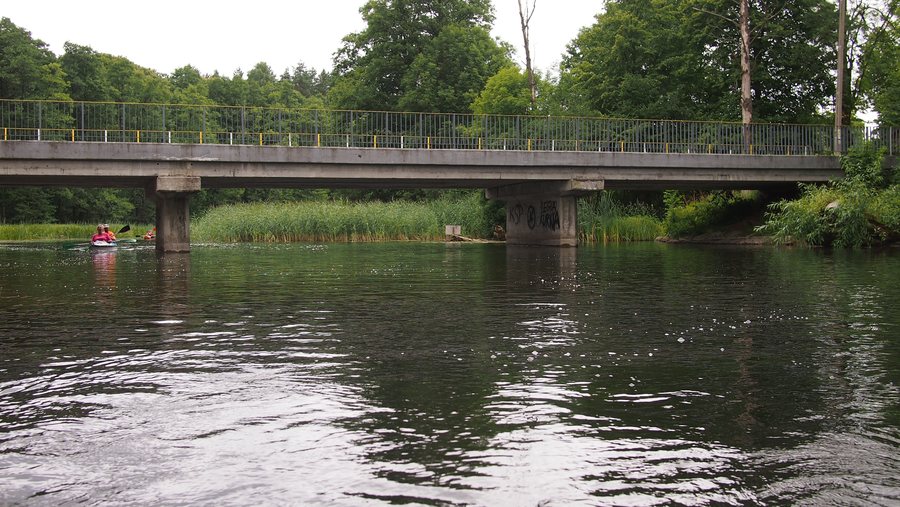 File:Gmina Piecki, Poland - panoramio (222).jpg
Photo: t.przechlewski via Wikimedia Commons, CC BY 3.0
Krutyński Piecek at a glance
- The Krutynia flows through the village, and kayak tours are organized on the river.
- The “Krutyń - Rosocha” nature trail passes through Krutyński Piecek.
- Nearby, a 19th-century mill stands at Zielony Lasek.
- At the historic mill, kayakers carry their kayaks around it to continue their journey.
How does the Krutynia change in the surrounding area?
Below the mill at Zielony Lasek, the Krutynia flows quickly and shallowly over a stony bed because of the impoundment. Further downstream, it reaches a depth of about one metre and has more underwater vegetation. The two sections therefore differ in current, depth, and vegetation: directly below the mill, the scene is shaped by shallow water and stones; downstream, the river is deeper and more heavily vegetated.
If you’re interested in a kayak trip, this comparison can help you distinguish between the river sections described. It does not indicate the conditions on the day of your trip. Check local conditions before setting out.
What story does the mill at Zielony Lasek tell?
The 19th-century mill is listed in Poland’s register of monuments and its list of historic monuments. Its history dates back to a time when the Krutynia was used for various forms of production. Before the mill was built, a paper mill that used water from the river stood on the site. It was shut down in the early 19th century after industrial paper-making methods were introduced.
In 1824, a watermill with a water-powered sawmill was built on the site of the former paper mill. Around 1890, a three-storey production mill was erected at Zielony Lasek. Its equipment included two millstone grinding mechanisms and a vertical conveyor for grain and milled products. The site’s use changed from paper production to a water-powered sawmill and then to grain processing.
The mill is therefore a distinct cultural point of interest near Krutyński Piecek for your trip planning. Its historical context explains the role played by water and technical facilities at this site, without requiring you to know the history of the entire region.
What should you plan for a trip on the water or on foot?
The kayak route on the Krutynia passes through Krutyński Piecek. At the historic mill, kayakers carry their kayaks around it to continue towards Rosocha. At the mill near Zielony Lasek, the carry is on the right-hand side and is about 70 metres long. If you choose this route, take this section into account when planning and check local conditions before setting off.
The “Krutyń - Rosocha” nature trail also passes through the village. Before setting out, check the current condition of the trail and access. This lets you include both distinct points of interest in your plans: the kayak route on the Krutynia and the nature trail. Both pass through Krutyński Piecek, but appeal to different interests.
Discover more destinations: Czerwonki, Piecki, Probark, Mikolajki, Krutyń, Kosewo, Maradki and Stare Sady.
FAQ
Does the Krutynia flow through Krutyński Piecek?
Yes. The Krutynia flows through the village, and kayak tours are organized on the river.
What should kayakers know about the mill at Zielony Lasek?
To continue towards Rosocha, kayakers must carry their kayaks around the historic mill on the right-hand side for about 70 metres. Check local conditions before setting out.
How do the river sections described differ?
Below the mill, the Krutynia flows quickly and shallowly over a stony bed; further downstream, it reaches a depth of about one metre and has more underwater vegetation.
For the regional travel overview: Mrągowski.

