
Nowe Kiełbonki by Lake Kiełbonki
Accommodation in Nowe Kiełbonki
Nowe Kiełbonki lies by Lake Kiełbonki and has a historic settlement pattern that can be described simply: the village developed as a linear village along a road. Together with its proximity to Provincial Road 58 and Stare Kiełbonki, about two kilometres away, this gives you a clear starting point for choosing a location and looking for accommodation.
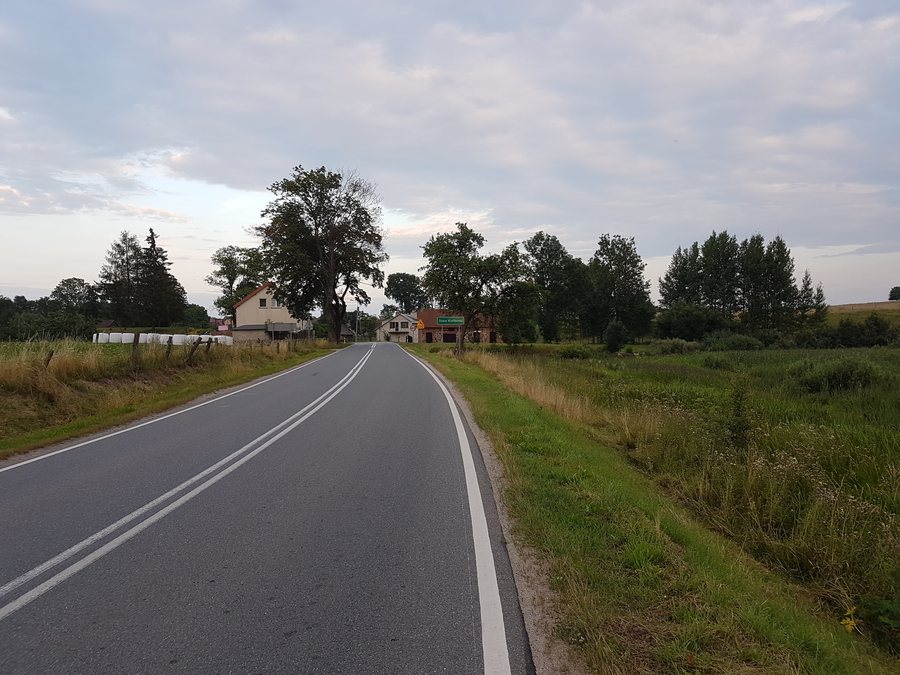 File:Stare Kiełbonki - entrance from Nowe Kiełbonki, 2016.jpg
Photo: Mateusz Giełczyński via Wikimedia Commons, CC BY-SA 4.0
Key facts about Nowe Kiełbonki
- The village lies by Lake Kiełbonki and near Provincial Road 58.
- Stare Kiełbonki is about two kilometres away.
- Nowe Kiełbonki was established around 1700 on cleared land as a village held under hereditary rent with hereditary rights.
- The settlement developed in the form of a linear village along a road.
- The Regional Museum named after Walentyna Dermacka née Sapieha is located in Piecki, not in Nowe Kiełbonki.
How can you get your bearings around the village?
Lake Kiełbonki is a key geographical reference point for Nowe Kiełbonki. Its proximity to Provincial Road 58 provides another point of reference for its location. Stare Kiełbonki is also about two kilometres away. These details help distinguish the two place names geographically and give you a sense of where Nowe Kiełbonki is as you plan your trip.
When comparing accommodation, use the place name as a specific starting point and check each address. The lake, the provincial road and the approximate distance to the neighbouring village describe the location of the village; they do not replace comparing the locations of individual accommodation options. This helps keep your decision focused on which location suits your plans.
What does the historic settlement pattern tell us?
Nowe Kiełbonki’s origins are dated to around 1700. The village was established on cleared land and is described as a village held under hereditary rent with hereditary rights. This historical account includes several distinct aspects: the approximate period when it was founded, the prior clearing of the land and the village’s status at the time. The phrase “around 1700” indicates an approximate date.
Its form as a linear village along a road is also part of its settlement history. The term describes a linear settlement pattern along a road and answers a different question from the date of its founding: it describes the traditional form in which the village developed. These details can be distinguished when learning about the village: one concerns its historical beginnings, the other its settlement pattern. This offers an accessible introduction to its history without requiring specialist knowledge.
Where are the village and the regional museum located?
The Regional Museum named after Walentyna Dermacka née Sapieha is located in Piecki, within the associated municipality. However, Piecki is not Nowe Kiełbonki, so the museum is not in the village itself. If you include the museum in your plans, treat Piecki as a separate location. This keeps the history of Nowe Kiełbonki distinct from the museum’s actual location.
How can you use this information when looking for accommodation?
The location by Lake Kiełbonki, the proximity to Provincial Road 58 and the approximate distance from Stare Kiełbonki give you reference points for identifying the geographical location you want. If you are comparing several destinations, you can also consider whether to include Nowe Kiełbonki or another place in your shortlist.
Discover more destinations: Mostek, Nowy Zyzdrój, Czerwonki, Bobrówko, Probark, Nibork, Jakubowo, Zełwągi.
FAQ
Where is Nowe Kiełbonki?
Nowe Kiełbonki lies by Lake Kiełbonki and near Provincial Road 58. Stare Kiełbonki is about two kilometres away.
How did Nowe Kiełbonki come into being?
The village was established around 1700 on cleared land as a village held under hereditary rent with hereditary rights.
What does the term “linear village along a road” mean?
It describes a linear settlement pattern along a road. Nowe Kiełbonki developed in this form.
Is the regional museum in Nowe Kiełbonki?
No. The Regional Museum named after Walentyna Dermacka née Sapieha is located in Piecki, within the associated municipality.
Go to the main travel overview: Mrągowski.

