
Nowe Miasto Lubawskie
Accommodation in Nowe Miasto Lubawskie
Nowe Miasto Lubawskie offers a focus on culture and routes: the medieval basilica, fragments of the Gothic town walls and two distinct trails give you concrete points of reference when deciding whether culture, cycling or hiking should shape your trip.
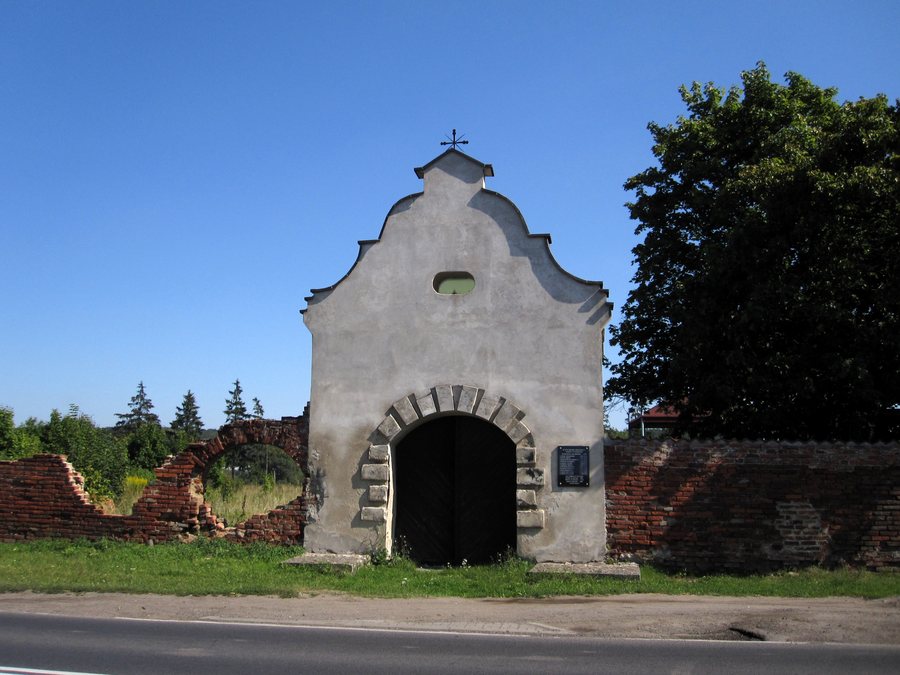 Ruins of the Reformed monastery in Łąki Miejskie
Photo: GringoPL via Wikimedia Commons, CC BY-SA 3.0
Ruins of the Reformed monastery in Łąki Miejskie
Photo: GringoPL via Wikimedia Commons, CC BY-SA 3.0
Nowe Miasto Lubawskie at a glance
The Church of St. Thomas the Apostle is a medieval church; its construction began around 1300. The surviving fragments of the medieval town walls include the Gothic Brodnicka and Lubawska gate towers. A family cycling route starts at the market square. The TO-2215 hiking trail is 13 km long and runs from Nowe Miasto Lubawskie via Nawre, Nowy Dwór Bratiański and Chrośle to Radomno. It connects the town with the yellow hiking trail in the Drwęca Valley.
What cultural history can you discover?
The Basilica of St. Thomas the Apostle is a destination for travelers interested in medieval sacred architecture and ecclesiastical art. The main nave features a Gothic wall painting from the second half of the 15th century. It depicts Christ on the cross. The interior of the basilica is also adorned with several altars from the 17th and 18th centuries.
The vestibule also has a striking detail: the vault corbels are designed as human heads with devilish grimaces. Thus, different forms of decoration sit side by side within the basilica—from the wall painting to the corbels. Travelers who enjoy noticing individual architectural features on a cultural trip will find concrete motifs here to focus on.
The surviving fragments of the medieval town walls include the Brodnicka and Lubawska gate towers. The Brodnicka Tower is also known as Baszta Kurzętnicka. In the 19th century, it was converted into a municipal archive; in 1959, it became the home of the Muzeum Ziemi Lubawskiej. Its collections illustrate the history and everyday life of the region’s inhabitants over the centuries. Cultural interest in Nowe Miasto Lubawskie therefore encompasses both architecture and regional history and daily life.
Which routes suit your travel plans?
The family cycling route starts at the market square, by the tourist information office in the former Protestant church building. From there, it follows Kościelna, Działyńskich and Tysiąclecia streets. The building on the market square serves as the Kinoteatr Harmonia and as the tourist information office. The starting point and the streets listed give you a concrete guide to the route described; further route details or a duration are not included in its description.
For a hike, the 13 km TO-2215 trail is another option. It begins near the former railway station in Nowe Miasto Lubawskie and runs via Nawre, Nowy Dwór Bratiański and Chrośle to Radomno. It also connects Nowe Miasto Lubawskie with the yellow hiking trail in the Drwęca Valley.
When looking for a hotel or other accommodation, you can first consider which focus better suits your trip: the basilica and the town’s history, or one of the routes described. For other pages about nearby places, you can also see Ostaszewo, Grodziczno, Kurzętnik and Kuligi.
FAQ
When did construction of the Church of St. Thomas the Apostle begin?
Construction of the medieval church began around 1300.
What distinctive decorative features does the basilica have?
The main nave features a Gothic wall painting from the second half of the 15th century depicting Christ on the cross. There are also several altars from the 17th and 18th centuries, as well as vault corbels shaped like human heads with devilish grimaces.
How long is the TO-2215 hiking trail?
The hiking trail is 13 km long. It runs from Nowe Miasto Lubawskie via Nawre, Nowy Dwór Bratiański and Chrośle to Radomno.
Back to the main travel overview: Nowomiejski.

_-_ruiny_klasztoru_reformat%C3%B3w_(01).jpg)