
Kajny – Village History, Chapels and Cycling Routes
Accommodation in Kajny
You can get to know Kajny through tangible traces of its village history, two chapels and cycling routes.
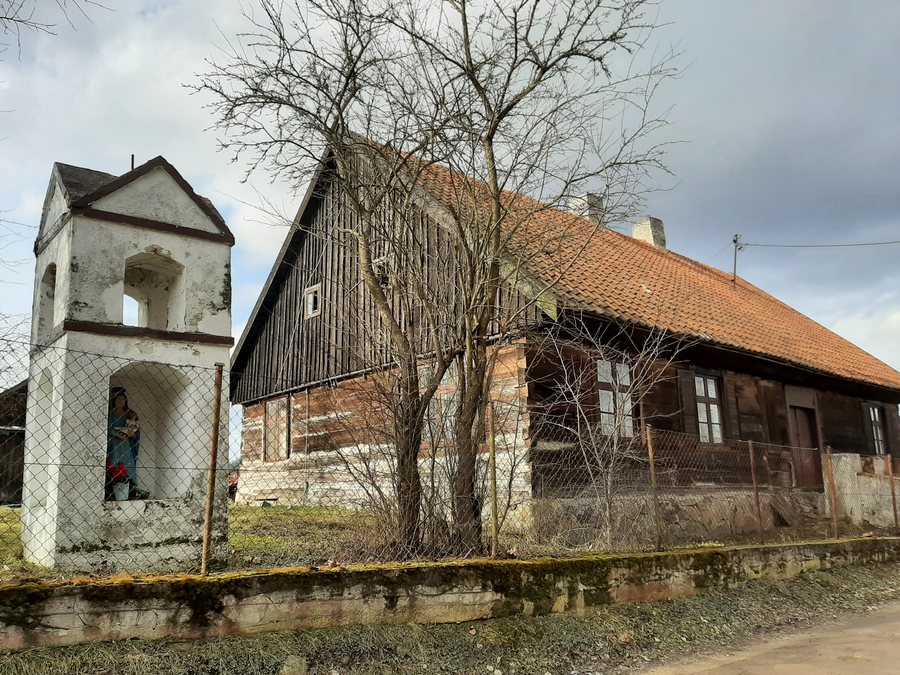
Kajny at a glance
Historic buildings include a wooden house belonging to the Rautenberg family, dating from 1856, and two chapels with distinct designs. Two cycling routes also pass through Kajny: one is 21.9 kilometres long and the other 40 kilometres. At the hydraulic ram, an information board shows a functional diagram; the fenced site is not open to visitors, though the village head may, at their discretion, arrange for a key to be handed over.
What village history and architecture can you discover?
After the First World War, Polish libraries were established in Godki, Kajny and Mątki. This history concerns several places; Kajny is not the only one involved. One specific historic building in the village is the Rautenberg family’s wooden house, which dates back to 1856.
The two chapels can also be distinguished by their architecture. The larger one has a bell and echoes the design of a nearby building. The lower chapel is plastered and stands beside the water tower and the wooden house of village head Jerzy Rautenberg. These features offer different points of interest if you are interested in the village’s buildings.
Which cycling routes pass through Kajny?
A 21.9-kilometre yellow cycling route passes through Dywity, Redykajny, Gutkowo, Wilimowo, Kajny, Barkweda, Brąswałd and Ługwałd before returning to Dywity. The second route described is 40 kilometres long: it runs from Olsztyn through Redykajny, Brąswałd, Barkweda, Kajny, Gutkowo and Łupstych before returning to Olsztyn.
The different total distances and route layouts are especially useful when comparing your cycling plans. The shorter route is yellow; no colour is specified for the 40-kilometre route. Both routes include Kajny, but differ in the other places they connect and the starting point to which they return.
What should you know about the hydraulic ram?
The hydraulic ram in Kajny was designed by Joseph Michael Montgolfier (1740–1810). It delivers water to the buildings through seven pipes. An information board with a functional diagram stands right next to it, providing a clear explanation of the system.
The site is fenced and not open to visitors. The village head may, at their discretion, lend keys to interested visitors, so a visit is not guaranteed. If you would like to see the installation from inside, check in advance whether a visit can be arranged. An educational trail with information boards has also been set up near the forester’s lodge, which is located in the spring area.
Discover more destinations: Olsztyn, Zgnilocha, Rasząg, Majdy, Kręsk, Adamowo, Jaroty, Łajsy.
FAQ
Which cycling routes pass through Kajny?
The yellow route is 21.9 kilometres long and passes through several places before returning to Dywity. The 40-kilometre route runs from Olsztyn through Kajny and other places before returning to Olsztyn.
Is the hydraulic ram open to visitors?
The site is fenced and not open to visitors. The village head may, at their discretion, lend keys to interested visitors; therefore, arrange any potential visit in advance.
Which historic buildings characterise Kajny?
The buildings mentioned include the Rautenberg family’s wooden house dating from 1856 and two chapels: a larger one with a bell and architectural links to a nearby building, and a lower, plastered chapel beside the water tower and the wooden house of village head Jerzy Rautenberg.
For the main travel overview: Olsztyn.

