
Discover Grabin
Accommodation in Grabin
Grabin combines a distinctive, tree-covered landscape with historic landmarks. At the archaeological site, the Grabiczek stream shapes the landscape; the surviving manor house and the palace and park complex add different historical dates to the village’s character. If you are looking for a hotel in Grabin, this page offers an initial overview of the area’s landscape and cultural themes.
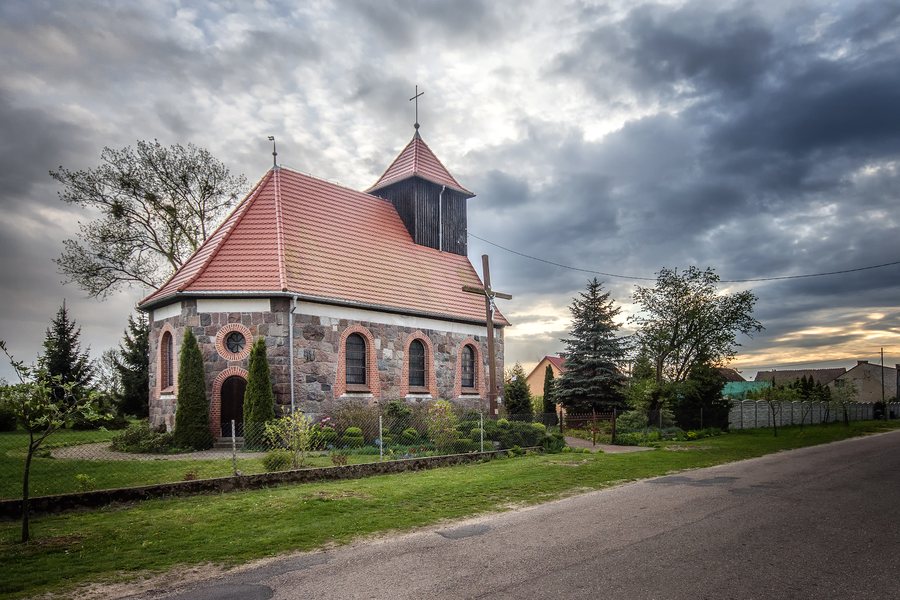 File:SM Grabin Kościół św Jana Chrzciciela 2019 (1).jpg
Photo: Sławomir Milejski via Wikimedia Commons, CC BY-SA 4.0
Grabin at a glance
- The Grabin archaeological site, site 1, lies on a distinctive land spur densely covered with trees and shrubs.
- The Grabiczek stream flows around the land spur to the west and north.
- The Grabiczek rises in Lake Lichtajny, about 500 m southwest of the archaeological site.
- The manor house was built in 1879; the palace and park complex underwent extensive renovation in 1998–2000.
What characterizes the landscape around the site?
The Grabin archaeological site, site 1, lies on a distinctive land spur. Densely covered with trees and shrubs, this part of the landscape takes its described form from the interplay of terrain and vegetation. The Grabiczek also flows around the spur on its western and northern sides. The landform, vegetation, and course of the stream are the main features of this landscape.
The location of the stream’s source is also part of this geographical picture: the Grabiczek rises in Lake Lichtajny, about 500 meters southwest of the site. The directional descriptions refer to two different relationships. West and north describe where the stream flows around the land spur; southwest indicates the lake’s approximate location relative to the site. The distance of around 500 meters likewise refers to these two locations.
How can the historic buildings be placed in context?
The surviving manor house in Grabin was built in 1879. The palace and park complex is recorded as having undergone extensive renovation between 1998 and 2000. These dates refer to different events and buildings: 1879 is the manor house’s construction year, while 1998–2000 is the renovation period for the palace and park complex.
This distinction helps prevent the village’s history from being reduced to a single date. The construction year places the manor house in time; the renovation years mark a later period in the history of the palace and park complex. If you take historic buildings into account when choosing a destination, you can therefore compare these details separately rather than treating them as a single building history.
What themes might shape your choice of Grabin?
The landscape and historic buildings offer different starting points for planning your trip. The site is characterized by its position on the tree-covered land spur and its relationship to the Grabiczek. The manor house and the palace and park complex, by contrast, can be considered in light of their respective historical details. This may help you decide whether you are drawn to Grabin more for its landforms or its architectural history. These themes can help you focus your search for a stay in the village on what interests you most.
Discover more destinations: Kątno, Grunwald, Maliniak, Dabrowno, Kretowiny, Gierzwald, Elgnowo, Międzylesie.
FAQ
Where is the Grabin archaeological site, site 1, located?
It lies on a distinctive land spur densely covered with trees and shrubs, which the Grabiczek flows around to the west and north.
Where does the Grabiczek rise?
The stream rises in Lake Lichtajny, about 500 m southwest of the Grabin archaeological site, site 1.
Which dates are associated with the historic buildings?
The manor house was built in 1879. The palace and park complex underwent extensive renovation in 1998–2000.
For the broader travel overview: Ostródzki.

