
Rańsk by Lake Rańskie
Accommodation in Rańsk
Rańsk combines its location on Lake Rańskie with a rich church history. You can shape your trip around the lakeshore landscape or the architecture.
Quick facts about Rańsk
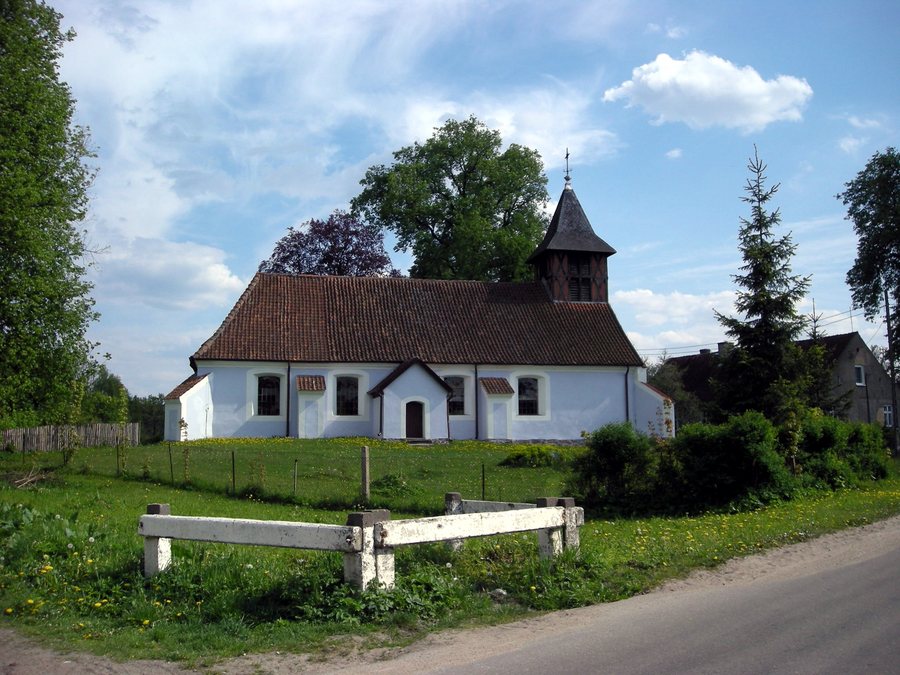
Rańsk lies on the shore of Lake Rańskie. The large, relatively shallow lake has numerous bays and inlets. Particularly many of the large piers around the lake are located along the Rańsk shore. The Protestant church brings together elements from different periods: fragments of the first church, built in the Middle Ages, have been preserved; the present-day church was built in the early 19th century.
What shapes the landscape around Lake Rańskie?
The lakeside setting is a defining feature of the townscape. The lake is large yet relatively shallow; its many bays and inlets make it a varied, indented waterscape. Two characteristics therefore coexist: a large expanse of water and numerous indentations along the shore.
The piers are another specific point of reference: particularly many of the large piers around the lake are on the Rańsk side. If you plan to visit the piers, check local conditions beforehand. This keeps your plans grounded in the situation on site.
What history does the church’s architecture tell?
Its history goes back to the Middle Ages. The first church in Rańsk was built during that period; some of its architectural elements survive as fragments in the present-day church. The Protestant church that defines the town today was built in the early 19th century. Thus, one building brings together medieval remains and a later phase of construction.
A major renovation in 1827 significantly altered the church: the main structure was rebuilt, two side extensions were added, and the present-day half-timbered tower was erected. This sequence helps put the documented building history into context without conflating the older fragments with the present-day church building.
How can the architectural styles be distinguished?
A Baroque cornice crowns the plastered main structure. Gothic buttresses are located at the corners and along the sides; rows of segmental-arched windows are arranged on both sides of the church. The half-timbered tower provides a distinct accent: its panels are filled with bricks. Baroque, Gothic, and half-timbered features therefore stand side by side, rather than forming a uniform appearance.
The church’s surviving furnishings also include a pulpit altar with columns. Together with the exterior features, it offers another way to describe the church—not only through its construction phases, but also through its furnishings.
What priorities can guide your accommodation search?
Two interests may determine your choice of destination: the lakeside landscape of Lake Rańskie or the architectural history of the Protestant church. Consider which subject matters more to you on your trip. This distinction helps you assess Rańsk in terms of its specific features before looking for a hotel.
If you’d like to discover more destinations: Dybowo, Trelkówko, Kobylocha, Spychowo, Narty, Jedwabno, Rudziska Pasymskie, Rumy.
FAQ
What is Lake Rańskie like?
The lake is large and relatively shallow. Numerous bays and inlets shape its shoreline.
Which construction phases of the church are documented?
The first church was built in the Middle Ages; fragments of it have been preserved in the present-day church. The present-day Protestant building dates from the early 19th century and underwent a major renovation in 1827.
Where are particularly many large piers located around the lake?
Particularly many of the large piers are located along the Rańsk shore of Lake Rańskie. Check local conditions if you plan to visit.
To the main travel overview: Szczycieński.

