
Discover Nowe Worowo: Church, Manor Park and Miedznik
Accommodation in Nowe Worowo
Nowe Worowo combines surviving historic buildings with a manor park and the Miedznik River. The village offers several points of interest to help you decide whether to visit: architecture, the park’s history and a distinctive geographical feature.
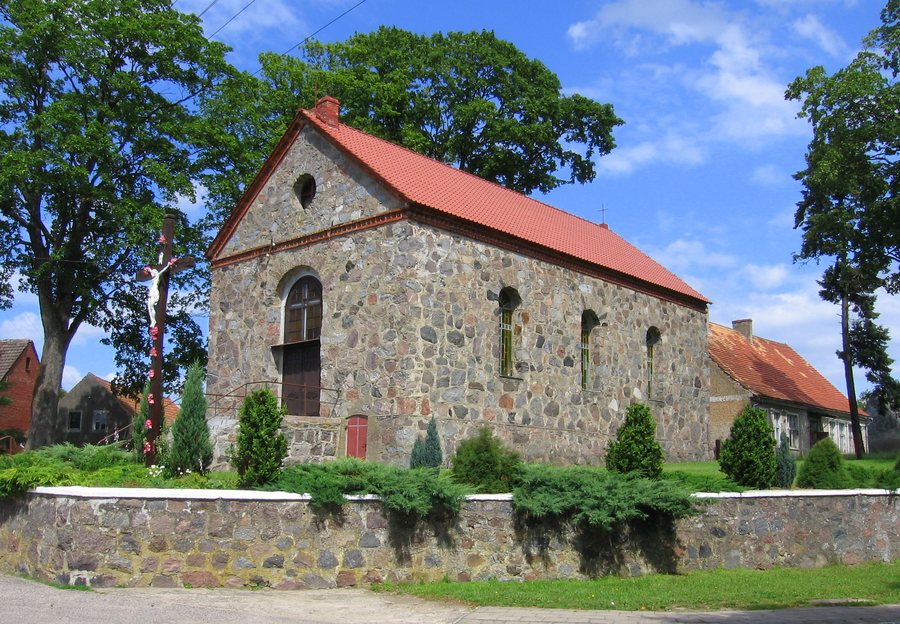
Quick facts about Nowe Worowo
- The Church of the Assumption of the Blessed Virgin Mary is a Neoclassical stone building dating from the 19th century.
- The Miedznik flows through Nowe Worowo and is a tributary of the Drawa.
- Old small-leaved lime trees, pedunculate oaks and common ash trees grow in the manor park.
- The manor park is listed in the register of monuments.
- Buildings from the 19th and 20th centuries have been preserved in Nowe Worowo.
- The structure of the Dutch windmill survives; its damaged mechanism can be seen inside. The windmill is privately owned.
Which historic architectural styles define the village?
The Church of the Assumption of the Blessed Virgin Mary offers a tangible starting point for exploring Nowe Worowo’s architectural history. Its description includes three distinct features: “stone” identifies the material, “Neoclassical” the style, and “19th century” the period. This makes it possible to classify the individual building more precisely without equating it with the village’s entire townscape.
The surviving buildings from the 19th and 20th centuries are important to the broader architectural context. The church dates from the 19th century; buildings from the 20th century are also noted in the village as a whole. This brings together a specific church building and a broader period of surviving architecture. Those interested in architecture can distinguish between these two layers: the history of a named building and the body of buildings in the village that spans several decades.
What does the manor park tell us about Nowe Worowo?
The manor park was laid out at the turn of the 18th and 19th centuries as the grounds of a once-prosperous manor. This historical context adds a different perspective on time and landscape to the church’s architectural history: it concerns the origins of a park and its former connection to the manor. The park is also listed in the register of monuments.
The old trees also give the park a distinctive character. They include small-leaved lime trees, pedunculate oaks and common ash trees. These species are easy to distinguish and make the tree population a subject in its own right in descriptions of the village, alongside the park’s origins and its listing in the register. This aspect is especially relevant to your travel plans if you are interested in historic parks and mature landscapes; these features are distinct from the church’s architecture.
How should the river and Dutch windmill be understood?
The Miedznik flows through Nowe Worowo and is also a tributary of the Drawa. These details place the river in two contexts: its course through the village establishes the immediate geographical connection, while its link to the Drawa places it within a broader river system. This is a different aspect of the destination from its historic buildings or manor park.
The Dutch windmill adds another architectural feature, but it is in a different state of preservation from the church. Only the structure survives; its damaged mechanism can be seen inside. Its private ownership is also relevant to understanding it. The surviving structure and damaged mechanism describe two different aspects of the windmill: what remains of the building and what can be seen inside.
What does this mean for your accommodation search?
The main points of interest here are historic architecture, the history of the manor park, its old trees and the Miedznik’s connection to the village. The Dutch windmill adds another historic building, with its own state of preservation. These highlights help you get a sense of Nowe Worowo as a destination; you can then choose accommodation to suit your personal requirements.
FAQ
What architectural style is the Church of the Assumption of the Blessed Virgin Mary?
The church is a Neoclassical stone building dating from the 19th century.
What is known about the manor park?
The park was laid out at the turn of the 18th and 19th centuries as the grounds of a once-prosperous manor. Old small-leaved lime trees, pedunculate oaks and common ash trees grow there; the park is also listed in the register of monuments.
How is the Miedznik connected to Nowe Worowo?
The Miedznik flows through Nowe Worowo and is a tributary of the Drawa.
For the broader travel overview: Warniłęg.

