
Niechorze: Lighthouse, Coast and Fishing Culture
Accommodation in Niechorze
Niechorze combines striking coastal views with stories of Baltic fishing and opportunities to observe nature. The lighthouse and pier define the coastal outlook, while the Ethnographic Park and Fishing Museum add their own cultural highlights.
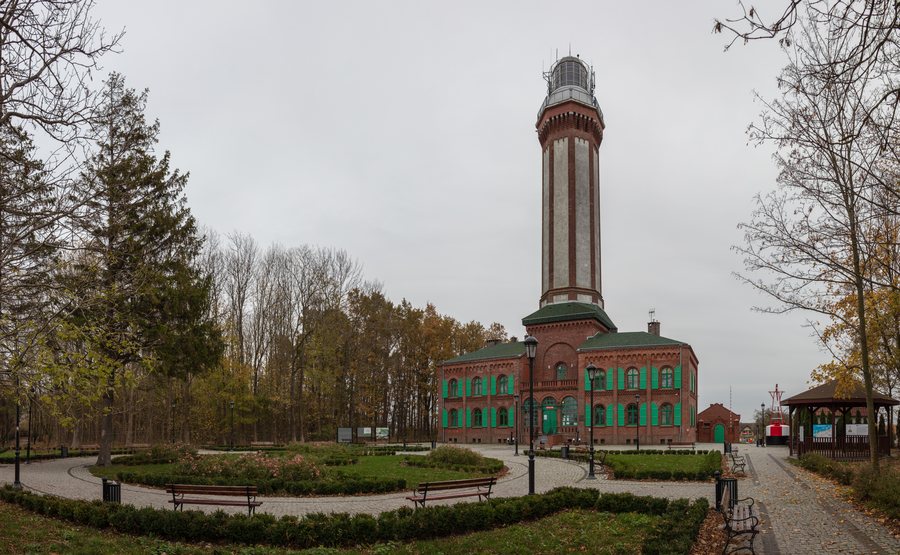 File:Faro de Niechorze, voivodato de Pomerania Occidental, Polonia, 2018-11-03, DD 35-40 PAN.jpg
Photo: Diego Delso via Wikimedia Commons, CC BY-SA 4.0
Niechorze at a glance
- The lighthouse was built in 1866, is 45 metres tall and stands on a 22-metre-high cliff.
- From the large pier, you can see the coastline, the transition between dune and cliff coast, and the lighthouse. Admission is free when sea conditions are safe.
- The Ethnographic Park features traditional fishermen’s cottages and offers insights into Baltic fishing.
- Lake Liwia-Łuża, south of Niechorze, has been an ornithological reserve since the late 1950s.
Which coastal views and routes define Niechorze?
The Niechorze lighthouse was built in 1866. It is 45 metres tall; the cliff it stands on is 22 metres high. These measurements refer to different features: the structure itself and the cliff on which it stands. From the observation terrace, you can see the sea and the picturesque surroundings. The large pier offers a different perspective, taking in the Niechorze coastline, the transition between dune and cliff coast, and the lighthouse.
There are different routes to explore on foot and by bike. The seawall along the high cliff near the lighthouse still serves as a promenade. The lighthouse is on the Polish Baltic coast’s Lighthouse Trail, and the international Velo Baltica cycle route, formerly R-10, passes by it. Admission to the large pier is free when sea conditions are safe.
What cultural experiences are there?
At the Ethnographic Park in Niechorze, you can see traditional fishermen’s cottages and learn more about the traditions of Baltic fishing. The park includes the “Droga Ryby” (Fish Path) and “Droga Chleba” (Bread Path) educational trails. The Muzeum Rybołówstwa Morskiego (Museum of Marine Fisheries) was designed as a centre where visitors and local residents can learn about the area’s fishing culture. The subject is presented in two different ways: through the park’s fishermen’s cottages and educational trails, and through the museum’s educational exhibits.
Park Miniatur Latarnia Morska explores the subject of lighthouses with models at a scale of 1:10. Visitors can see all the lighthouses on the Polish coast in one place in 45 minutes. Motylarnia offers a different glimpse of wildlife: living exotic butterflies roam freely there. You can watch colourful butterflies emerge from their pupae and learn more about their habits and secrets.
What natural features can you discover around Niechorze?
Lake Liwia-Łuża lies south of Niechorze. It has been an ornithological reserve since the late 1950s; 133 bird species have been recorded at the lake, including 50 breeding species. East of the lighthouse, a sandy spit separates the lake from the Baltic Sea. Alongside coastal views and fishing culture, the lake, its birdlife and the spit offer distinct landscape features to explore.
Discover more destinations: Rogowo, Brojce, Karnice, Śliwin, Pustkowo, Trzęsacz, Czaplin Mały, Żukowo.
FAQ
When is admission to the large pier free?
Admission to the large pier is free when sea conditions are safe.
What can you see at Park Miniatur Latarnia Morska?
The park features lighthouse models at a scale of 1:10. Visitors can see all the lighthouses on the Polish coast in one place in 45 minutes.
What can you observe at Motylarnia?
You can observe living exotic butterflies roaming freely there and watch colourful butterflies emerge from their pupae.
Where are there designated places to launch from the shore?
At the fishing harbour in Niechorze, on Pocztowa Street, there are designated places where you can launch from the shore when conditions are safe.
Go to the main travel overview: Gryfice.

