
Paprotno
Accommodation in Paprotno
Paprotno offers cultural and historical points of interest in various forms: a palace with a manor park, an Evangelical cemetery, and a narrow-gauge railway station. If you are considering Paprotno as a possible place to stay, these features give you a concrete sense of the destination’s character before you choose a hotel.
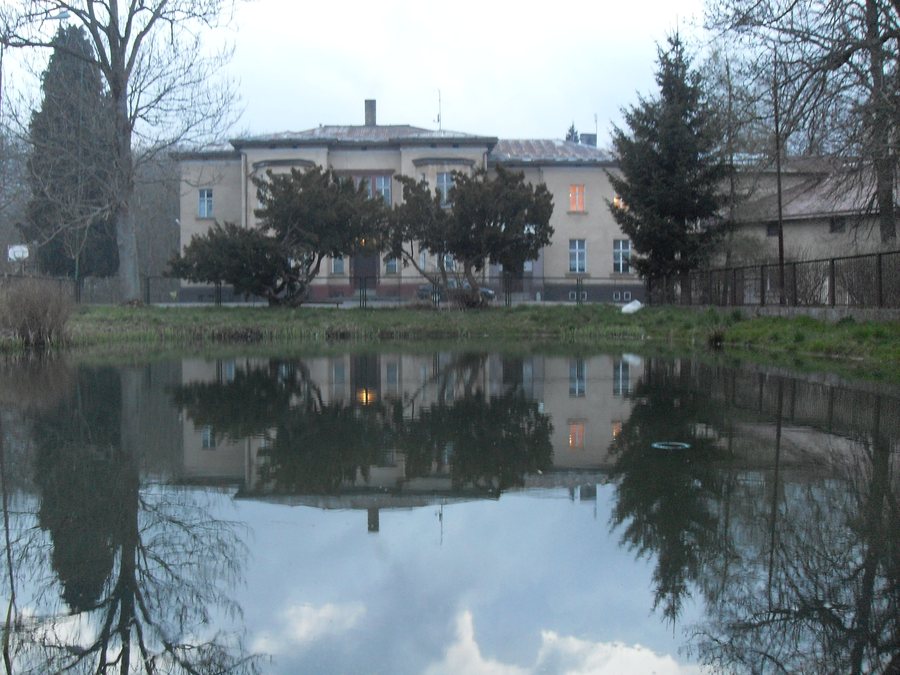 File:Paprotno, dwór nad stawem (Gesamtansicht Gut Parpart).jpg
Photo: VManteuffel via Wikimedia Commons, CC BY-SA 3.0
Quick facts about Paprotno
- The Evangelical cemetery dates from the early 20th century.
- The palace dates from 1871, has two stories, and covers an area of 1,483 m². Several renovations caused it to lose its original stylistic features.
- Outbuildings and a 0.43-hectare manor park are located next to the palace.
- The narrow-gauge railway station is listed as a tourist attraction and monument. The platform and the station building, which has been converted for residential use, have been preserved; the station buildings are somewhat neglected.
What architectural history has shaped Paprotno?
The palace dates from 1871, covers 1,483 m², and has two stories. These details describe different aspects of the building: its date, its area, and the number of its stories. Several renovations have caused it to lose its original stylistic features. Its architectural history therefore involves more than just its year of construction; it also reflects change: the palace is not an unchanged example of its original stylistic features.
Outbuildings stand next to the palace, and a 0.43-hectare manor park is also located there. This park area is equivalent to 4,300 m². Paprotno’s heritage can therefore be considered in terms of more than a single building: the named surroundings also include other buildings and a green space. As you get your bearings, you can distinguish whether you are primarily interested in the palace’s architectural history or its relationship to the manor park.
What different kinds of cultural heritage are there?
The Evangelical cemetery dates from the early 20th century. Alongside the palace, dated to 1871, it is another local feature with a different historical timeframe. The information also differs in kind: for the palace, it concerns its construction date, area, and renovations; for the cemetery, its Evangelical affiliation and the period it dates from. These distinctions help put Paprotno’s cultural features into more precise context rather than grouping them together under the general heading of history. They show two different perspectives: architectural history on the one hand and a cemetery shaped by religious affiliation on the other.
What has been preserved at the narrow-gauge railway station?
The narrow-gauge railway station in Paprotno is listed as a tourist attraction and monument. A platform and the station building, which has been converted for residential use, have been preserved. The station buildings are now somewhat neglected. These details complement one another: the designation describes its relevance to visitors, while the platform and building identify the surviving parts. The conversion to a new use is also part of the local history: the station building serves as a residence, while the platform remains as a railway relic. For travelers interested in railway history, the station can thus be understood through its monument designation, its specific remains, and the building’s change of use.
Discover more destinations: Rewal, Pogorzelica, Gryfice, Pustkowo, Czaplin Mały, Żukowo, Mrzezyno Gryfickie, Darszyce.
FAQ
What year does the palace in Paprotno date from?
The palace dates from 1871. It has two stories and covers an area of 1,483 m²; several renovations caused it to lose its original stylistic features.
What characterizes the cemetery in Paprotno?
It is an Evangelical cemetery dating from the early 20th century.
Which parts of the narrow-gauge railway station have been preserved?
A platform and the station building, which has been converted for residential use, have been preserved. The station buildings are now somewhat neglected.
Go to the overview of the wider area: Greifenberg.

