
Sucha Koszalinska – The Camino de Santiago, Culture and Church
Accommodation in Sucha Koszalinska
Sucha Koszalinska is a destination for travellers who want to combine routes with local history: a section of the Pomeranian Camino de Santiago passes through the village, alongside a cycling route, a cultural trail and a Gothic church.
Quick facts about Sucha Koszalinska
Stage 29 of the Pomeranian Camino de Santiago is 23.1 km long and runs from Iwięcino to Koszalin Cathedral. Sucha Koszalinska lies along this route at kilometre 8.9. The “Sianowska nitka Pomorskiego Szlaku Św. Jakuba” section also passes through the village. The blue “Śladami końskich podków” cycling route reaches the first buildings at kilometre 30.3. Another culture-themed route is the 18 km “Droga między trzema wieżami” walking trail.
Which routes pass through the village?
For navigating the Camino de Santiago, both the “Sianowska nitka” section that passes through Sucha Koszalinska and the stage details are useful. On Stage 29, the village is at kilometre 8.9 of the 23.1 km route between Iwięcino and Koszalin Cathedral.
The “Śladami końskich podków” cycling route offers another way to explore the area: it is marked in blue and reaches the first buildings of Sucha Koszalinska at kilometre 30.3. This kilometre marker refers to the cycling route; it indicates the point where the route reaches the first buildings. Comparing cycling and walking trips makes it easier to distinguish the different options in the village without combining their distances into a single total.
What does the cultural trail offer?
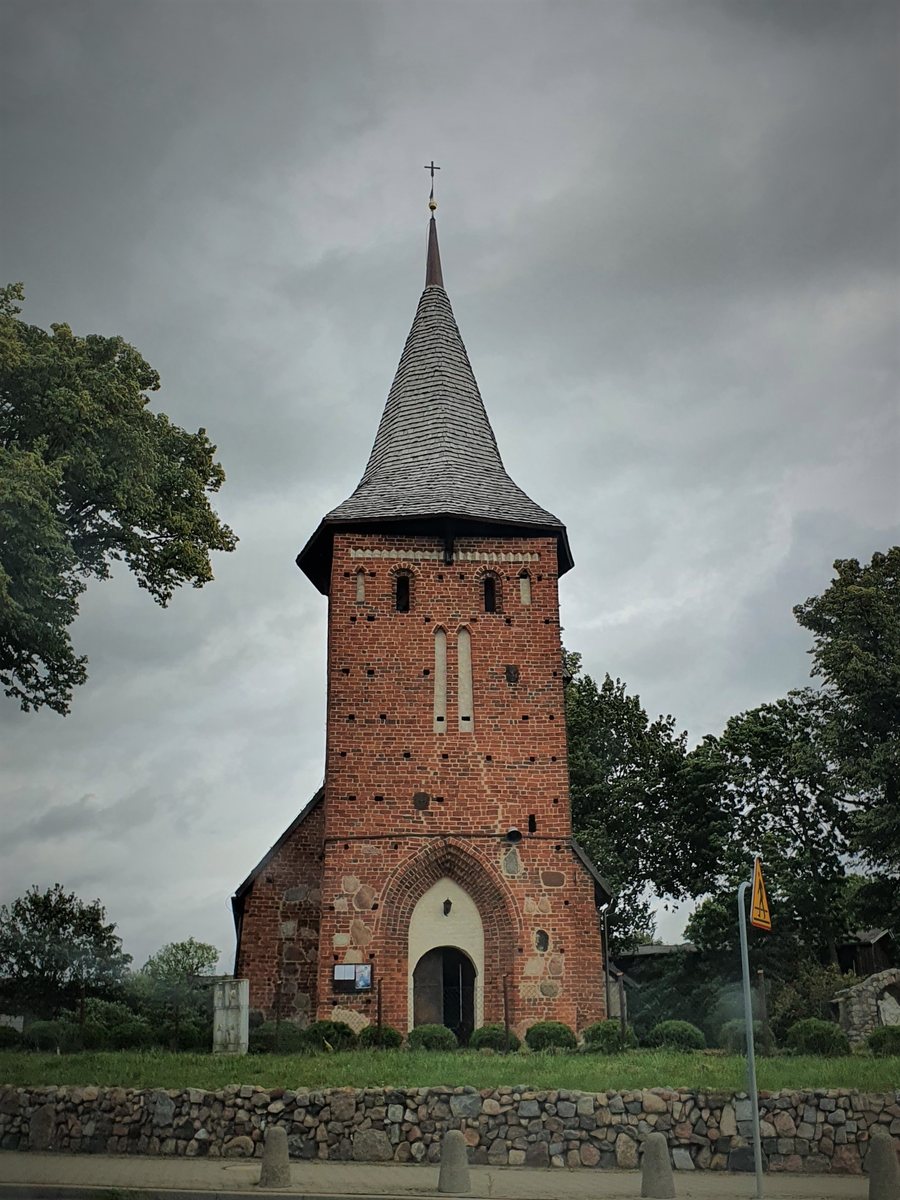
“Droga między trzema wieżami” is an 18 km cultural trail through Sucha Koszalinska, Iwięcino and Osieki. All three villages have distinctive, pointed church towers. The trail thus connects three place names through a recurring architectural feature. For travellers interested in churches and local landscapes, it offers a different focus from the kilometre markers on the Camino stage or the blue cycling route.
What story does the church tell?
The Gothic Church of the Exaltation of the Holy Cross (Podwyższenia Krzyża Świętego) was built in the 14th century. It was remodelled in the 15th century and restored in the 19th and 20th centuries.
Its furnishings include a preserved high altar from the 17th century. This adds a specific historic object to the account of the church’s construction. Those interested in religious architecture will find in Sucha Koszalinska both a building with a Gothic identity and an altar from a later period.
What makes the park distinctive?
The park in Sucha Koszalinska is a recreational space used by local residents. As part of the completed “Zielona Energia w Parku” project, four hybrid lamps that use renewable energy were installed there. Alongside the village’s historical and route-related attractions, the park adds another aspect: its role as a recreational space and a specific project using renewable energy.
More village pages to compare: Tymień, Smolne, Niedalino, Kłos, Żydowo, Mielno, Dobrzyca and Będzino.
FAQ
How long is Stage 29 of the Pomeranian Camino de Santiago?
The route from Iwięcino to Koszalin Cathedral is 23.1 km long. Sucha Koszalinska is at kilometre 8.9.
Which cycling route reaches Sucha Koszalinska?
The blue “Śladami końskich podków” cycling route reaches the first buildings in the village at kilometre 30.3.
Which places does “Droga między trzema wieżami” connect?
The 18 km cultural trail passes through Sucha Koszalinska, Iwięcino and Osieki. All three villages have distinctive pointed church towers.
What are the church’s historical features?
The Gothic Church of the Exaltation of the Holy Cross (Podwyższenia Krzyża Świętego) was built in the 14th century, remodelled in the 15th century and restored in the 19th and 20th centuries. Its preserved high altar dates from the 17th century.
For the broader travel overview: Koszalin.

