
Slobozia: Hotels and Accommodations
Accommodation in Slobozia
Pădurea PERI is a recreational area with barbecue facilities and an area for various festival competitions.
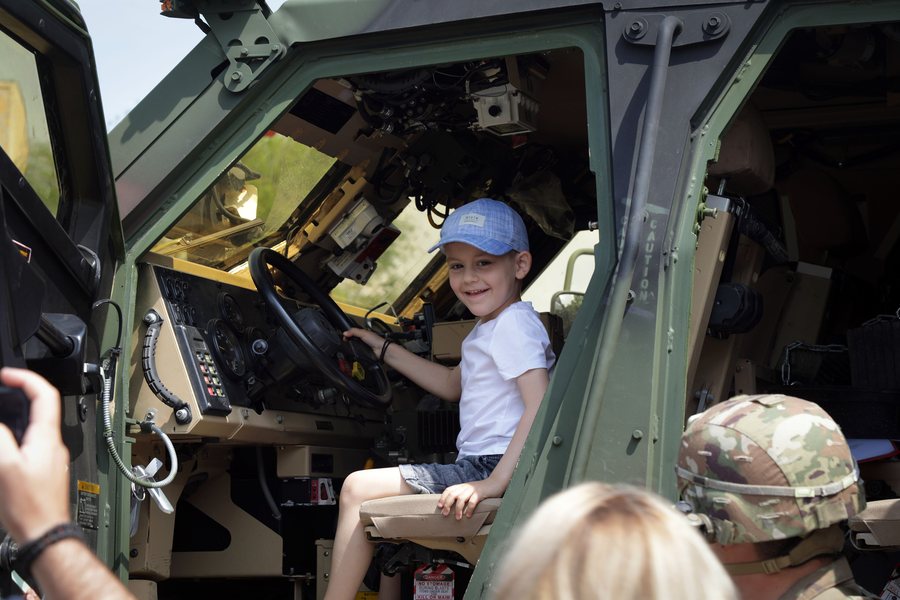 File:Military Vehicle Static Displays in Slobozia Town Square (7837388).jpg
Photo: U.S. Army photo by Sgt. Jordan Arnold via Source, Public domain
File:Military Vehicle Static Displays in Slobozia Town Square (7837388).jpg
Photo: U.S. Army photo by Sgt. Jordan Arnold via Source, Public domain
Booking a hotel in Slobozia is part of personal travel planning.
Nature
The hills of Movila Amara, Movilă Nemţilor, La Cealâcu and Movilă Mare are located in the surrounding area of Comuna Slobozia.
Culture and History
The churches Catedrala Înălţarea Domnului, Biserica Slobozia Nouă, Biserica de Lemn „Poiana“ and the Orthodox church Biserica Orthodoxă Cosâmbeşti are located in the immediate vicinity of Comuna Slobozia.
The Catedrala Episcopală in Slobozia can be visited daily and is visible on the E85 European road near Slobozia. The Biserica „Adormirea Maicii Domnului“ in the Bora district of Slobozia dates from 1864.
The wooden church Biserica de lemn „Sf. Nicolae“ in Slobozia dates from 1748 and was moved here from the village of Poiana in the municipality of Ciulnița. The listed ensemble Mănăstirea „Sf. Voievozi“ in Slobozia dates from the 17th to the 19th century.
The Mănăstirea „Sfinţii Voievozi“ in Slobozia was founded by Matei Basarab around 1634. The lower part of the bell tower and the surrounding wall are preserved from this old foundation.
The Catedrala Episcopală din Slobozia is 37 metres high, 45 metres long and 24 metres wide; at the apses, the width is 33 metres, and the total area is 850 square metres.
Archaeology
The archaeological site of Slobozia is located behind the Bora district, east of the Slobozia–Ciulniţa railway line, on the high terrace of the Ialomiţa River.
The archaeological site of Slobozia includes a Neolithic settlement of the Boian culture. It also includes medieval settlements from the 9th to the 11th century and from the 17th and 18th centuries.
Museums and Events
The Centrul Cultural Ionel Perlea offers painting exhibitions, exhibitions by children, chamber music and symphonic concerts, as well as symposia and conferences.
The Muzeul Naţional al Agriculturii includes a 1.7-hectare park with 40 dendrological species. The museum has more than 8,400 objects from the fields of agricultural tools, agricultural machinery, industrial archaeology, means of transport, ethnography, commemorative culture and church collections.
The permanent exhibition „La pas prin lumea satului“ at the Muzeul Naţional al Agriculturii presents harvest customs, including the weaving craft „Barba lui Dumnezeu“, and shows documentaries about these customs.
Remembrance
The war cemetery in Slobozia has four burial plots for war dead from the Romanian, British, German, French and Turkish armies. It contains the remains of more than 1,900 war dead, including 77 Romanian heroes.
The memorial in Slobozia was inaugurated in 1932. Romanian officers and soldiers who died in the First World War, as well as foreign war participants, are buried in the Heroes' Cemetery in Slobozia.
Other local page: Ion Roata.
To the higher-level travel overview: Ialomita.

.jpg)