
Vidra: Archaeological Traces and Landscape between the Argeș and Dâmbovița
Accommodation in Vidra
In Vidra, the “Goddess of Vidra” points to a connection with Bucharest: the figure is currently kept at the Museum of History and Art of the City of Bucharest in Palatul Șuțu.
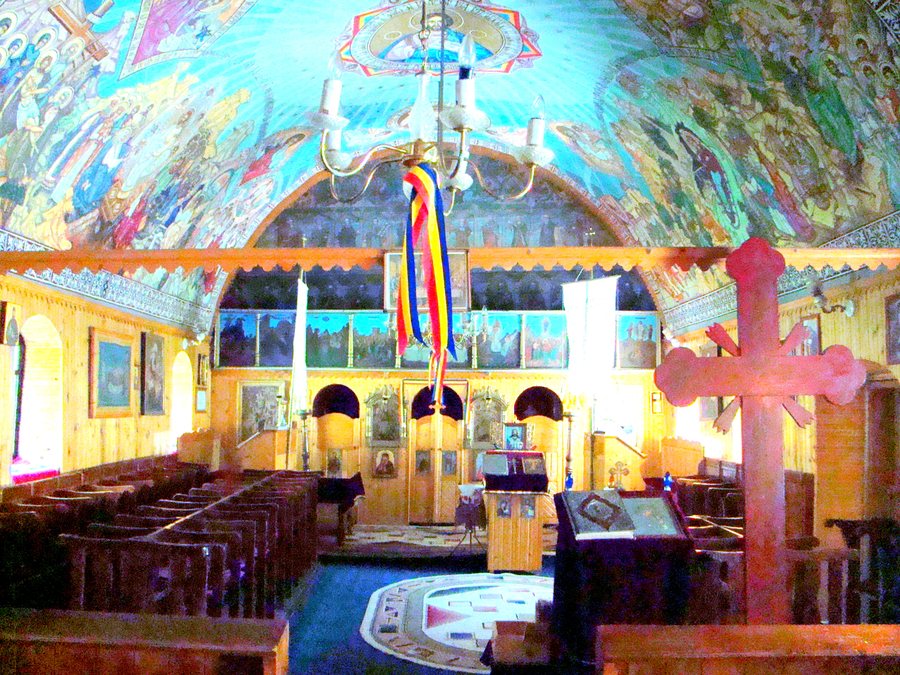 File:Biserica Sfinții Arhangheli din Vidra (2).jpg
Photo: Țetcu Mircea Rareș via Wikimedia Commons, CC BY-SA 4.0
File:Biserica Sfinții Arhangheli din Vidra (2).jpg
Photo: Țetcu Mircea Rareș via Wikimedia Commons, CC BY-SA 4.0
Archaeology
“Tellul Vidra” comprises a settlement from the 18th century, one from the 9th to 11th centuries, one from the 3rd to 4th centuries AD, as well as two Neolithic settlements, one of which is attributed to the Gumelnița culture. The “Tellul Vidra” archaeological site is located in the municipality of Vidra on the left bank of the Sabar. In the Măgura archaeological area of Vidra, visitors can still observe on the surface fragments of grooved ceramic vessels and flint or quartz remains. Another archaeological site in the municipality of Vidra lies on the Sabar near the Bucharest–Giurgiu railway line and includes a settlement from the 17th and 18th centuries.
You can read the findings along two lines: according to their chronological classification and according to the material visible on the surface. This makes it possible to consider widely separated eras and different types of finds separately.
Historic Churches
The year 1733 was carved into a beam of Vidra’s former wooden church. When it was built, the former wooden church in the Bragadiru cemetery was notable for the craftsmanship of the local artisans. A new church was built on the same site as the church dating from 1872.
For personal planning, it helps to keep a separate note of years, buildings, and locations. This keeps the former buildings and the new church distinguishable within their respective historical contexts.
Landscape
Vidra is bordered to the south by the Sabar, a tributary of the Argeș. The municipality of Vidra lies in the Lower Danube Plain, in the subdivision known as “Câmpul Câlnăului” between the Argeș and Dâmbovița. The Câmpul Câlnăului landscape includes plains and valleys with floodplains and terraces. The Bucharest–Giurgiu railway line crosses the southeastern part of Vidra and lies 17 km from Progresul railway station in the south of the capital.
For travel planning, you can use the geographical information at different scales: bodies of water, landscape forms, and the railway route do not answer the same question. No fixed order is specified by this information.
When looking for a hotel in Vidra, you can compare travel dates, room categories, and cancellation policies on the offer pages. The accommodation decision can be adapted to your own travel plan without mixing up the local topics.
Regional Produce
In 1998, producers from Vidra marketed tomatoes, early and autumn cabbage, hot and sweet peppers, aubergines, lettuce, parsley, lovage, dill, Gogosari peppers, cucumbers, and white pumpkins in Bucharest and throughout the country. The residents of Vidra were regarded in Bucharest and in the provinces as some of the earliest producers of high-quality early produce.
To the overarching travel overview: Vidra Commune.

.jpg)