
Petrilaca de Mureș: Bach, Church and Cultural Heritage
Accommodation in Petrilaca de Mureș
Petrilaca de Mureș can be understood through specific landscape and cultural features. East of the village lies the Ciortoș archaeological site on a terrace crossed by streams. Petrilaca de Mureș itself lies in the valley of the Petrilaca stream. This places two different spatial features side by side: the terrace with its archaeological site and the valley that directly shapes the village.
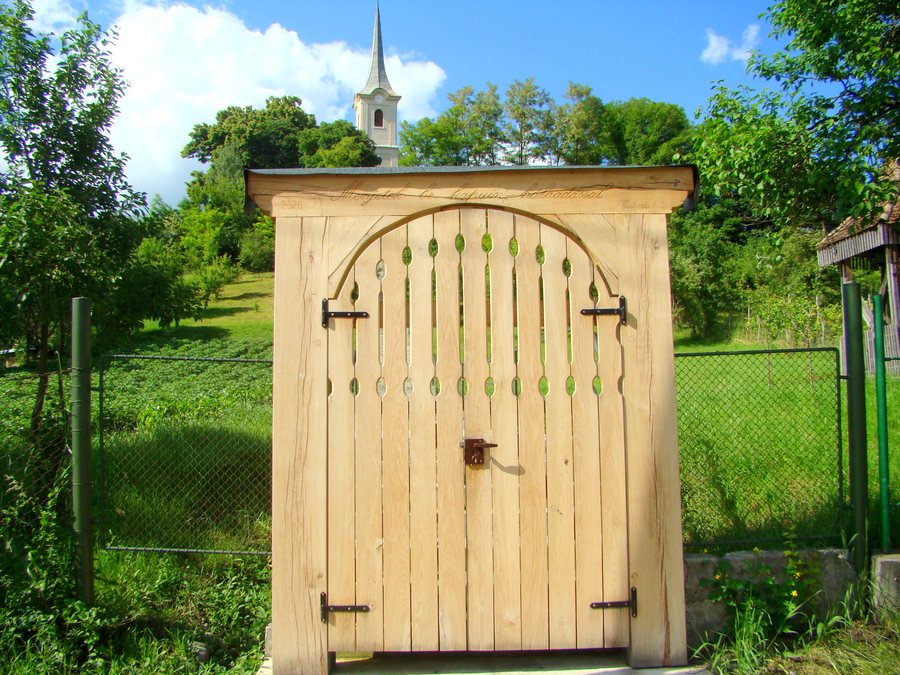 File:Biserica reformată din Petrilaca de Mureș (1).jpg
Photo: Țetcu Mircea Rareș via Wikimedia Commons, CC BY-SA 4.0
File:Biserica reformată din Petrilaca de Mureș (1).jpg
Photo: Țetcu Mircea Rareș via Wikimedia Commons, CC BY-SA 4.0
Nature
The municipal road DC 15 Periş (DN 15)–Petrilaca de Mureș–Teleac is also part of the area's geographical context. It is 12 km long and paved. In the wider regional surroundings of Petrilaca de Mureș are the hills Dealul Sântana, Dealul Călugărului, Dosul Mănăstirii and Lechincioara. The road information and the four named hills represent different ways of orienting oneself: the road is clearly described by its length and surface, while the landscape can be understood through individual geographical names. Comparing the features of the village makes it possible to read these details separately according to transport connection, valley area and the wider landscape context.
Culture
The Reformed Church with bell tower in Petrilaca de Mureș is listed under heritage protection code MS-II-m-A-15754. Petrilaca de Mureș was first mentioned in 1332. The present building of the Reformed Church was constructed between 1782 and 1786, and the tower was added around 1861. The church stands on the site of an older medieval church that burned down. It reflects the style typical of Reformed churches in Transylvania in the 18th century. The building's history therefore contains several clearly distinguishable dates: the first mention of the village, the construction of the present church building, the later addition of the tower and the older church that burned down on the same site.
In the wider regional surroundings of Petrilaca de Mureș, Râciu is home to the Biserica Greco-Catolică Râciu and the Biserica Ortodoxă Râciu. In Şincai, the same wider regional area includes the Biserica Reformată Şincai and the Biserica Romano-Catolică Şincai. Gornești is also home to the architectural ensemble Castelul Teleki, built by the Teleki family in the Grassalkovich style and set in a dendrological park with allegorical statues. The named destinations can be distinguished by location, denominational designation and architectural form: Râciu and Şincai each have two churches, while Gornești describes a different architectural focus through the ensemble, the Grassalkovich style, the dendrological park and the allegorical statues.
Event
The event “Zilele localității Petrilaca” is also associated with Petrilaca de Mureș.
When choosing a hotel in Petrilaca de Mureș, travelers can consider travel dates, room category and the conditions for changes or cancellation separately. This keeps the accommodation details distinct from the named features of the village, the church and local history, and the regional cultural destinations. For comparison purposes, the separation of the information is important: in Petrilaca de Mureș, the church, local history, valley area and event represent the village itself; Râciu, Şincai and Gornești indicate the wider regional context.
For the broader travel overview: Gornesti.

.jpg)