
Mures: Hotels and Accommodation
Accommodation in Mures
The historic centre of Sighișoara is an outstanding testimony to the culture of the Transylvanian Saxons. At the same time, it is an outstanding example of a small fortified town in the cultural border region between Latin-influenced Central Europe and Byzantine Orthodox-influenced Southeastern Europe.
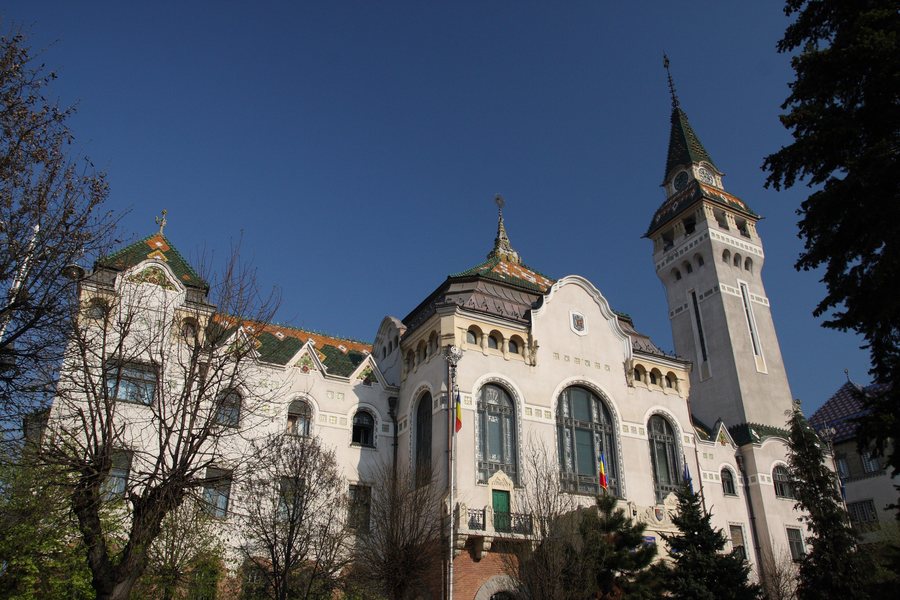 File:County Council Building, Targu Mures, Romania (5681869206).jpg
Photo: yeowatzup via Wikimedia Commons, CC BY 2.0
File:County Council Building, Targu Mures, Romania (5681869206).jpg
Photo: yeowatzup via Wikimedia Commons, CC BY 2.0
Those who choose Mureş as a travel destination want to book a hotel.
Culture
The citadel of Sighișoara conveys a historic townscape with towers, cobbled streets, old houses, a Gothic church and a covered wooden staircase with 172 steps. The Clock Tower is 65 metres high, has five levels and an open gallery.
The Palace of Culture in Târgu Mureș was built between 1911 and 1913 and forms part of the Art Nouveau architectural ensemble in the city centre. Its interior and exterior decoration includes Secession stained-glass windows, Zsolnay tiles, mosaics, stone and stucco ornaments, frescoes and gilded paintings. Visitors can see the foyer, staircase, Hall of Mirrors, Small Hall, Great Hall, Gallery of Classical Hungarian Art, Gallery of Romanian Modern Art and the memorial exhibitions there. A lift facilitates access to the upper levels for people with walking difficulties or reduced mobility.
The Ethnography and Folk Art Museum in Târgu Mureș is housed in the Toldalagi Palace, which dates from the 18th century. Its collections include traditional costumes, household textiles, wooden, ceramic, metal and bone objects, religious objects, icons on wood and glass, as well as contemporary works.
Teleki Castle in Gorneşti was built between 1771 and 1778 in the Grassalkowich style on the site of a former medieval fortress. It has 52 rooms and 365 windows; its floor plan is U-shaped, and a central dome is located above the reception hall.
The area around Mureş is home to Biserica Greco-Catolică Râciu, a Greek Catholic church, Biserica Ortodoxă Râciu, an Orthodox church, Biserica Reformată Şincai, a Reformed church, and Biserica Romano-Catolică Şincai, a Roman Catholic church.
Nature
The Upper Mureș Valley Nature Park protects bird, plant and animal species in species-rich coniferous and deciduous forests. It is suitable for rafting, hiking and cycling.
The Upper Mureș Valley protected area is located in the northeast of Mureș County and encompasses the administrative territories of Stânceni, Lunca Bradului, Răstolița and Deda.
Lacul Ursu in Sovata is considered the largest heliothermal salt lake in the world. It formed between 1875 and 1880 through the gradual dissolution of a salt massif followed by ground collapses.
Geographical Location
Dealul Sântana, a hill, is located in the area around Mureş. In the wider regional surroundings of Mureş are Dosul Mănăstirii, a hill, Fântâna Babii, a spring, and Dosul Şăuliei, a mountain.
Via Transilvanica crosses Romania along a 1,600-kilometre route through ten counties and eight cultural and historical regions featuring diverse natural and cultural landscapes.
More destination pages: Schaas, Răstolița, Trei Sate, Comuna Ibănești, Santana de Mures, Comuna Brâncovenești, Orașul Sovata, Bistra Mureşului, Feleag, Săcalu De Pădure, Eremitu, Gornesti, Curteni, Galesti, Comuna Acățari, Maia, Weichseldorf, Târnăveni, Gorneşti, Hetiur, Weissenkirch, Daneș, Ungheni, Lunca Bradului, Schässburg, Gheorghe Doja, Chibed, Absdorf, Burgfeld, Corunca, Reen, Rohrdachen, Saschiz, Ugern, Sângeorgiu De Mureş, Sowata, Targu Mures.
For the higher-level travel overview: Romania.

.jpg)