
Hotels in Šentjanž: Hiking, Culture and Mining History
Accommodation in Šentjanž
Šentjanž reveals itself through its trails, landscape and closely intertwined cultural history. The town is the starting point for several hikes, while the surrounding area brings together mountains, vineyards and former mining sites. There is also a historic parish church, art, memorial sites and customs that remain alive throughout the region beyond Šentjanž.
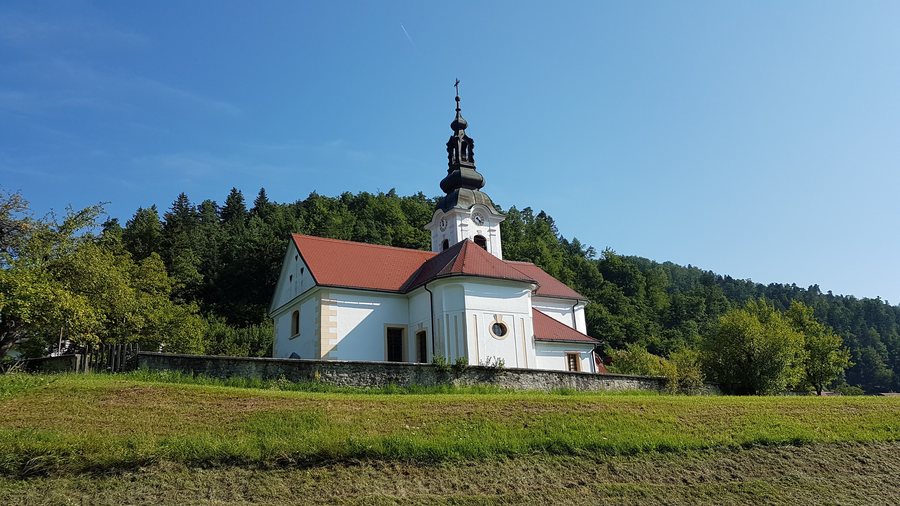 File:Sentjanz pri Mozirju - Cerkev sv. Janeza Krstnika - 20190720 091014.jpg
Photo: Romanm via Wikimedia Commons, CC BY-SA 4.0
File:Sentjanz pri Mozirju - Cerkev sv. Janeza Krstnika - 20190720 091014.jpg
Photo: Romanm via Wikimedia Commons, CC BY-SA 4.0
Hiking
A longer connection is formed by the section of the Sevniška planinska pot between Sevnica and Šentjanž. The route is approximately 23 km long and takes six to seven hours on foot. Shorter is the mining-themed Rudarska tematska pot Tk pav, which begins in Šentjanž at Videm. It is 5.1 km long, takes about two hours and has a medium difficulty level. The route passes Črna mlaka, a pond that formed on the site of a former open-pit mine.
The Krekova pot begins in front of the church in Šentjanž. Four to five hours are allotted for it; it is suitable for every hiker. Its route leads along forest paths and past vineyards. The Pot Milana Majcna trail also combines exercise with remembrance: it commemorates the heroic struggle and resistance of the local men Milan Majcen and Janči Mevželj. During the sixth hike in the footsteps of Milan Majcen, the approximately 13 km route began at the monument in Šentjanž.
Nature
The mountains Velike Kozje, Kopitnik and Kum are located in the surroundings of Šentjanž. Mount Golce lies in the wider regional area. Tag bau has a particularly distinctive connection to the landscape: the site is considered a young primeval forest on the grounds of a former open-pit lignite mine. The mining-themed route and these landscape features thus lead to different traces of the area's use and transformation.
Culture
The parish church of St. John the Baptist in Šentjanž is first mentioned in 1526 and is a three-nave building. A memorial plaque to Janez Evangelist Krek, who died in Šentjanž in 1917, is located on the rectory. The cultural centre houses the collection of Toman paintings from Šentjanž.
For many years, the ArtEko Šentjanž art academy has taken place for one week at the confluence of the Pekel and Mrzli potok streams. Artists from Slovenia, Italy and Croatia take part. Another recurring event is the Šentjanška tržnica, held every year since 2010 on the last Sunday in September. The intangible cultural heritage of Jurjevo koledovanje na Sevniškem remains alive in Sevnica and the surrounding towns, as well as in Raka and Vrhovo.
The Pleterje Monastery lies in the wider regional area around Šentjanž. The cultural setting therefore extends from local memorial sites and events to a destination in the wider regional area.
Mining History
The area's historical mining history is connected with the Šentjanž lignite mine near Krmelj. It operated from 1834 to 1962. Along the trails and in the landscape, visitors therefore encounter both the memory of former work and resistance and the present-day ways in which this history remains visible in routes, places and landscapes.

