
Active Holidays in Sochi: Mountains, Gorges and Coast
Sochi connects the Black Sea coast with the foothills of the Caucasus. Two distinctive natural areas are the Agura Gorge, with its waterfalls, and the mountain area around Mount Bolshoy Akhun. Here, karst formations, rivers and subtropical vegetation meet a more recent architectural history, visible in the 1936 observation tower.
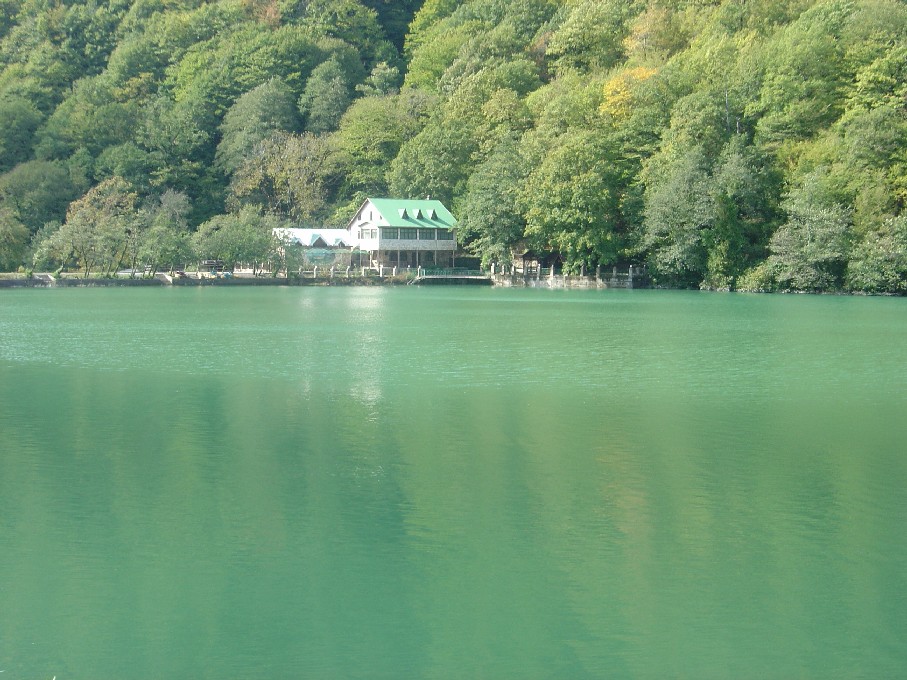 Berglandschaft mit Stausee als Ausgangspunkt für Aktivitäten in der Natur.
Photo: Techniker
Active holiday in Sochi: key facts
- The Agura Gorge follows the lower course of the river; its waterfalls are regional natural landmarks.
- The Agura karst area contains at least 30 caves and shafts.
- Mount Bolshoy Akhun lies between the Agura and Khosta rivers and rises to 663 metres.
- The stone observation tower at the summit opened in 1936 and is 30.5 metres high.
Agura Gorge: river, karst and vegetation
Sochi National Park places the Agura Gorge along the lower course of the Agura River. Its sources lie at the foot of the Alek Ridge, about ten kilometres from the sea. The waterfalls are designated regional natural landmarks. Rock, flowing water and karst define the area: the national park identifies at least 30 caves and shafts in the massif, including several in the river valley. The gorge is part of a larger geological system.
The plant life also contributes to the area’s distinctive character. Mixed forests and relict vegetation with Mediterranean elements grow in the gorge; evergreen cherry laurel and lianas are among the species recorded here. On Mount Bolshoy Akhun, the national park describes beech and hornbeam forests, as well as subtropical broadleaf forest with Colchian characteristics. This diversity of vegetation links the damp gorge slopes with the forested mountainsides above the coast.
The landscape around Matsesta is also part of the Sochi coastal region.
Mount Bolshoy Akhun and the observation tower
Mount Bolshoy Akhun lies between the Agura and Khosta rivers. The national park gives its summit elevation as 663 metres and describes it as the highest point in the greater coastal Sochi area. An observation tower was planned because trees obscured the view of the sea and mountains. Construction took seven months, and the tower opened on 6 June 1936.
The 30.5-metre-high building is made of roughly hewn natural stone quarried at the site. The tower has four storeys. Its design combines medieval Romanesque features with elements reminiscent of Caucasian defensive architecture. The tower is a striking 20th-century landmark set within an older mountain landscape.
Travel tips
The location of your accommodation affects how far you need to travel to the places you plan to visit.
Frequently asked questions about active holidays in Sochi
Who built the first path through the Agura Gorge?
The Crimean-Caucasian Mountain Club built the first path in 1911.
