
Masally: Cultural Sites and History
Accommodation in Masally
Masally offers religious sites, historic buildings, a museum and archaeological evidence. Their dates range from the Bronze and Iron Ages to the 19th century—a variety that can be organized by location and theme.
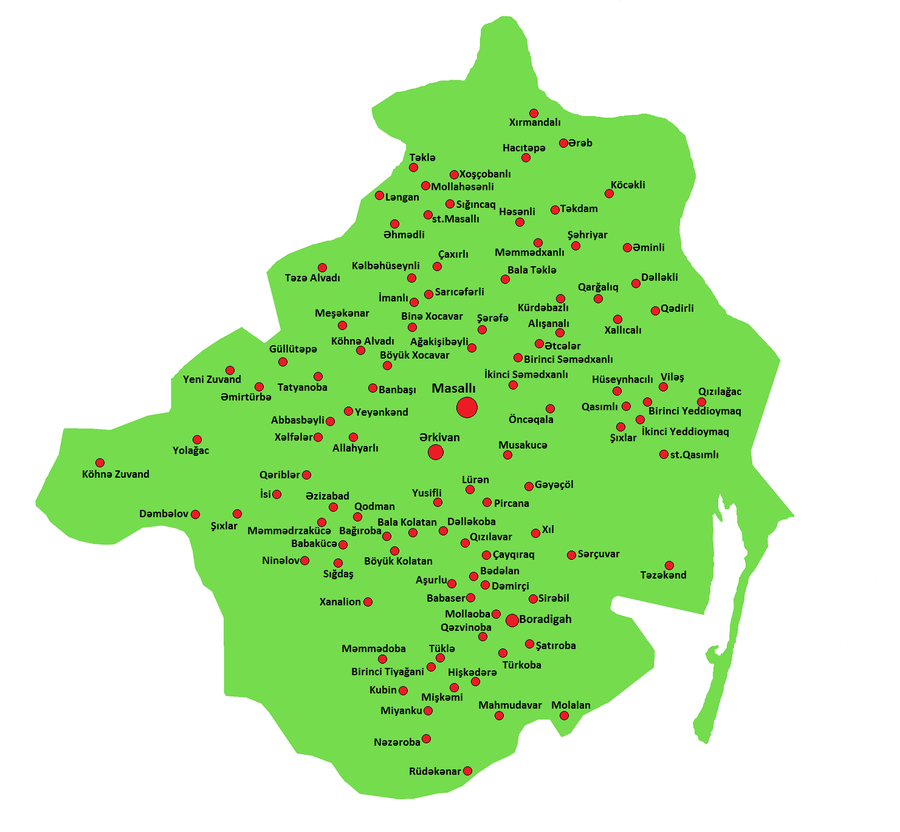 File:Masallı rayonu xəritə Ağaəli Ağayev (Varsaman).png
Photo: Sarhat bek Varsaman via Wikimedia Commons, CC BY-SA 4.0
Masally at a glance
- The Imamzade shrine in Hişkədərə dates from the 8th or 9th century.
- The Rəhim-Tağıyev Museum in Hişkədərə has more than 19,000 exhibits across four specialist fields.
- Archaeological evidence includes Bronze and Iron Age kurgans.
How can you place the religious and historic sites in context?
The Imamzade shrine in Hişkədərə combines an early date with a specific religious association: it contains the tomb of İbrahim, a grandson of the seventh Imam Museyi Kazım. The site was restored in 2001. This brings into view not only the age of the site, but also its religious significance and a later intervention in its architectural history as distinct aspects.
Other sites can also be compared by their dates. Ərkivan Castle dates from the 9th to 10th century. The Baba-Seyidağa Mausoleum in Mahmudavar dates from the 16th century. In the city of Masallı are a historic bathhouse and the Juma Mosque, both from the 19th century. Also dating from the 19th century are the Amir Mausoleum in Güllütəpə and Mehti Spring in Ərkivan. The cultural picture thus includes religious buildings as well as historic structures and a spring.
What does the museum in Hişkədərə offer?
The Rəhim-Tağıyev Museum of History and Local Lore is in Hişkədərə. Its more than 19,000 exhibits are divided among paleontology, ethnography, numismatics and archaeology. The four fields offer different perspectives, from natural history finds and evidence of social life to coins and archaeological objects. The museum is visited year-round by guests from various parts of Azerbaijan and from abroad. Check the current visiting arrangements before setting out.
What archaeological evidence is there?
Qaraxantəpə, a Bronze Age kurgan, is in Hişkədərə. Another kurgan is in Təzə Alvadı: Məmmədtəpə is dated to the Bronze and Iron Ages. A kurgan is a burial mound, so the two datings place the sites in different historical periods. Mahmudavar is also home to an archaeological monument dating from the 3rd to 9th century. Its broad date range is a different kind of classification from the specific kurgan designation.
Among the cultural sites mentioned, Ərkivan brings together a castle and a spring; further evidence can be found in Güllütəpə, Mahmudavar and Təzə Alvadı. First decide which places matter to your interests, then use that to compare the exact location of a hotel. This way, you can tailor your search to your own priorities instead of choosing solely by the name of the destination.
If you are looking for more information within the area, also explore the subregion Masallı. Discover more destinations: Shaki, Şəmkir, Baku, Absheron, Shamakhi, Qakh and Lankaran City.
FAQ
Which historical periods are represented in Masally?
The evidence ranges from Bronze and Iron Age kurgans and the Imamzade shrine from the 8th or 9th century to buildings and sites from the 19th century.
What collections does the museum in Hişkədərə have?
The Rəhim-Tağıyev Museum has more than 19,000 exhibits in paleontology, ethnography, numismatics and archaeology.
What should you check before visiting the museum?
The museum receives visitors year-round. Confirm the current visiting arrangements before setting out.
For the broader travel overview: Azerbaijan.

