
Shaki: UNESCO World Heritage, Khanate History and Halwa
Accommodation in Shaki
Shaki combines a historic centre at the foot of the Greater Caucasus with architecture from the Khanate period and a strong tradition of sweets. The city therefore offers several focal points for planning your trip: architecture and applied arts, a route to Gurjana Waterfall, and insights into regional cuisine and craftsmanship.
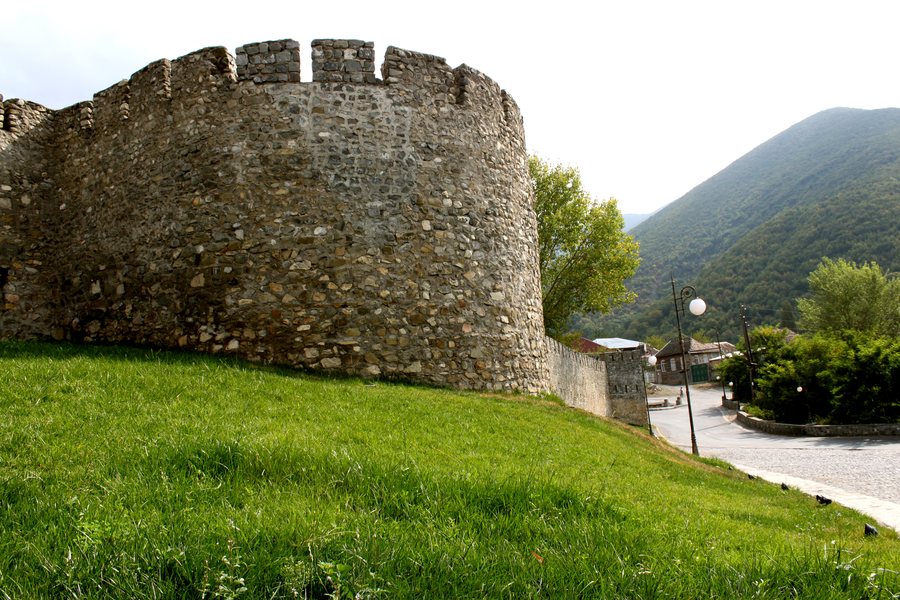
Shaki at a glance
The historic centre of Shaki is a UNESCO World Heritage Site and has been protected, along with the Palace of the Khans, since 1967. The Gurjana River divides the historic city into two parts. Its defining features include Khanate history, Shebeke glasswork and local specialities such as halwa.
What makes the historic centre worth seeing?
The Palace of the Khans of Shaki was built in the late 18th century as an administrative building for the khans. It is a monument from the Khanate period and stands at one of the highest points in the city. The Shebeke technique used in its windows is particularly striking: the glass windows are made without glue or nails. Anyone interested in traditional architecture will find a tangible example here of craftsmanship in a historic building.
Another building dating from the 18th century is Yuxarı Karvansaray. It has up to 300 rooms and cellars. The Khan Mosque also dates from the 18th century. The museum in its courtyard displays artefacts and cultural objects from the Khanate of Shaki.
What museums and craft experiences are available?
The Sheki Museum of Applied Arts is located in the Yukhari Bash State Historical and Architectural Reserve. It has four halls with approximately 600 examples of applied or decorative art. The approximate number and classification of the collection help give a sense of the museum's focus: it centres on crafted objects and handicrafts.
A Shebeke workshop in Shaki Fortress showcases mosaics made from tiny pieces of glass held together in wooden latticework. This adds insight into the craft technique behind the palace's window designs. At the Shaki Silk Factory, visitors also have the opportunity to observe silk production. You can therefore consider cultural sites, traditional crafts and a look at production as distinct interests when planning your trip.
How can you combine the city and nature?
The Gurjana River divides Shaki into two parts and is therefore part of the city's character. If you want to include nature alongside the historic sights, you could consider the route to Gurjana Waterfall, which begins at the Palace of the Khans of Shaki. No further information about the route's length or duration is available here, so you should check these details separately when planning your day.
Which specialities and classes are characteristic of Shaki?
Halwa is considered Shaki's best-known sweet. The local version of pakhlava consists of layers of rice-dough lattice with ground nuts, syrup, spices and saffron. Traditional sweet shops offer halwa masterclasses with local confectioners, who share family recipes passed down through generations. The sweet is therefore not only a regional culinary speciality, but also an opportunity to learn more about a confectionery tradition handed down over time.
Another culinary option is a masterclass in Dopu-Dolmasi, a distinctive type of dolma cooked in a clay pot. Visitors can take part at VIP Karvan Restaurant in central Shaki. If you would rather structure your trip around food and crafts than architectural history, this offers a different focus for exploring the city.
For further information, see the pages on the subregions of Sheki and Bideyiz. For comparisons with other destinations, see Ganja, Khachmaz, Siazan, Lankaran City, Ismailli and Masally.
FAQ
What is included in Shaki's UNESCO World Heritage Site?
The historic centre of Shaki is a UNESCO World Heritage Site. The historic centre and the Palace of the Khans have been protected since 1967.
Where does the route to Gurjana Waterfall begin?
The route to Gurjana Waterfall begins at the Palace of the Khans of Shaki.
What is Shaki halwa made of?
The local version of pakhlava is made from layers of rice-dough lattice, ground nuts, syrup, spices and saffron.
For the broader travel overview: Azerbaijan.

