
Pomorie
Accommodation in Pomorie
Pomorie lies on a narrow, rocky peninsula that extends 3.5 km into the Black Sea. Lake Pomorie, the salt-making tradition and several cultural sites each offer a different focus. If you are looking for a hotel, you can first consider whether nature, salt production or history is especially important to your trip.
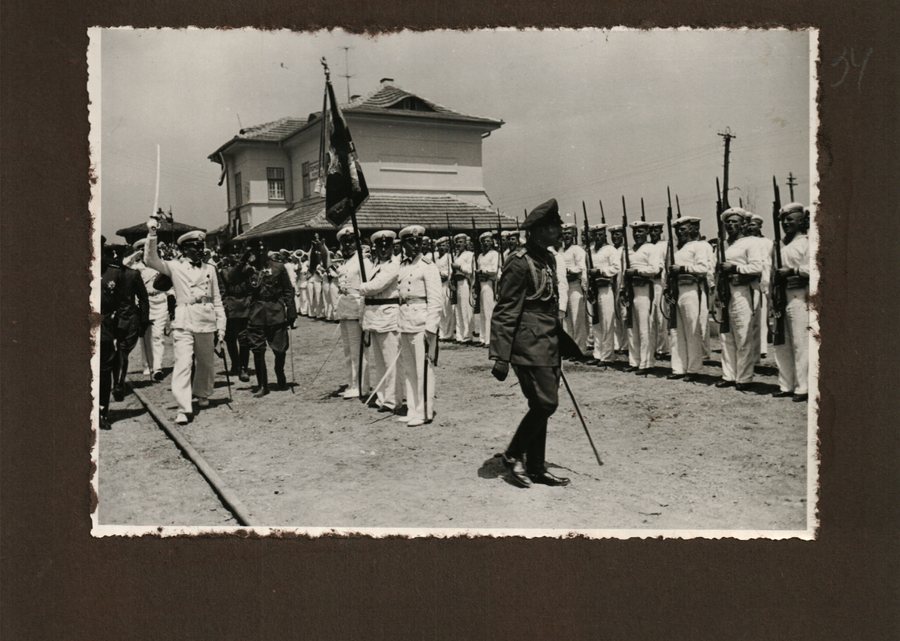 File:BASA-3K-15-181-34-Burgas-Pomorie railway line.JPG
Photo: Unknown author Unknown author via Wikimedia Commons, Public domain
Pomorie at a glance
- The peninsula extends 3.5 km into the Black Sea.
- The lake lies north of Pomorie and is a protected area and part of Via Pontica.
- Salt production, museums and historic buildings shape the cultural offerings.
How do the peninsula and Lake Pomorie shape the area?
The peninsula gives Pomorie a clear connection to the Black Sea; Lake Pomorie lies north of the town. It is designated as a protected area under the Birds Directive and is part of Via Pontica, one of Europe’s second-largest bird migration routes. The wetland provides habitat for salt-loving plants and animals adapted to the salinity. The landscape and wildlife here are closely linked to the lake’s distinctive conditions.
Visitors interested in this natural environment can find an exhibition on the lake’s biodiversity at the Lake Pomorie Visitor Centre. The Salt Museum on the lakeshore offers another way to explore the landscape: it focuses on producing salt from seawater by evaporation using the sun. It also preserves salt pans where the old Anhialo technology was used. In this way, the natural environment and salt-making tradition are two distinct but related aspects of Pomorie.
What cultural history does Pomorie showcase?
The Historical Museum is located in the old town. Its exhibition presents life in the Pomorie region from the earliest antiquity to the Renaissance. Another archaeological attraction is the ancient Thracian domed tomb, which dates from the 2nd to the 4th century AD and is considered unique of its kind on the Balkan Peninsula.
The Monastery of St. George was founded in 1856. It preserves examples of icon art from the 18th and early 19th centuries. The town’s architecture is also among its documented cultural themes: the “Old Houses of Pomorie” complex comprises ten houses with typical Revival-era architecture, designated as cultural monuments. The Pomorie Lighthouse adds a more recent chapter of architectural history: it was built in 1933 by the German company Julius Pintsch.
Fishing is a subject in its own right. The Fishing and Maritime Visitor Centre is housed in a converted water tower and is dedicated to fishing. Its exhibition includes ancient finds from Pomorie’s waters, various ship models and fishing equipment, as well as information about Black Sea fish. Thus, alongside architecture and religious art, the use of the sea and fishing are also central themes.
What can you combine with a visit to Kableshkovo?
Kableshkovo complements the themes around Pomorie with local wine culture. Visitors can tour two wine cellars in the region and buy a wide selection of local wines. This offers a different travel focus from Pomorie’s peninsula, lake and cultural sites: when planning, you can decide whether you are more interested in coastal scenery, nature, history or wine.
For further orientation, see the pages on Pomorie, Aheloy, Medovo and Kableshkovo. Discover more destinations: Ruen, Sredets Municipality, Aytos and Primorsko.
FAQ
What opening hours are listed for the Salt Museum?
The listed hours are 08:00 to 18:00 Monday to Friday and 10:00 to 18:00 at weekends. Check the opening hours before your visit.
Which bus route is listed in the municipal timetable?
On 8 September 2026, a route from Pomorie via Kableshkovo and Goritza and back to Pomorie was listed. Check the timetable before travelling.
What is Kozareva Mogila near Kableshkovo?
Kozareva Mogila is a prehistoric settlement mound and necropolis complex dating from the 5th millennium BC.
For the broader travel overview: Burgas Province.

