
Lovech: Fortress, Museums and Nature Destinations
Accommodation in Lovech
Lovech combines a distinctive history in its old town with nature and hiking destinations. When planning your trip, you can choose different focal points, from the fortress and museums to Stratesh Park and trails along the Osam River.
Lovech at a glance
The medieval fortress of Lovech stands on two terraces of the rocky Hisarya Hill in the old town. It is a monument of national significance and is designated as a museum and tourist reserve. Lovech Zoo is in Stratesh Park: 450 animals and birds from 64 species live across 110 decares. The park itself covers 1,000 decares and includes a lake with an area of 2 decares.
The nature destinations also differ considerably: Devetashka Cave near Devetaki is 2,442 meters long, covers 20,400 square meters and reaches a height of 60 meters. The Bash Bunar Alley follows the bends of the river for two kilometers along the left bank of the Osam.
Which historic places define Lovech?
The fortress on Hisarya Hill connects the city’s history with a clearly visible position above the old town. Stratesh Park is connected to the old Varosha neighborhood by a direct road below the rocky ridge. It leads directly to the monument to Vasil Levski and the fortress of Lovech. This connection helps visitors find their way to these historic places.
In Varosha, the old part of the city lies on the eastern bank of the Osam River. As an architectural and historical reserve, it includes the part of Lovech shaped during the Bulgarian National Revival. The Church of the Dormition of the Mother of God is designated there as an immovable cultural asset of national significance.
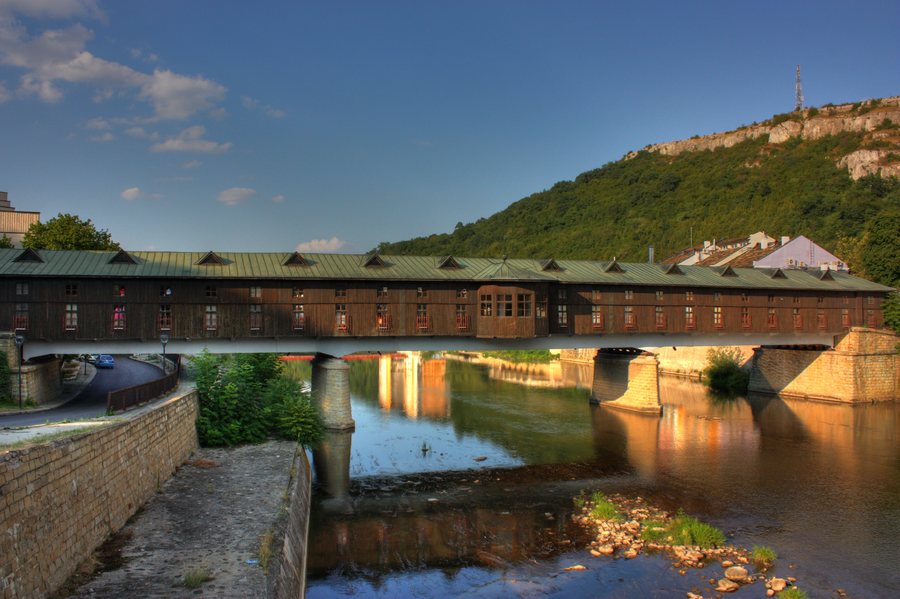
Another landmark is the Covered Bridge built by Kolyu Ficheto. It is considered a symbol of Lovech and is unique of its kind on the Balkan Peninsula. Today, it serves as a covered shopping street. For those interested in crafts, artisans demonstrate how Bulgarian folk handicrafts are made.
Which museums and exhibitions match your interests?
The Vasil Levski Museum devotes its two-story exhibition to the Bulgarian national revolutionary movement and Levski’s activities in Bulgaria. Topics include Lovech’s private revolutionary committee, the Novosel Uprising of 1876, and the first and second liberation of Lovech during the Russo-Turkish War of 1877–1878. The museum preserves 6,000 movable cultural assets and other objects, including the country’s most extensive collection of Levski’s personal belongings.
Everyday life and commercial history are the focus of the Ethnographic Complex, which includes the Drasova House and Rashova House. The exhibition depicts the life of a wealthy merchant from Lovech, including vessels used to make and store wine. The complex is listed as site number 30 among Bulgaria’s 100 national tourist sites. The old Deli Hamam city bath, built in the 16th century, is now a virtual water attraction: multimedia effects and programs share information about water. The bath is also an architectural and construction monument of national significance.
Which nature and hiking destinations offer different experiences?
Devetashka Cave is an immovable cultural asset of national significance, a natural monument and a protected area. It is also listed as a bat roost of international importance and as a priority site on the EUROBATS Agreement’s list for the conservation of European bat species. Its measurements give an impression of the cave’s scale.
For a riverside walk, Bash Bunar Alley offers a different experience from the cave. A marked hiking trail also leads east from the monument to Vasil Levski. In good weather, it offers panoramic views of the Osam’s meandering gorge, the Bash Bunar cliffs and, in the distance, the central ridge of the Balkan Mountains. The Igla rock formation can be reached from the monument to Vasil Levski and from Stratesh Park; mountaineering skills are required to climb to its summit. Access to Zamyka begins at the Lovech Hydroelectric Power Plant, Yuzinata, and follows a mainly green-marked hiking trail toward Tabashka Cave.
Which other places add to this range of attractions?
Staro Stefanovo was declared an architectural reserve in 1982; 96 sites there are registered as cultural monuments. The traditional open ovens beside the two-story houses are considered a tourist attraction. The Kakrina Inn is also among Bulgaria’s 100 national tourist sites. These places offer a different focus from Lovech’s museums and trails: here, the emphasis is on architecture and inclusion among Bulgaria’s tourist sites.
Related destination pages: Lovech, Hlevene, Brestovo, Lukovit, Letnitsa, Apriltsi, Teteven and Yablanitsa.
FAQ
How long is Bash Bunar Alley?
It follows the bends of the Osam for 2 kilometers along the river’s left bank.
What should I know before climbing the Igla rock formation?
Mountaineering skills are required to climb to the summit.
What topics does the Vasil Levski Museum cover?
The two-story exhibition covers the Bulgarian national revolutionary movement, Levski’s activities in Bulgaria and several events in the history of the city and country, including the Novosel Uprising of 1876 and the Russo-Turkish War of 1877–1878.
For the broader travel overview: Lovech Province.

