
Ugarchin
Accommodation in Ugarchin
Ugarchin offers a range of reasons to visit: Fore-Balkan landscapes, protected areas, churches and traditional festivals. Which of these you want to shape your stay can also guide your choice of accommodation in the municipality.
Ugarchin at a glance
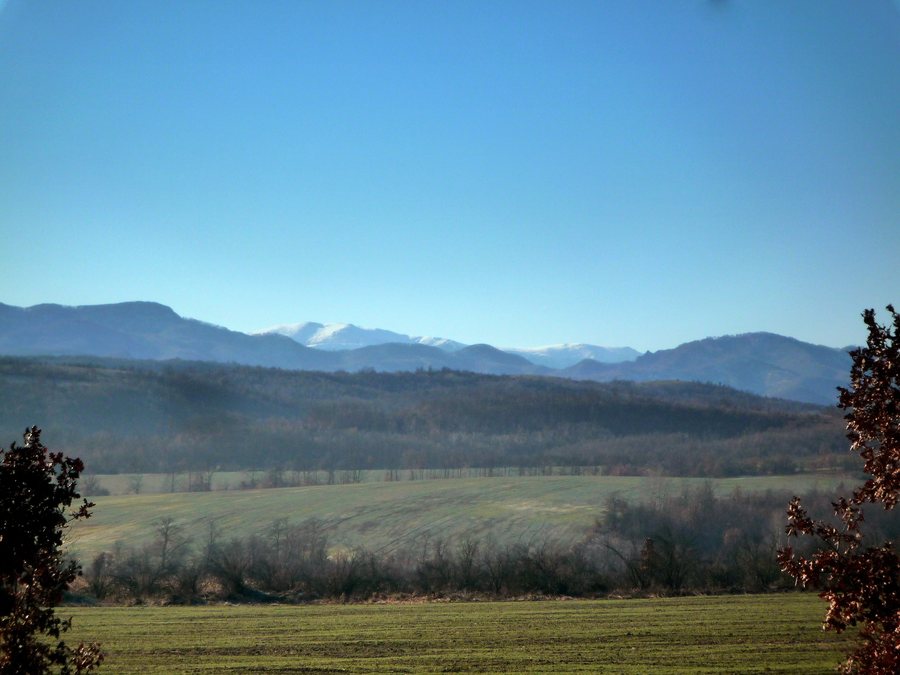
- The municipality is characterised by wooded and bare hills, as well as narrow and broad meadows and plains typical of the Fore-Balkan.
- Part of Studenets Nature Park lies within the lands of Dragana, Kalenik and Katunets.
- Protected landscapes include Shumnatitsa, covering 27.4 hectares, and Anomir, covering 3 hectares.
- Sopot Reservoir offers opportunities for sport fishing, as well as places for tent camping and bivouacking.
- Ugarchin celebrates the spring festival “Svetii” and the annual “Truffle Fest”.
What shapes the landscape and nature in the municipality?
The landscape alternates between wooded and bare hills, and narrow and broad meadows and plains. Meandering rivers cross green meadows and, in places, flow between steep rocks. These descriptions give an impression of the variety of landscapes without tying them to a single viewpoint or shared route.
Part of Studenets Nature Park lies within the lands of Dragana, Kalenik and Katunets in the municipality. Shumnatitsa is located within the lands of Sopot and Mikre. The 27.4-hectare area was designated in 1987 to protect a characteristic landscape. Anomir is located in Lesidren: the 3-hectare area was designated in 1964 for the same conservation purpose and is part of the Natura 2000 protected areas.
The Mikre and Mandrata caves in Mikre are also covered by a Natura 2000 protection regime under the Habitats Directive. The municipality’s areas of Sopot, Lesidren and Kirchewo are part of the Natura 2000 protected area “Central Balkan–Buffer” under the Habitats Directive. The various protection designations therefore apply to specific areas and places within the municipality.
Which places combine nature and history?
Several different attractions are mentioned around Lesidren: the Nedini Lakes are considered a natural attraction; the medieval Kichera/Gradishte fortress is also located near Lesidren. West of Sopot lies the ancient settlement of “Perdevoyka”, which is classified as immovable cultural heritage. The Rudaritsa smelter near Lesidren is also described as a natural attraction.
Other named landscape destinations include Kaleto near Kirchewo and the Roman road between Golets and Kirkova Mahala. Both are listed as natural attractions. Golets is also home to the five-hectare Petko Bunar protected area, designated in 1964 to protect a characteristic landscape.
The churches add their own distinctive touches. The Orthodox Church of Sv. Paraskeva in Ugarchin is permanently open and holds regular services. The “Sveti Georgi” Church in Lesidren is described as fully accessible, functional and well maintained. Sv. Archangel Michael in Katunets is classified as local cultural heritage of artistic and architectural-artistic significance.
In Sopot, a memorial plaque commemorates 57 residents who fell in the Balkan Wars and the First World War. It is included in the regional register of war memorials and plaques. Visitors interested in different cultural and historical subjects will therefore find not only churches in Ugarchin, but also memorial sites and traces of various eras.
What experiences do the reservoirs offer?
Sport fishing, tent camping and bivouacking are listed as activities at Sopot Reservoir. This combination appeals to travellers interested in fishing or spending the night in a tent. Morun Reservoir is described as a good basis for short-term recreation and tourism in the municipality. The two reservoirs are thus associated with different recreational activities.
In the wider region, reservoirs and smaller water reservoirs in the territory of the MIG “Troyan, Apritsi and Ugarchin” are used for recreational and sport fishing. This regional reference is broader than the specific information about Sopot Reservoir and should therefore be understood as referring to the area around the municipality when planning a trip.
Which festivals and dishes are characteristic of Ugarchin?
The spring festival “Svetii” has been celebrated in Ugarchin since 1929. The initiative came from local teachers who wanted to organise a Ugarchin folk evening with folk songs and dances on 22 March. The festival also features the special wedding soup “svatbarska chorba”: it is prepared for residents and guests and served after the festival programme.
The traditional “Truffle Fest” is an annual gathering of truffle hunters and begins with a truffle-hunting competition. The festival is aimed at people interested in regional events centred on truffle hunting. Together with “Svetii”, it represents two distinct festival themes: folk songs, folk dances and wedding soup on the one hand, and a gathering of truffle hunters with a competition on the other.
Other destinations: Lovech, Teteven, Yablanitza, Letnitza, Lukovit, Apriltzi, Troyan.
FAQ
Which protected areas are located in Ugarchin Municipality?
Part of Studenets Nature Park lies within the lands of Dragana, Kalenik and Katunets. Other protected areas mentioned include Shumnatitsa and Anomir; the Mikre and Mandrata caves are also covered by a Natura 2000 protection regime.
What can you do at Sopot Reservoir?
Sopot Reservoir offers opportunities for sport fishing, as well as places for tent camping and bivouacking.
What is part of the “Svetii” festival?
The festival has been celebrated in Ugarchin since 1929. Wedding soup “svatbarska chorba” is prepared for residents and guests and served after the festival programme.
What makes the “Truffle Fest” distinctive?
It is an annual gathering of truffle hunters and begins with a truffle-hunting competition.
To the main travel overview: Lovech Province.

.jpg)