
Pag: Historic Town, Lace and Nature
Accommodation in Pag
Pag combines a historic town centre dating from the 15th century with the tradition of Paška čipka and nature experiences in the Dubrava-Hanzina Forest Reserve. Its varied attractions make it easy to plan your trip around culture, crafts or a stay surrounded by nature.
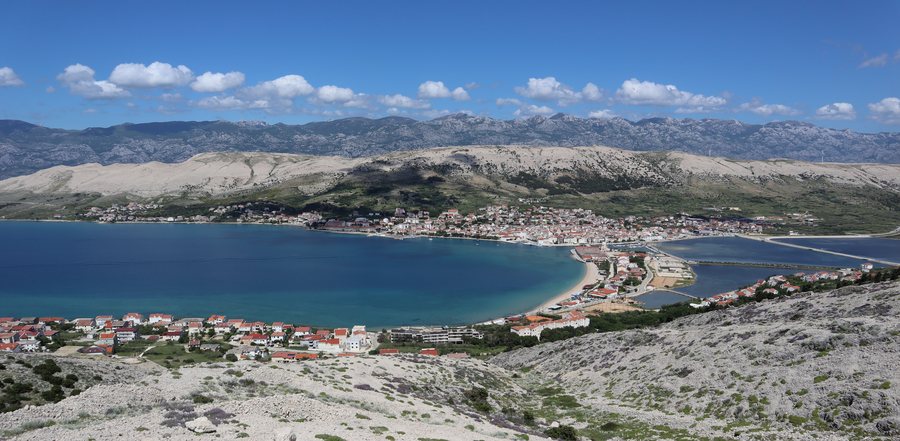
Pag at a glance
Pag’s historic town centre is known for its regular street layout, designed by Juraj Dalmatinac. Its landmarks include the protected Magazini soli, Knežev Dvor, the surviving Kula Skrivanat tower and the Zborna crkva. Paška čipka has been documented as being made in the town since the mid-15th century. For nature lovers, the trail in the special Dubrava-Hanzina Forest Vegetation Reserve features benches, information boards and a viewpoint.
Which historic buildings define Pag?
A distinctive feature of the town centre is its regular street layout, designed in the 15th century by Juraj Dalmatinac. The Magazini soli stand opposite the historic town centre. Of the nine salt warehouses, three were built in the 17th century; the remaining six date from the period of the Second Austrian Administration. Their protected status and different construction dates make them a topic of particular interest for travellers curious about the town’s history.
Knežev Dvor is a restored 15th-century cultural monument in the centre of Pag. Kula Skrivanat, meanwhile, is the only surviving one of the town’s original nine towers. The tower was built in 1468 as part of the defence system. The Zborna crkva also has several clearly distinguishable architectural features: it is a three-aisled basilica with three apses, a Renaissance rose window and a Gothic portal. Together, these landmarks offer several ways to explore Pag’s historic architecture.
What makes Paška čipka special?
Lace-making in Pag has a long history: Paška čipka has been documented as being made there since the mid-15th century. In 2009, it was added to UNESCO’s Intangible Cultural Heritage List. At the Paška čipka Gallery, visitors can watch how the lace is made and view lacework from different periods. This offers a chance to discover both the craft itself and how its work has changed over time.
Salt is another part of the town’s history. The Magazini soli were salt warehouses, built over a period stretching from the 17th century to the time of the Second Austrian Administration. Alongside the street layout, religious buildings and lace, this economic and architectural history offers further topics to explore during a cultural stay.
What nature experiences does Pag offer?
The trail in the special Dubrava-Hanzina Forest Vegetation Reserve offers a way to connect with nature alongside the town’s historic buildings and crafts.
First, consider which themes matter most for your trip: the planned town layout and historic buildings, Paška čipka, or the trail in Dubrava-Hanzina. Salt is also a part of Pag’s story: from 1 June, Solana Pag offers outdoor educational workshops on the history and production of salt, as well as its composition, quality and significance. For further orientation, you can also explore the local areas of Općina Pag, Općina Novalja and Općina Povljana.
If you would also like to compare other destinations, you can explore Ciovo, Karlovac County, Istria County, Krapina-Zagorje and Požega-Slavonia County.
FAQ
Which century does Pag’s historic town centre date from?
It dates from the 15th century. Its regular street layout was designed by Juraj Dalmatinac.
How many towers from the town’s fortifications survive?
Kula Skrivanat is the only surviving one of the nine towers. It was built in 1468 as part of the town’s defence system.
What can visitors see at the Paška čipka Gallery?
They can watch the lace being made and view lacework from different periods.
What can you find along the trail in Dubrava-Hanzina?
The trail is equipped with benches, educational and information boards, and a viewpoint or viewing platform.
For the wider travel overview: Croatia.

