
Kovácsszénája: Lakes, Cycling Routes and Village Culture
Accommodation in Kovácsszénája
Kovácsszénája combines village culture with lakes and cycling routes in the surrounding area.
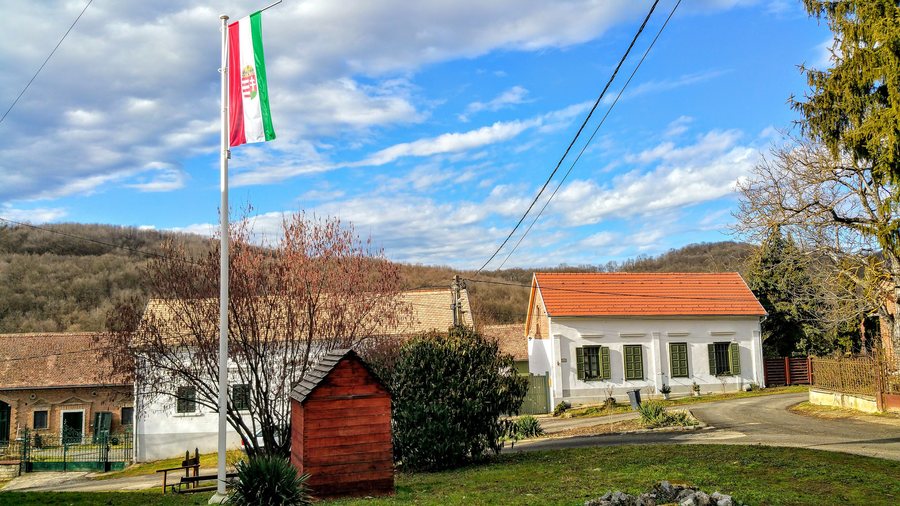
Quick facts about Kovácsszénája
- The village center has a photo gallery with temporary exhibitions.
- Kovácsszénájai-tó is very close to the village and is a fishing lake.
- A forest cycling route completed in 2024 connects Orfű-Tekeres and Kovácsszénája.
- On the hillside above the village is an Árpád-era quarry with benches and a fire pit.
What does the village itself have to offer?
The photo gallery in the village center hosts temporary exhibitions. Its program may vary, so for travelers interested in culture, it is a reason in its own right to check which exhibitions are currently on before visiting. The Árpád-era quarry on the hillside above the village has benches and a fire pit.
The lakes also give the surrounding area different points of interest. Kovácsszénájai-tó lies on the northern slopes of the Mecsek, right next to Kovácsszénája, and is designated as a fishing lake. If you would like to fish there, check the applicable rules and any required permits with the lake manager. Nearby Herman Ottó-tó is locally protected and is significant as a fish reserve. This means a fishing lake and a protected fish reserve sit side by side as distinct points of interest.
How do the cycling routes and lakes fit together?
When planning, it is worth distinguishing between two cycling routes. The forest cycling route runs between Orfű-Tekeres and Kovácsszénája; its route passes through the area of Herman Ottó-tó and Kovácsszénájai-tó. It was completed in 2024. Another cycling route, described at the regional level, connects the Mecsek area with Ormánság and is linked to the regional cycling network. The routes therefore differ in scope: the forest route has named endpoints, while the other connects two areas.
If cycling is an important part of your trip, these routes give you a more specific starting point for your hotel search than a general description of the landscape. Fishing raises a different planning question: the current rules and any required permits for Kovácsszénájai-tó should be confirmed with the lake manager.
What other destinations are part of Baranya?
The wider destination of Baranya also offers distinct cultural and nature-related points of interest. In Pécs, the Early Christian Necropolis of Sopianae includes decorated tombs dating from the 4th century. The underground burial chambers were built with above-ground memorial chapels and feature richly decorated Christian wall paintings. The Zsolnay Cultural Quarter is also in Pécs. Its exhibitions include “Golden Age of Zsolnay,” the “Pink Exhibition,” and an exhibition on the history of the family and factory. For children, it offers, among other things, outdoor playgrounds, an interactive lab, a planetarium, the Bóbita Puppet Theatre, a ceramics painting workshop, and classes at the Hercules Workshop. The publicly accessible outdoor area can be entered and used free of charge during opening hours; check current opening hours in advance.
The Ős-Dráva Visitor Centre near Szaporca offers further nature-related attractions. It includes an interactive exhibition, a demonstration farming area with hands-on land management, and three educational trails. They share knowledge about traditional farming, the Ős-Dráva program, and wildlife along the Drava. The farming area features, among other animals, Hungarian Grey cattle, Mangalica pigs, Hucul horses, and old breeds of sheep and poultry. The Wilderness Trail along the Old Drava also has a birdwatching and bird-ringing station, a lookout point, a photography hide, a covered activity area, and rest areas.
Culture and landscape also come together elsewhere in Baranya: Siklós Castle is considered one of Hungary’s best-preserved military complexes and an important Renaissance building. Modernization of the museum wing also opened up the Gothic section, which had previously been inaccessible to visitors. The Kikerics Panorama Trail offers a path that allows safe movement along the cliff edge while protecting plant life from trampling; at the Nagyharsány Sculpture Park, the “Art in Nature” program includes a guided tour. In Villány’s cellar row, you can go from cellar to cellar year-round to sample wines and food. These destinations complement the information about the village with other interests, without replacing the local offerings of Kovácsszénája.
Discover more destinations: Pécs, Szalánta, Áta, Regenye, Cserkút, Kozármisleny, Kökény and Kővágótöttös.
FAQ
Is Kovácsszénájai-tó a fishing lake?
Yes. Check the current rules and any required permits with the lake manager.
Which places does the forest cycling route connect?
It connects Orfű-Tekeres and Kovácsszénája and passes through the area of Herman Ottó-tó and Kovácsszénájai-tó. It was completed in 2024.
What is on display at the photo gallery in the village center?
Temporary exhibitions are shown there. The exhibition program may vary.
See the broader travel overview: Pécsi.

