
Kővágótöttös: Spring, Church and Regional Culture
Accommodation in Kővágótöttös
Kővágótöttös can be explored through two specific local features: the stone-built Hideg-kút spring in the Kígyósi Valley and a small 12th-century Romanesque church. There is also a protected-area boundary and the Tót-vár earthworks north of the village.
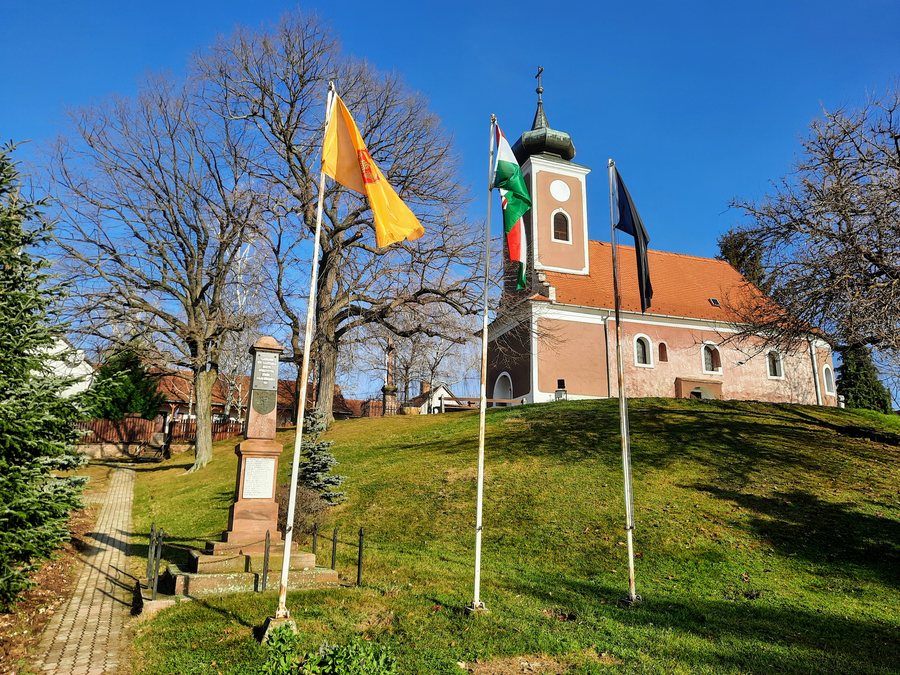 File:Kővágótöttös, Szent Miklós katolikus templom 2020.jpg
Photo: Györkő Zsombor via Wikimedia Commons, CC BY-SA 4.0
Key facts about Kővágótöttös
- Hideg-kút is a spring enclosed in natural stone, located in a playground in the Kígyósi Valley between the village’s two parts.
- Its flow rate is about 2 to 20 litres per minute; the amount of water can vary.
- The municipality renovated the spring in 2005.
- The administrative boundary of Kővágótöttös meets the Nyugat Mecsek Landscape Protection Area.
- The Tót-vár earthworks lie north of the village.
- The small Romanesque church was built in the 12th century.
What does Hideg-kút tell us about the village?
The location of Hideg-kút brings together several local features: it is in the Kígyósi Valley, between the village’s two parts, and in a playground. Its stone enclosure and stated flow rate also describe different aspects of the spring. The flow rate is given as about 2 to 20 litres per minute and can vary, so this range should not be understood as a constant value.
The municipality’s renovation in 2005 adds a dated chapter in the spring’s history to these details about its location. In this way, its location, design, flow rate, and municipal renovation stand alongside one another as distinct, clearly defined facts.
What cultural and landscape features can be found locally?
The small Romanesque church in Kővágótöttös dates from the 12th century. There are no regular opening hours for visiting the church; visits are possible by prior telephone appointment. Call ahead and plan your visit accordingly.
The landscape can also be understood through specific local features: the administrative boundary of Kővágótöttös meets the Nyugat Mecsek Landscape Protection Area. The Tót-vár earthworks, by contrast, lie north of the village. These represent two different ways of looking at the surroundings: a connection to the boundary of a protected area and the location of a named site.
What cultural attractions does the wider destination of Baranya offer?
In the wider destination of Baranya, the Early Christian Necropolis of Sopianae in Pécs includes decorated tombs dating from the 4th century. They were built as underground burial chambers with above-ground memorial chapels and adorned with richly decorated Christian wall paintings. The burial chambers, chapels, and paintings each offer a different insight into the character of this burial site.
The Zsolnay Cultural Quarter in Pécs brings together several exhibition themes: “Golden Age of Zsolnay,” “Pink Exhibition,” and an exhibition on the history of the family and factory. Activities for children complement this cultural programme. They include outdoor playgrounds, an interactive lab, a planetarium, the Bóbita Puppet Theatre, a ceramics painting workshop, and classes at the Hercules Workshop. The quarter’s freely accessible outdoor area can be entered and used free of charge during opening hours. Check the opening hours before your visit.
Where do nature, agriculture, and regional cuisine come together?
In the wider destination of Baranya, the Ős-Dráva Visitor Centre near Szaporca offers an interactive exhibition and a demonstration farm area with hands-on farming activities. Three themed educational trails provide information about traditional agriculture, the Ős-Dráva Programme, and wildlife along the Drava. The farming area features native Hungarian domestic animals, including Hungarian Grey cattle, Mangalica pigs, and Hucul horses, as well as old breeds of sheep and poultry.
The wilderness trail along the Old Drava has a birdwatching and bird-ringing station, a lookout point, a photography hide, a covered activity area, and several rest areas. The Villány wine cellar row offers a different experience: visitors can go from cellar to cellar throughout the year to taste wines and food. Nature watching, insights into agriculture, and regional cuisine are distinct themes within the wider destination of Baranya.
Discover more destinations: Ócsárd, Kovácsszénája, Regenye, Abaliget, Pécs, Pogány, Egerág, Kökény.
FAQ
What is known about Hideg-kút?
The spring, enclosed in natural stone, is located in a playground in the Kígyósi Valley between the village’s two parts. Its flow rate is about 2 to 20 litres per minute and can vary. The municipality renovated Hideg-kút in 2005.
Can I visit the church without an appointment?
There are no regular opening hours for a church in Kővágótöttös. Visits are possible by prior telephone appointment, so arrange your visit by phone in advance.
Where are the Tót-vár earthworks?
The Tót-vár earthworks lie north of Kővágótöttös.
What activities for children are available at the Zsolnay Cultural Quarter?
Activities include outdoor playgrounds, an interactive lab, a planetarium, the Bóbita Puppet Theatre, a ceramics painting workshop, and classes at the Hercules Workshop. The outdoor area is free to access and use during opening hours.
Go to the wider travel overview: Pécs.

