
Szellő: Rest Area, Pilgrimage Route and Village History
Accommodation in Szellő
Szellő can be explored through a rest area on the pilgrimage route and several clearly located landmarks. For more nature and culture themes, it is also worth looking at the wider destination of Baranya—separate from Szellő’s own local character.
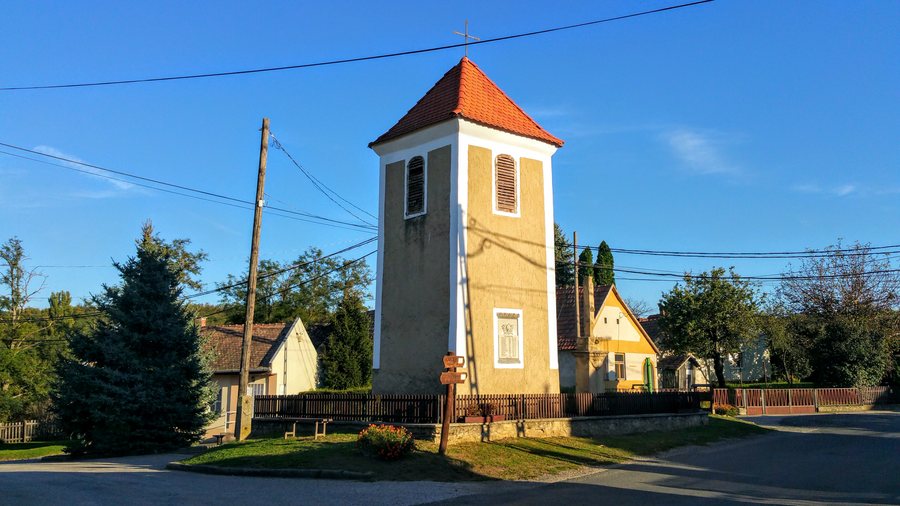
Szellő at a glance
The rest area is on the southern edge of the village and has tables, benches and a fire pit. It can be reached via the route of the Szent Márton Pilgrimage Route. Local landmarks also include a bell tower, a marble memorial and a statue of Saint Florian.
What local history and memorial sites can you find in Szellő?
The present-day bell tower stands on the site of a 16th-century chapel. The chapel was later demolished, and the bell tower was built in its place. This links a present-day landmark in the village with the site’s earlier religious use.
The marble memorial “Könnyező felhő” commemorates the people who were resettled from Szellő. There is also a statue of Saint Florian at the northern end of the village. Together, these places offer different points of interest for a walk focused on local history and remembrance, without requiring a particular route.
Which cultural sites are part of the wider destination of Baranya?
In Pécs, the Early Christian Necropolis of Sopianae includes decorated tombs from the 4th century. The tombs were built as underground burial chambers with above-ground memorial chapels and adorned with richly decorated Christian wall paintings. This archaeological site offers a distinct focus alongside Szellő’s smaller, locally rooted memorials.
Also in Pécs, the Zsolnay Cultural Quarter offers several named exhibitions: “Golden Age of Zsolnay,” “Pink Exhibition,” and an exhibition on the history of the family and the factory. For children, there are outdoor playgrounds, an interactive lab, a planetarium, the Bóbita Puppet Theatre, a ceramic painting workshop and classes at the Hercules Workshop. The freely accessible outdoor area can be entered and used free of charge during opening hours; check the opening hours before your visit.
Siklós Castle represents another chapter in Baranya’s cultural history. It is considered one of Hungary’s best-preserved military complexes and also one of the country’s most significant Renaissance buildings. Modernisation of the museum wing opened the previously inaccessible Gothic section to visitors.
What nature and family activities can you find in Baranya?
Near Szaporca, the Ős-Dráva Visitor Centre offers an interactive exhibition and a demonstration farming area where practical farming methods are shown. Three themed educational trails teach visitors about traditional agriculture, the Ős-Dráva Programme and the wildlife along the Drava. The agricultural area features native Hungarian domestic animals, including Hungarian Grey cattle, Mangalica pigs, Hucul horses, and old breeds of sheep and poultry.
The Wilderness Educational Trail along the Old Drava includes a birdwatching and bird-ringing station, a lookout point, a photographic hide, a covered activity area and several rest areas. The different facilities and themes offer distinct focuses, from wildlife observation and nature photography to agricultural practice and learning along the educational trails.
On the cliff edge, the Kikerics Panorama Trail allows visitors to move around safely while protecting the park’s plant life from trampling. The “Art in Nature” programme at Nagyharsány Sculpture Park includes a guided tour. Thus, alongside exhibitions and historic buildings, Baranya also offers nature experiences, each with its own thematic focus.
What other interests make Baranya worth visiting?
In Villány’s wine cellar row, you can go from cellar to cellar throughout the year and sample wines and tasty dishes. This adds a culinary focus to the archaeological and cultural themes. When planning, the key question is what interests you: Szellő’s local landmarks and history, or additional culture, nature and food experiences across the wider destination of Baranya.
Discover more destinations: Erzsébet, Pécsvárad, Ófalu, Óbánya, Erdősmecske, Mecseknádasd, Apátvarasd, Zengővárkony.
FAQ
Where is the rest area in Szellő?
It is on the southern edge of the village and has tables, benches and a fire pit.
Which route leads to the rest area?
The rest area can be reached via the route of the Szent Márton Pilgrimage Route.
Which historic memorial sites are there in Szellő?
A 16th-century chapel stood on the site of the present-day bell tower. The marble memorial “Könnyező felhő” commemorates the people resettled from the village; a statue of Saint Florian stands at the northern end of the village.
For the wider travel overview: Pécsvárad.

