
Szentlőrinc: Museum, Baroque Church and Railway History
Accommodation in Szentlőrinc
Szentlőrinc combines a museum of bourgeois domestic culture with a listed steward’s house and a Baroque church. The history of this former railway junction adds to its local cultural focus. For broader travel comparisons, the town can also be considered as part of the wider destination of Baranya.
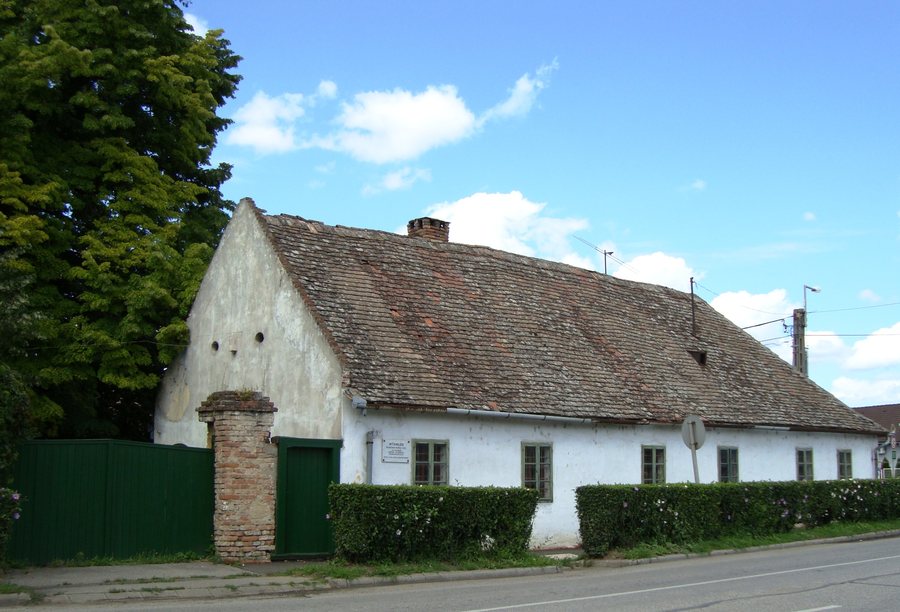 File:Szentlőrinc,Koncz-Brantner ház.jpg
Photo: Bodka at Hungarian Wikipedia via Wikimedia Commons, Public domain
Szentlőrinc at a glance
- The Brantner-Koncz House is a preserved, listed steward’s house from the 18th century and is now a museum of bourgeois domestic culture from the 19th and 20th centuries.
- The Baroque church was built in 1718 and is protected as a national monument.
- Szentlőrinc developed into a railway junction in the 19th century with the construction of several railway lines.
What does Szentlőrinc tell us about its history?
The Brantner-Koncz House brings together two historical layers: the preserved steward’s house dates from the 18th century, while the museum explores bourgeois domestic culture in the 19th and 20th centuries. It is now run by a foundation. If you are planning a museum visit, check access arrangements in advance.
The railway history can also be traced through specific dates. When the Pécs–Barcs line opened in 1868, Szentlőrinc became an important railway stop. The construction of the Budapest–Szentlőrinc line in 1882 and the Szentlőrinc–Slatina–Našice local railway in 1895 helped the town develop into a railway junction. These three dates mark successive steps in this historical development.
What does the Baroque church reveal about building and musical history?
The Baroque church in Szentlőrinc was built in 1718 by Countess Mária Breiner and is protected as a national monument. Its organ adds a later historical layer: József Lesnyik and Ernő Kész rebuilt it around 1880; in 1937, the Angster factory rebuilt it again. The organ bears opus number 1137. The same building thus brings together the church’s date of construction and the later dates associated with its instrument.
What cultural attractions does the wider destination of Baranya offer?
Within the wider destination of Baranya, Pécs offers an archaeological highlight in the Early Christian Necropolis of Sopianae. It includes decorated tombs from the 4th century: underground burial chambers are connected to above-ground memorial chapels and adorned with richly detailed Christian wall paintings.
The Zsolnay Cultural Quarter offers another way to explore cultural history. Its exhibitions include “Golden Age of Zsolnay,” the “Pink Exhibition” and an exhibition on the family and factory history. Children can enjoy outdoor playgrounds, an interactive lab, a planetarium, the Bóbita Puppet Theatre, a ceramics-painting workshop and classes at the Hercules Workshop. The outdoor area is free to enter and use during opening hours; check the current hours before your visit.
Another historical option is Siklós Castle, one of Hungary’s best-preserved military complexes and one of the country’s most important Renaissance buildings. Modernisation of the museum wing opened up the Gothic area, which had previously been inaccessible to visitors. At the Nagyharsány Sculpture Park, the “Art in Nature” programme includes a guided walk through the park.
How do nature and regional cuisine complement Baranya?
Within the wider destination of Baranya, the Ős-Dráva Visitor Centre near Szaporca combines an interactive exhibition with a demonstration farm where practical farming takes place, as well as three themed educational trails. They share information about traditional agriculture, the Ős-Dráva programme and the wildlife along the Drava. The farm area features native Hungarian domestic animals, including Hungarian Grey cattle, Mangalica pigs, Hucul horses, and traditional breeds of sheep and poultry.
For wildlife watching, the Wilderness Trail along the Old Drava features a birdwatching and bird-ringing station, a lookout point, a photography hide, a covered activity area and several rest stops. The Kikerics Panorama Trail allows visitors to walk safely along the edge of the cliffs while protecting the park’s plant life from trampling.
Regional cuisine is another highlight: in Villány’s wine-cellar row, you can go from cellar to cellar throughout the year to sample wines and food. The wider destination of Baranya thus brings together archaeological and architectural heritage, wildlife watching, and wine and food traditions.
Discover more destinations: Helesfa, Bükkösd, Dinnyeberki and Hetvehely.
FAQ
What can you see at the Brantner-Koncz House?
The preserved, listed steward’s house from the 18th century now houses a museum of bourgeois domestic culture from the 19th and 20th centuries, run by a foundation. Check access arrangements before your visit.
Is the outdoor area of the Zsolnay Cultural Quarter free?
Yes. The outdoor area is free to enter and use during opening hours. Check the current opening hours in advance.
Which dates are significant in the history of the Baroque church?
The church was built in 1718. Its organ dates from around 1880 and was rebuilt by the Angster factory in 1937.
For the wider travel overview: Szentlőrinc.

