
Szuhogy – Castle History and Churches
Accommodation in Szuhogy
Szuhogy lies on the edge of the Rudabánya Mountains. The history of Csorbakő Castle, the architectural history of the Reformed Church, and a monument to the First World War offer different starting points for getting to know the town.
Quick Facts About Szuhogy
Szuhogy stretches along the Szuhogy Stream, on the southern edge of the Rudabánya Mountains and the eastern edge of the Putnok Hills. Csorbakő Castle stands on a lower northeastern spur of Nagy-hegy and is now within the municipality. The Reformed Church and the Roman Catholic Church of the Holy Trinity are in the town; a monument commemorates Szuhogy soldiers who fell in the First World War.
What does the history of Csorbakő Castle tell us?
The castle’s history reaches back to a time when it was already badly dilapidated and in ruins: in 1403, King Sigismund granted his chief cupbearer, Imre Perényi, permission to rebuild Csorbakő above Szuhogy. This is recorded as a grant of permission; later events show a different course for the castle.
In 1553, Ferenc Bebek had miners from Rudabánya demolish Csorbakő Castle. Although it remained in the possession of Imre Bebek’s heirs, it was never rebuilt. Its history therefore includes both permission to rebuild and its later demolition. The castle’s position on the northeastern spur of Nagy-hegy locates it in the landscape; it can be reached from Ady Endre Street.
What architectural history shaped the churches?
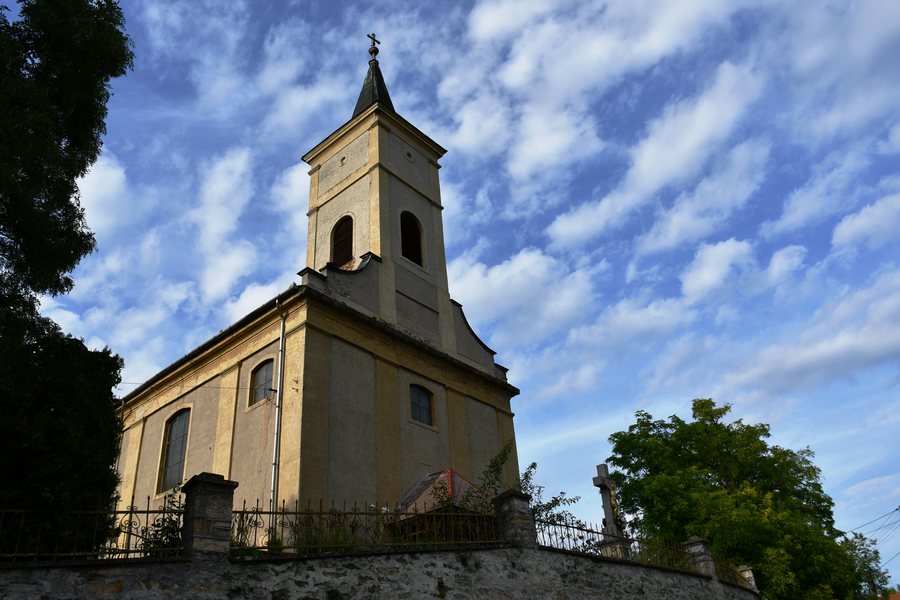
The present-day Reformed Church was built in the late Baroque style between 1790 and 1796, following the Edict of Toleration. It developed from an earlier prayer house. Its floor plan is oriented along an east–west axis; the tower stands on the south side of the nave.
The former church tower was taken down in 1985. A new, 20-metre-high tower was built in its place by 1987. The Reformed Church also houses an organ built by József Angster in 1912. Szuhogy’s Roman Catholic Church of the Holy Trinity was built in 1859. The town thus features churches from different periods and with distinct architectural forms.
Where can you find the First World War monument?
The First World War monument stands at 26 Rákóczi Ferenc Street, on the corner of a small square beside the Catholic church. It was originally erected in 1920 to commemorate 26 Hungarian soldiers from Szuhogy who fell in the First World War. The location and dedication go together: the monument is a specific remembrance of people from the town, not a general memorial without a local connection.
Getting to Szuhogy and getting around
Szuhogy is accessible by bus. There are three stops on József Attila Street: at both ends of the town and in the town centre. The street is also the town’s main transport link, connecting Szuhogy with the neighbouring towns of Szendrő and Rudabánya. If you are looking for a hotel in Szuhogy, these local landmarks offer practical guidance as you consider where to stay: you can take the bus arrival point in the centre or at either end of town, as well as the road connection, into account when planning.
Ady Endre Street is another specific point of reference for the castle, which can be reached from there. The street names identify different landmarks to help with travel planning; the castle, churches, and monument each have their own described locations and histories.
Discover more local pages about Viszló, Tornaszentandrás, Szendrő, Becskeháza, Bódvarákó, Szakácsi, Debréte and Szögliget.
FAQ
Where is Csorbakő Castle?
It stands on a lower northeastern spur of Nagy-hegy in the Rudabánya Mountains and is within the municipality of Szuhogy.
How can you get to Szuhogy by bus?
There are three stops on József Attila Street: at both ends of the town and in the town centre.
When was the Reformed Church in Szuhogy built?
It was built in the late Baroque style between 1790 and 1796, following the Edict of Toleration, and developed from an earlier prayer house.
For the overview of the wider area: Edelény.

