
Cserépváralja: Beehive Stones and History
Accommodation in Cserépváralja
Cserépváralja combines distinctive rock formations and hiking destinations with a multifaceted local history. These topics provide an initial orientation as you plan a stay and consider what you would like to discover on site.
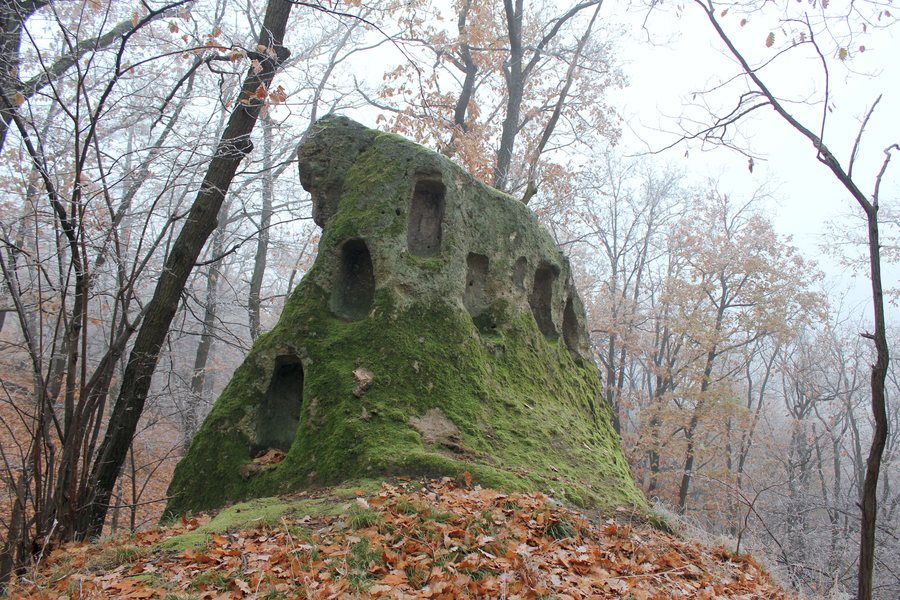 File:A cserépváraljai Nagy-Bábaszék ÉK-i oldala.jpg
Photo: Baráz Csaba via Wikimedia Commons, CC BY-SA 3.0
File:A cserépváraljai Nagy-Bábaszék ÉK-i oldala.jpg
Photo: Baráz Csaba via Wikimedia Commons, CC BY-SA 3.0
Key facts about Cserépváralja
The area of Cserépváralja is home to particularly monumental beehive stones on Mangó-tető. The larger stone is 10 to 13 meters high, has 25 niches, and a regularly conical south side. Other hiking destinations include Alsó-szoros, Felső-szoros, and Szurdok-völgy. Historical sites include Szent József-templom and the castle of the L’Huillier family.
What makes the beehive stones special?
The beehive stones on Mangó-tető stand out for their distinctive shape. Their special form is easy to appreciate from the size of the larger stone and its 25 niches: It reaches a height of 10 to 13 meters, and its south side is regularly conical. During a visit, you can take in not only the overall size but also the shape of the individual rock faces.
Since January 1, 1977, the stones have been part of a particularly protected area of Bükk National Park. Leaving the marked hiking trails is prohibited. Take this restriction into account when planning and check trail conditions before setting out on a hike.
What hiking destinations and tours are there?
Hiking destinations to consider in Cserépváralja include Alsó-szoros, Felső-szoros, and Szurdok-völgy. You can include these three destinations individually in your plans.
The three-hour “Élet a Bükkalján” hike focuses on the cultural and historical values of the area and is offered in Cserépváralja and its surroundings. It has a different focus from the individual hiking destinations: cultural history takes center stage. Check the current date before making plans, as the specific schedule is important to your travel decision.
What stories do the buildings and local history tell?
The present-day Szent József-templom in Cserépváralja was built by Csaba László between 1959 and 1961. Munkás Szent József-templom is one of the modern churches of the Archdiocese of Eger. Another architectural trace leads to the French-origin L’Huillier family: they settled in the area in the early 18th century and built their castle below the castle hill using stones from the castle walls.
Mihály Munkácsy is also connected with Cserépváralja. During the battles of the Hungarian War of Independence, his parents brought him to his uncle in Cserépváralja in 1848, when he was four years old. His uncle worked as an estate manager at the castle. A reproduction of Munkácsy’s painting “Rőzsehordó nő” is on display in the youth room of the Tourist Reception Center.
Nearby Cserépvár offers another historical connection. After the final fall of Eger, the Hungarian garrison left the castle in 1596; it then remained under Ottoman rule for almost a century without a siege. On October 30, 1687, imperial troops recaptured Cserépvár. After setting fire to the outer wooden-and-earth palisade ring, the defenders of the inner stone castle surrendered.
How does the destination fit into the wider travel region?
Other nature-related attractions also form part of the wider destination of Borsod-Abaúj-Zemplén. The Baradla-Domica Cave System is part of the UNESCO World Heritage site of the Caves of the Aggtelek and Slovak Karst. The short Aggtelek cave tour is 1 kilometer long, takes 60 minutes, and is classified as easy. You can therefore consider whether your trip should focus mainly on the beehive stones, hiking destinations, and local history of Cserépváralja, or whether you would also like to include the cave landscape in the wider destination.
Discover more destinations: Tibolddaróc, Cserépfalu, Négyes, Bükkzsérc, Szomolya, Sály, Bogács, Szentistván.
FAQ
What rules apply at the beehive stones?
Since January 1, 1977, the beehive stones have been part of a particularly protected area of Bükk National Park. Leaving the marked hiking trails is prohibited.
How long does the “Élet a Bükkalján” hike take?
The hike is listed as taking three hours. It focuses on the cultural and historical values of the area and is offered in Cserépváralja and its surroundings.
Is the Cave Dwelling Local History Museum accessible?
Visits to the Cave Dwelling Local History Museum should be announced in advance. Check the current access conditions before planning a visit.
To the wider travel overview: Mezőkövesdi.

