
Erdőhorváti: Pretzel Tradition and Cultural Heritage
Accommodation in Erdőhorváti
Erdőhorváti can be explored through its distinctive local traditions and specific points of reference: Csurgó-kút in the village center, the baking of Erdőhorváti pretzels, and a section of the red-marked Rákóczi hiking trail.
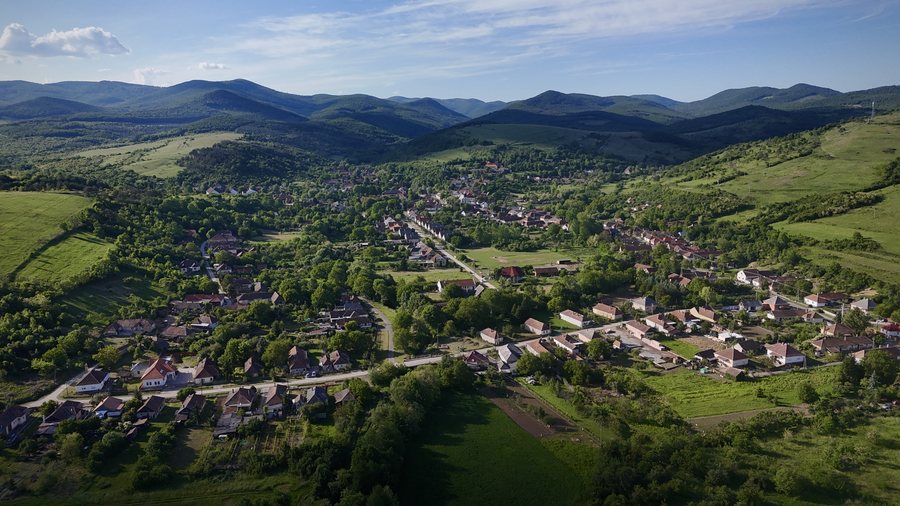
Erdőhorváti at a glance
- Csurgó-kút stands in the center of Erdőhorváti, opposite the mayor’s office.
- Erdőhorváti pretzels are traditionally baked in a búbos kemence.
- The Roman Catholic church is built in the Neo-Baroque style.
- The red-marked Rákóczi hiking trail passes along a street between the churches and then reaches the road to Komlóska.
What does the pretzel tradition tell us about the village?
Baking Erdőhorváti pretzels is a long-standing local tradition. Their distinctive connection to the village lies both in the baked goods themselves and in their traditional preparation in a búbos kemence. This gives local cuisine a concrete cultural significance without reducing it to a single dish.
The history of their production also extends beyond everyday home life. In the 20th century, Erdőhorváti was an important center for pretzel baking: 15 to 20 women made pretzels for the market. They mainly visited markets and fairs in Tokaj-Hegyalja. This historical context shows that baking was also linked to trade and market visits at the time. When planning your trip, you can distinguish between the local tradition as it is practiced today and its former economic significance.
What local landmarks can you explore?
Csurgó-kút is a clearly identifiable point of reference in the center: it stands opposite the mayor’s office.
The Roman Catholic church in Erdőhorváti offers another cultural facet. Its Neo-Baroque style adds an architectural perspective to the village’s local attractions. Together with the pretzel tradition and the history of market trade, this offers several ways to explore the village: through architecture, traditional crafts, and the history of selling goods.
What does the Rákóczi hiking trail pass in Erdőhorváti?
In Erdőhorváti, the red-marked Rákóczi hiking trail passes along a street between the churches and then reaches the road to Komlóska. For planning purposes, these two streets provide specific local points of reference for this section.
You can also prioritize local attractions according to your interests: the route description is useful for travelers who want to include a marked trail in their plans. The pretzel tradition and church offer historical and cultural or architectural points of interest, while Csurgó-kút is a clearly located feature of the village center.
What else does Borsod-Abaúj-Zemplén have to offer?
The wider destination of Borsod-Abaúj-Zemplén offers other distinct regional highlights. The Tokaj wine region is legally protected as a wine-growing area; its climate, soil quality, and slope exposure are suitable for growing grapes. This gives it a different focus from the local pretzel tradition: here, the emphasis is on landscape and viticulture.
Culture and architectural history are also represented by their own examples. In Sárospatak, the Reformed College preserves treasures of Hungarian Protestant culture. Beneath the park of Rákóczi Castle there, a cellar complex extends for about 2,000 meters and includes two wine-tasting rooms. These examples place the cultural attractions within the wider destination, rather than presenting them as local features of Erdőhorváti.
For those who want to compare nature experiences with cultural attractions, the wider destination also includes the Baradla-Domica Cave System, part of the UNESCO World Heritage-listed Caves of the Aggtelek and Slovak Karst. The short Aggtelek cave tour is 1 kilometer long, takes 60 minutes, and is rated easy. The destination thus brings together a wide variety of themes: viticulture and cultural heritage, caves, and Erdőhorváti’s local traditions and route description.
Explore more destinations: Bodrogolaszi, Komlóska, Sárospatak, Hercegkút, Tolcsva, Sárazsadány, Vajdácska and Vámosújfalu.
FAQ
Where is Csurgó-kút?
Csurgó-kút stands in the center of Erdőhorváti, opposite the mayor’s office.
What is known about Erdőhorváti pretzels?
Baking pretzels is a long-standing local tradition. The pretzels are baked in a búbos kemence. In the 20th century, 15 to 20 women made pretzels for the market and mainly visited markets and fairs in Tokaj-Hegyalja.
What route does the Rákóczi hiking trail take through Erdőhorváti?
The red-marked trail passes along a street between the churches and then reaches the road to Komlóska.
Go to the wider travel overview: Sárospataki.

