
Discover Hercegkút: cellar rows and Swabian heritage
Accommodation in Hercegkút
Hercegkút is defined by two cellar rows at opposite ends of the village. Their architecture, the history of the Swabian community, and wine-growing themes give you concrete points of reference when getting to know the village and comparing hotels for your stay.
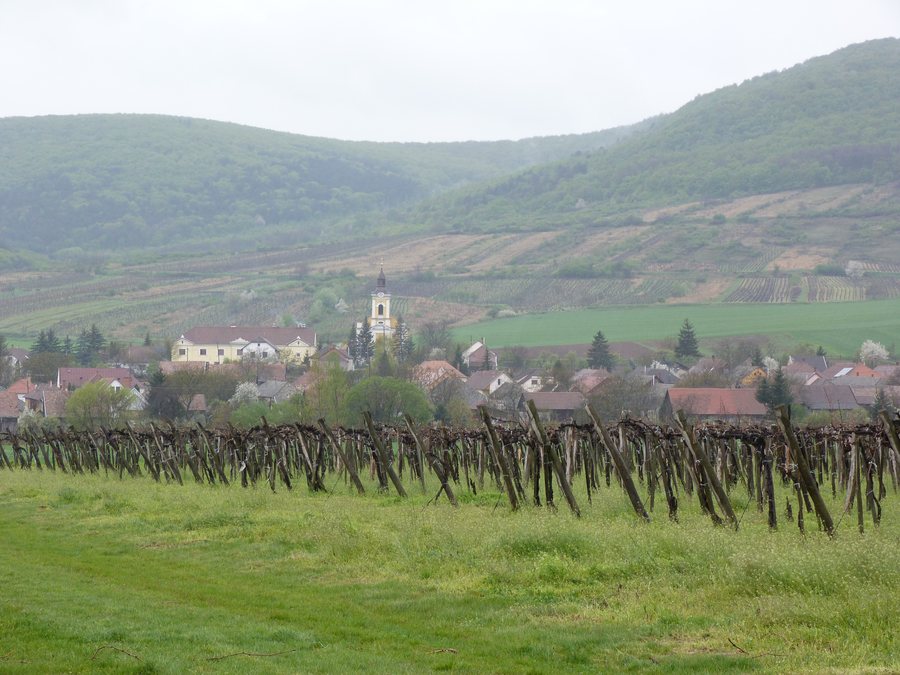
Hercegkút at a glance
- Kőporosi Pincesor lies in the north of Hercegkút, on the Makkoshotyka side; it has 87 largely uniform cellars with triangular gables.
- Gomboshegyi Pincesor consists of four orderly rows of cellars with triangular gables on the hillside.
- Both cellar rows are open year-round, at any time, and free of charge. Winery opening hours vary.
What distinguishes the two cellar rows?
Kőporosi Pincesor combines a clearly recognizable architectural style with a winding street layout: 87 largely uniform cellars with triangular gables line paved, winding lanes. Its location in the northern part of Hercegkút, on the Makkoshotyka side, helps you place this cellar row within the village. At the upper end, there is also a playground, barbecue areas, and gazebos.
At Gomboshegyi Pincesor, the arrangement on the hillside is its defining feature. The cellars with triangular gables stand in four orderly rows. Compared with the winding lanes of Kőporosi, this arrangement of rows presents the site in a different way: here, the terraces on the hillside are what stand out. The village also lists Gombos-hegyi Kálvária as another local structure visitors can see.
For visits to the cellar rows themselves, note that they are open year-round, at any time, and free of charge. This is separate from the opening hours of individual wineries, which vary. If you would also like to visit a winery, check its opening hours separately.
What cultural and wine-growing themes are there?
Sváb Tájház offers a different focus from the cellar architecture. It displays historical objects and memorabilia from Hercegkút’s Swabian community. Its structural restoration was completed by the end of May 2007, and the house reopened on August 18, 2007. Check current visitor information before your visit.
Világörökségi Élményközpont was completed in 2023 on the north side of Kőporosi Pincesor. Its facilities include an event venue, a cultural community space, and a tasting room. An infographic exhibition covers Aszú formation, local wine-growing traditions, and Tokaj wine types. Check current visitor information before your trip rather than assuming the center will be open as a scheduled stop.
In the wider destination of Borsod-Abaúj-Zemplén, the Tokaj Wine Region is legally protected. The Tokaj Wine Region’s climate, soil quality, and slope exposure are suitable for growing wine grapes.
Discover more destinations: Háromhuta, Sárospatak, Erdőhorváti, Vajdácska, Makkoshotyka, Vámosújfalu, Bodrogolaszi and Tolcsva.
FAQ
Which cellar row is in the north of Hercegkút?
Kőporosi Pincesor lies in the northern part of the village, on the Makkoshotyka side.
How do Kőporosi and Gomboshegyi differ?
At Kőporosi, 87 largely uniform cellars line paved, winding lanes. Gomboshegyi Pincesor arranges its cellars with triangular gables in four rows on the hillside.
Are the cellar rows free to access?
Yes. Both cellar rows are open year-round, at any time, and free of charge. Winery opening hours vary independently.
To the main travel overview: Sárospataki.

