
Discover Iváncsa: Culture and Architecture
Accommodation in Iváncsa
In Iváncsa, architectural heritage and places of remembrance come together. The churches, the Faluház, and the memorial sites associated with Fejérpataky László give you specific topics to explore as you plan your trip—from architecture to local history.
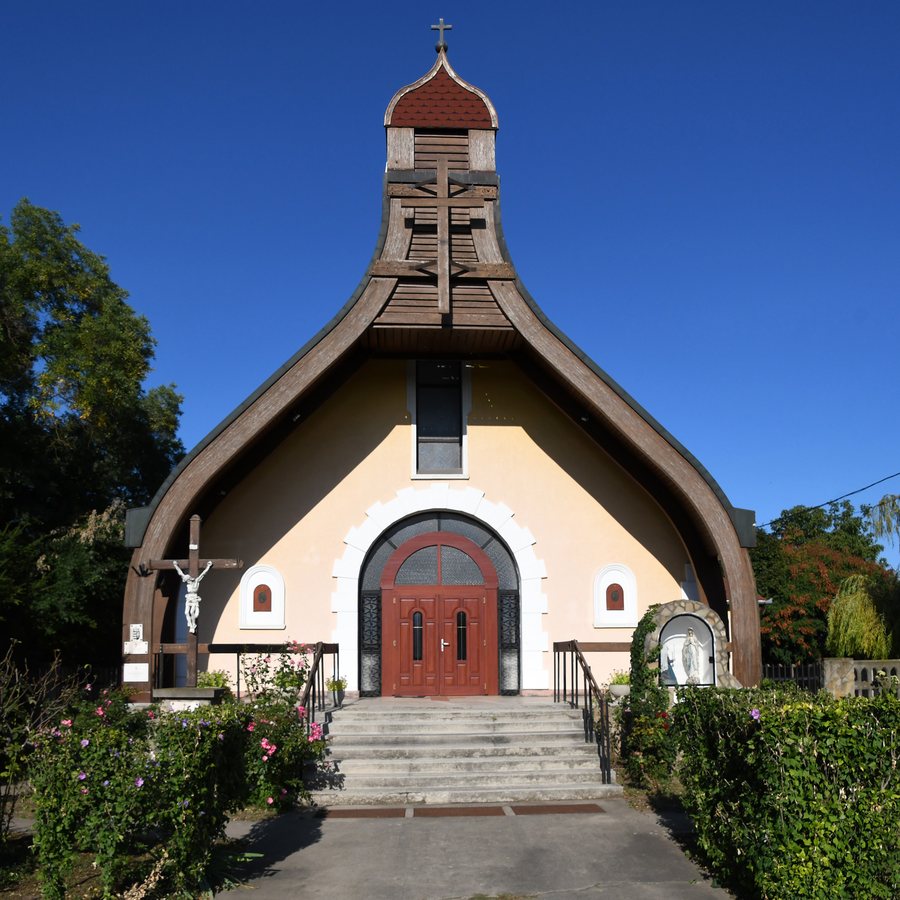 File:Iváncsa, római katolikus templom 2021 02.jpg
Photo: Pasztilla aka Attila Terbócs via Wikimedia Commons, CC BY-SA 4.0
File:Iváncsa, római katolikus templom 2021 02.jpg
Photo: Pasztilla aka Attila Terbócs via Wikimedia Commons, CC BY-SA 4.0
Iváncsa at a glance
- The two churches shape the townscape.
- The Faluház was built to designs by architect Imre Makovecz. Makovecz received the Kossuth and Ybl Miklós Awards.
- A relief commemorates Fejérpataky László, the namesake of the local school.
- His grave in the Catholic cemetery in Iváncsa was included in the National Cemetery in 2008.
What places of remembrance are there in Iváncsa?
You can encounter Fejérpataky László in Iváncsa at two different sites: a relief commemorates him as the namesake of the local school, and his grave is in the Catholic cemetery. The grave was included in the National Cemetery in 2008. In this way, a memorial and a specific historic commemorative site stand side by side, while remaining distinct.
The statue of Hercules is also among the town’s cultural landmarks. It is an allegorical symbol of strength and goodness. If you are interested in the meaning of monuments, you can consider this symbol alongside the more personal commemoration of Fejérpataky: one represents an allegorical idea, while the other remembers a specific person by name.
What defines the architecture?
The two churches together shape Iváncsa’s townscape. The Faluház adds a clearly attributed architectural landmark: it was built to designs by Imre Makovecz. Its connection to an award-winning architect is another point of interest for anyone interested in architectural design. Makovecz received the Kossuth and Ybl Miklós Awards.
The cultural themes can be distinguished as follows: the churches shape the townscape, the Faluház is attributed to an architect, and the relief and statue bring remembrance and symbolism into the picture. This distinction helps you explore the sites and buildings according to your own interests, rather than treating them as a single attraction.
How can you plan a visit to the collection?
The Helytörténeti Gyűjtemény is located at Fő utca 3 in Iváncsa. Visits are possible by prior arrangement in Hungarian, English, German, and French. Arrange your visit with the collection before you arrive. This way, you can take the agreed visiting conditions into account when planning, rather than assuming you can drop in without notice.
As a complementary perspective on the landscape within the wider travel destination of Székesfehérvár, the reed beds on Lake Velence offer a different focus: they are home to thousands of waterbirds. This nature aspect stands on its own and complements Iváncsa’s cultural themes with regional landscape and nature observation.
Discover more destinations: Kulcs, Pusztaszabolcs, Adony.
FAQ
What cultural highlights can you find in Iváncsa?
The townscape includes two prominent churches. Other highlights include the Faluház, built to designs by Imre Makovecz; a relief honoring Fejérpataky László, the namesake of the local school; and the statue of Hercules, an allegorical symbol of strength and goodness.
Where is the Helytörténeti Gyűjtemény located?
The collection is listed at Fő utca 3 in Iváncsa. Visits are possible in Hungarian, English, German, and French by prior arrangement. Confirm the arrangements with the collection in advance.
What does it mean that the grave was included in the National Cemetery?
Fejérpataky László’s grave in the Catholic cemetery in Iváncsa was included in the National Cemetery in 2008.
What natural perspective complements the cultural themes?
Within the wider travel destination of Székesfehérvár, the reed beds on Lake Velence are home to thousands of waterbirds. This is a distinct landscape and nature aspect alongside Iváncsa’s cultural themes.
Go to the wider travel overview: Adonyi.

