
Iszkaszentgyörgy: Castle, Park History and Trails
Accommodation in Iszkaszentgyörgy
Iszkaszentgyörgy combines a castle with a layered park history and trails that showcase the town’s built and natural heritage. This gives you two distinct focuses for planning your trip: historic garden and family connections, and trails with different themes and difficulty levels.
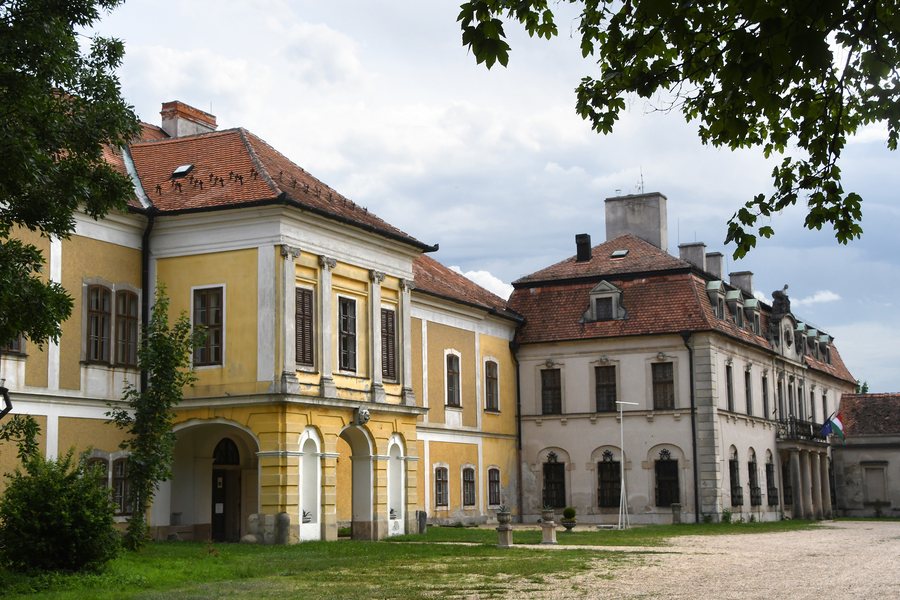 File:Iszkaszentgyörgy, Amadé–Bajzáth–Pappenheim-kastély 2021 01.jpg
Photo: Pasztilla aka Attila Terbócs via Source, CC BY-SA 4.0
Iszkaszentgyörgy at a Glance
- The Amadé–Bajzáth–Pappenheim Castle was built in the mid-18th century.
- From the 1820s onward, the castle park also served as a botanical garden.
- The Kastélybirtok educational trail has ten stops covering the town’s built and natural heritage.
- In 2024, two woodland trails with different difficulty levels were developed by the municipality.
- A 2024 report lists the castle garden in Hungary’s database of historic gardens.
What does the history of the castle and park tell us?
The Amadé–Bajzáth–Pappenheim Castle was built in the mid-18th century. From the 1820s onward, the castle park also served as a botanical garden. Bajzáth György brought back many unusual plants from his travels abroad, and they were subsequently planted in the park. This brings together two distinct chapters: the castle’s architectural history and the park’s later botanical use.
A 2024 report lists the castle garden in Hungary’s database of historic gardens. Together with the accounts of Bajzáth György, this classification offers a way into the town’s garden and cultural history. Iszkaszentgyörgy is therefore about more than a historic building; it is also about the plants that played a role in the park.
What different focuses do the trails offer?
The Kastélybirtok educational trail has ten stops where you can explore Iszkaszentgyörgy’s built and natural heritage. Points mentioned along the way include the Kőasztal rest area, the Csillaghegyi lookout tower and a stone pyramid. Kőasztal was once a popular outing spot for the Pappenheim family. The lookout tower is on a route of the educational trail; the stone pyramid is associated with the Pappenheim family.
In addition, two heart-friendly woodland trails were developed by the municipality in 2024 as part of the “Út az egészséghez” program. They have different difficulty levels and are marked in blue and red; the colors indicate the grading. The difference between the trails is clear: the educational trail focuses on local history and natural and built heritage, while the two woodland trails offer different difficulty levels.
If you plan to include one of these trails in your stay, check its current condition in advance. The details above can help you decide what to focus on: historic sites and their connections, or the woodland trails with their different markings.
Which natural destinations are part of the wider Székesfehérvár destination?
The Pákozdi Ingókövek offer another nature and hiking experience within the wider Székesfehérvár destination. Several hiking trails lead from Pákozd to the rock formations; these trails can also be cycled. A geological educational trail established in 1994 connects the rocks. At Lake Velence, the reed beds provide habitat for thousands of waterbirds. These destinations add to the picture of the region, but are separate from the castle, park and trails in Iszkaszentgyörgy.
Discover more destinations: Sárkeresztes, Börgönd, Székesfehérvár, Sárszentmihály, Pátka, Lovasberény, Sárkeszi.
FAQ
What is known about the castle park as a botanical garden?
From the 1820s onward, the park also served as a botanical garden. Bajzáth György brought unusual plants back from his travels abroad; they were subsequently planted there.
Which places are associated with the Kastélybirtok educational trail?
The educational trail has ten stops. The Kőasztal rest area is along the trail, and the Csillaghegyi lookout tower is on one of its routes; a stone pyramid associated with the Pappenheim family is also mentioned.
How do the two woodland trails differ?
The trails established in 2024 have different difficulty levels and are marked in blue and red. The colors indicate these differences.
For the wider travel overview: Székesfehérvár.

