
Bihartorda: Church, History and Regional Travel Ideas
Accommodation in Bihartorda
Bihartorda combines a late Baroque Reformed church with clearly dated memorials. The wider Hajdú-Bihar travel region offers additional cultural and natural attractions. You can therefore consider the town’s history and regional experiences separately when planning your trip.
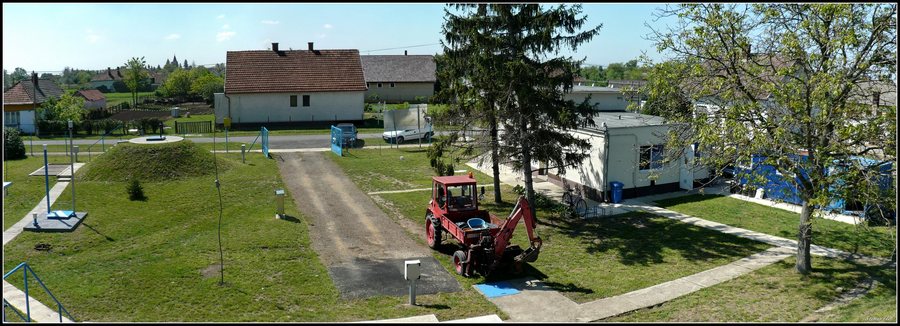 File:Bihartorda, 4174 Hungary - panoramio (37).jpg
Photo: Szemes Elek via Wikimedia Commons, CC BY-SA 3.0
Bihartorda at a glance
- Construction of the Reformed church began in 1793; the nave was completed in 1797.
- The church has a carefully crafted wooden coffered ceiling.
- The Székely Gate was erected on 22 August 2009 as a symbol for all Hungarians.
- In 1959, a memorial to the heroes of the First and Second World Wars was added to the Kossuth statue.
What does the Reformed church tell us?
The church offers two ways to understand its construction history: its late Baroque style and its distinguishable construction phases. Work began in 1793, which is not the same as the nave being completed four years later. The dates therefore mark a beginning and a later stage of construction.
The fittings and the history of the tower are also part of the story. The carefully crafted coffered ceiling is made of wood. A coffered ceiling divides a ceiling surface into individual panels; here, the material is specified as clearly as the design. The tower was destroyed during the Second World War. A new tower spire was not completed until 1974—a later phase, distinct from the construction history of the nave.
What other signs of the town’s history are important?
The Székely Gate makes a different statement from the church: it was erected on 22 August 2009 and is regarded as a symbol for all Hungarians. Its date and symbolic significance are closely linked.
Another memorial is associated with the Kossuth statue. In 1959, a memorial to the heroes of the First and Second World Wars was added to it. This was an addition to the statue, not a separate installation. The different dates help distinguish these memorials as separate milestones in the town’s history.
What does the Hajdú-Bihar travel region offer nature lovers?
In the Bihari-sík landscape unit of the Hajdú-Bihar travel region, the scenery is shaped by near-natural saline grasslands, temporary bodies of water, wet meadows and smaller marshy meadows. These landscape features are connected with the drainage of a former marshland. The World Heritage property “Hortobágyi Nemzeti Park – the Puszta” covers nearly 75,000 hectares in the Great Hungarian Plain in eastern Hungary. This cultural landscape preserves visible evidence of more than 2,000 years of traditional pastoralism.
The Hortobágyi-halastó fishpond system is a Ramsar site, an Important Bird Area, part of the World Heritage property and a Natura 2000 site. The nature trail there offers walks of 3.6, 5.4 or 10 kilometres; according to the trail description, there are no difficult sections. The three distances give you specific options for walks of varying lengths.
The Hortobágy Wildlife Park offers a different nature experience. It showcases the native wildlife of the Hungarian Puszta, including wolves, Przewalski’s horses, vultures and pelicans. There is also a bookable Land Rover safari with an expert guide to see wild horses and aurochs. Booking conditions may change, so check them before making plans.
Which regional cultural themes add to the picture?
The Shepherds’ Museum in Hortobágy explores the lives of shepherds and displays handmade clothing, tools and decorated personal belongings. It is housed in a former carriage depot that was part of the Hortobágyi Csárda complex. Its subject and the building’s history offer two different ways to discover regional shepherding culture.
The “Nature of Hortobágy” exhibition at the Hortobágy National Park Visitor Centre provides information about the region’s rich flora and fauna. “The World of Cranes” is for all ages and combines hands-on learning with entertainment. Its features include a diorama, tactile objects, quiz questions and a digital drawing board. The visitor centre also provides information about programs and events, and sells products made by local craftspeople, as well as books and T-shirts.
Discover more destinations: Nádudvar, Kaba, Földes, Sárrétudvari, Püspökladány, Báránd.
FAQ
When did construction of the Reformed church begin?
Construction began in 1793. The nave was completed in 1797.
What is the significance of the Székely Gate in Bihartorda?
It was erected on 22 August 2009 as a symbol for all Hungarians.
How is the war memorial connected to the Kossuth statue?
In 1959, the memorial to the heroes of the First and Second World Wars was added to the Kossuth statue.
To the main travel overview: Püspökladányi.

