
Pély: Protected Landscapes and Water Engineering
Accommodation in Pély
Pély combines protected landscapes with a history of water engineering. If you choose a destination for its nature and historical traces, the following facts can help you understand what it has to offer before you look for a hotel for your trip.
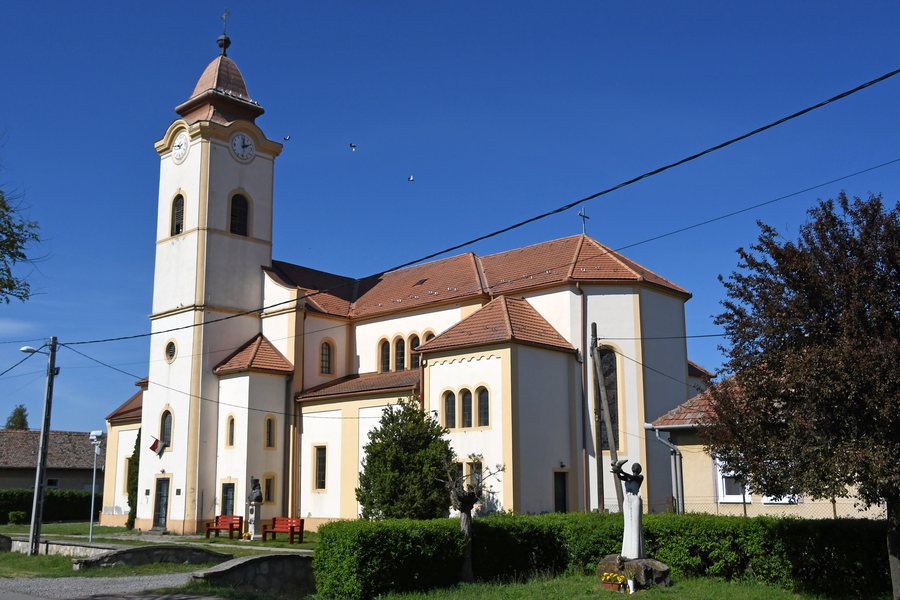 File:Pély, római katolikus templom 2021 01.jpg
Photo: Pasztilla aka Attila Terbócs via Wikimedia Commons, CC BY-SA 4.0
File:Pély, római katolikus templom 2021 01.jpg
Photo: Pasztilla aka Attila Terbócs via Wikimedia Commons, CC BY-SA 4.0
Pély at a glance
- The salt meadows of Pély form a nature reserve within the Hevesi Füves Puszták Landscape Protection Area and are among its most valuable parts.
- The Pélyi Madárrezervátum lies in the Tisza floodplain and is a designated area of the Közép-Tiszai Landscape Protection Area.
- The Sajfoki-zsilip was built in 1862; its original commemorative plaque is still visible.
- Visits to the Csipkebogyós Madármegfigyelő Les require advance registration.
What makes Pély’s protected nature distinctive?
The salt meadows of Pély form a nature reserve within the Hevesi Füves Puszták Landscape Protection Area and are among its most valuable parts. Their character, as well as their plant and animal life, resembles that of Hortobágy. This comparison describes both the landscape and its natural features, giving you a concrete point of reference for understanding Pély’s natural character.
Another named protected area is the Pélyi Madárrezervátum. It lies in the Tisza floodplain and is a designated area of the Közép-Tiszai Landscape Protection Area. The salt meadows and the floodplain reserve thus provide two distinct landscape reference points; both are designated protected areas.
What does the Pély-Ludas educational trail cover?
The Pély-Ludas tanösvény introduces habitat development, nature conservation goals, management tasks and challenges in the Hevesi Füves Puszták Landscape Protection Area. Its range of topics extends from the goals of conservation work to its practical tasks and difficulties. If you are interested not only in landscapes but also in how habitats are managed, this focus offers a distinct way to explore Pély’s nature-related themes.
The Csipkebogyós Madármegfigyelő Les is also among the site’s designated nature attractions. Visits require advance registration. Confirm the current arrangements before your visit.
What historical traces shape the town?
The Sajfoki-zsilip was built in 1862; its original commemorative plaque is still visible. The Sajfoki belvízátemelő szivattyútelep adds to the story of water engineering: it began operating in 1878 with an English steam pump, and Hungarian-made machinery was added in 1879. It was Hungary’s first facility of its kind, remains operational and is considered a valuable monument to water management and engineering.
The statue of Saint John of Nepomuk, created in the 19th century, is considered the municipality’s only protected monument. Artists who supported Pély also enriched the townscape with several public sculptures and artworks. The cultural highlights thus range from a dated monument to artistic contributions to the townscape.
Discover more destinations: Heves, Tiszanána, Kisköre.
FAQ
Which natural areas define Pély?
The salt meadows form a nature reserve within the Hevesi Füves Puszták Landscape Protection Area. The Pélyi Madárrezervátum lies in the Tisza floodplain and belongs to the Közép-Tiszai Landscape Protection Area.
What topics does the Pély-Ludas educational trail cover?
It introduces habitat development, nature conservation goals, management tasks and challenges in the Hevesi Füves Puszták Landscape Protection Area.
What are the requirements for visiting the Csipkebogyós Madármegfigyelő Les?
Visits require advance registration. Confirm the current arrangements in advance.
For the broader travel overview: Hevesi.

