
Pétervására: Architectural History and Hotels
Accommodation in Pétervására
Pétervására brings together several distinct architectural and historical points of interest: Keglevich Castle, the round chapel and the Roman Catholic church on Szent-Márton Hill. For planning your trip, these offer a cultural perspective that distinguishes between architectural form, a specific year of construction and art-historical classification.
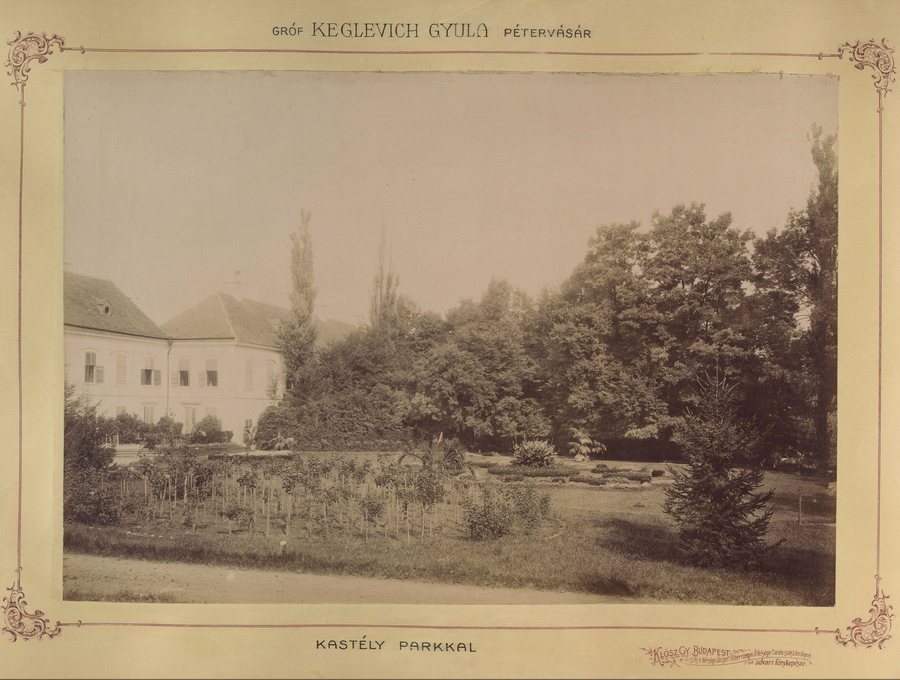 Pétervására, Gróf Keglevich Gyula kastélyának parkja
Photo: Photo: FOTO:Fortepan — ID 83360 : Adományozó/Donor: Budapest Főváros Levéltára.
Pétervására at a glance
- Keglevich Castle is a listed, detached, single-storey building with a U-shaped floor plan.
- The round chapel, also known as Fájdalmas Anya Kápolna, was built in 1722 and is located on Kossuth Street.
- The Roman Catholic church on Szent-Márton Hill is considered one of the earliest works of Hungarian Romanticism.
- In 1738, Gábor Keglevich had a chapel and a parish built in the castle.
What is known about Keglevich Castle?
The description of the castle combines its listed status with specific features of its design: it is detached, has one storey and a U-shaped floor plan. This distinguishes its form from its height; both details help provide a concise, vivid picture of the building.
Its history also includes a commission dated precisely to 1738, when Gábor Keglevich had a chapel and a parish built in the castle. Thus, alongside the architectural form, historical institutions are also central. The chapel within the castle and the round chapel are separate points of reference: the round chapel is identified by its own name and its 1722 construction date.
How do the buildings and their histories differ?
A construction year is recorded for the round chapel: 1722. The Roman Catholic church on Szent-Márton Hill, by contrast, is classified art-historically and is considered one of the earliest works of Hungarian Romanticism. The information therefore offers two different ways to orient yourself: a specific construction date for the chapel and a stylistic classification for the church.
The two chapels can also be compared chronologically. There are 16 years between the construction of the round chapel in 1722 and the chapel built in the castle in 1738. This provides a straightforward reference point for the sequence of the construction events mentioned; the parish was also part of the 1738 commission. Visitors choosing Pétervására primarily for its architectural history will thus find several clearly identified, but distinct, points of interest.
What else does the wider destination of Heves offer?
The wider destination of Heves offers a strong focus on landscape and nature alongside architectural history. The Hevesi Füves Puszták Landscape Protection Area lies in the southern part of Heves County and covers 16,114 hectares. It was designated in 1993; expansions in 2005 and 2008 brought it to its present size.
The 6.5-kilometre Ilona Valley nature trail along the Ilona Stream passes geological features of the Eastern Mátra Mountains and traces of former ore mining. The Pély-Ludas nature trail, by contrast, focuses on the grassland habitats of the Hevesi Plain, including salt meadows, marshes, bodies of water, scrub, semi-natural woodlands and forests, as well as their wildlife and population of European rollers.
Culture and gastronomy are also among the themes of the wider destination of Heves. The Szépasszony Valley contains Eger’s largest contiguous area of wine-cellar-lined vineyards; wine culture and the associated gastronomy are among its most important tourist attractions. These landscape, nature and wine themes complement the cultural-historical view of Pétervására with other interests, but are not features of the town itself.
If you would like to compare other destinations, you can also explore the pages for Bodony, Parád, Istenmezeje, Sirok, Paradohuta, Mátraderecske, Kisfüzes and Bükkszék.
FAQ
What are the features of Keglevich Castle?
It is a listed, detached, single-storey building with a U-shaped floor plan. In 1738, Gábor Keglevich had a chapel and a parish built inside it.
When was the round chapel built?
The round chapel, also known as Fájdalmas Anya Kápolna, was built in 1722 and is located on Kossuth Street in Pétervására.
What is the church on Szent-Márton Hill known for?
It is considered one of the earliest works of Hungarian Romanticism.
For the wider travel overview: Pétervásárai.
