
Esztergom: Churches, Museums and Culture
Accommodation in Esztergom
Esztergom can be explored from several cultural perspectives: the basilica sets a benchmark in church architecture, museums focus on water management, local history and archaeology, and a walk up Szent Tamás Hill leads to a chapel.
Esztergom at a glance
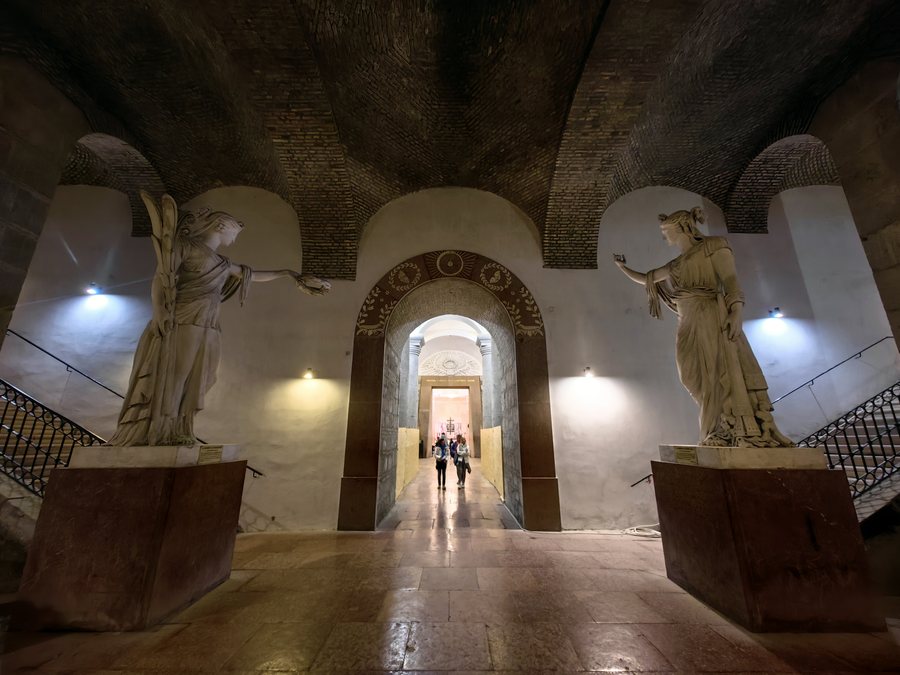
The Esztergom Basilica is Hungary’s largest church building and stands 100 metres tall from the lower level of the crypt to the finial of the dome. On Szent Tamás Hill, a seven-station Calvary staircase leads from the junction of Batthyány Lajos utca and Basa utca to the Fájdalmas Szűz Chapel. At the Duna Museum, the permanent exhibition Vízeum explores the past and present of water management.
Which buildings showcase different styles?
The basilica stands out for its size: the stated height runs explicitly from the lower level of the crypt to the finial of the dome. The Szent Anna Parish Church, also known as the Round Church, offers a different architectural impression. Its floor plan is perfectly circular, with a tall central dome rising above the nave.
At the Church of St Ignatius of Loyola in Víziváros, a precise historical date takes centre stage: Bishop Mihály Althann of Vác consecrated it in 1738. The Esztergom Mosque, also known as the Özicseli Hadzsi Ibrahim Mosque, is a visible monument to Ottoman architecture on the banks of the Danube and is closely tied to the city’s history. These examples make it possible to distinguish different architectural forms and historical connections, rather than reducing the sights to a single era.
What subjects do the museums explore?
The exhibitions differ in their subjects and time spans. In addition to water management at the Vízeum, the permanent exhibition at the Balassa Bálint Museum covers the history of Esztergom and its surroundings from prehistoric times to the 20th century. At the Esztergom Castle Museum, visitors can walk across a glass floor beneath which lie archaeological layers dating back 2,000 years. The museum welcomes visitors as a branch of the Hungarian National Museum.
Another collection of the Christian Museum is housed on the second floor of the Primate’s Palace. When choosing what to see, you can therefore decide whether you are more interested in water management, the history of the city and its surroundings, archaeological layers, or the collection in the palace. These subjects address different questions and are not simply variations on the same exhibition theme.
What historical details add to the walk?
The walk along the Calvary staircase has a specific starting point and destination: it begins at the junction of Batthyány Lajos utca and Basa utca and leads to the Fájdalmas Szűz Chapel. Its seven stations give the route a clearly defined sequence. At the southern end of Erzsébet Park, by the bridgehead of Kossuth Bridge, stands a bronze bust of Queen Elisabeth of Hungary.
Individual buildings and places also have their own historical details. The 12-metre-tall sculpture by Miklós Melocco on the northern bastion of Castle Hill depicts the coronation of Saint Stephen, the first king of Hungary. The Einczinger bakery was Esztergom’s oldest known bakery and operated in this building for more than 200 years; this describes its history, not a bakery operating there today. The history of crossing between Esztergom and Párkány dates back to Roman times.
How can you use these themes to plan your trip?
If you are looking for a hotel for your trip to Esztergom, you can start by weighing your interests: church architecture, museum subjects, or a walk with a set destination each offer a different focus. These specific differences can help you plan your trip around the sights that interest you most.
Discover more destinations: Mogyorósbánya, Dömös, Lábatlan, Pilismarót, Kertvaros, Tát, Nyergesújfalu.
FAQ
Where does the walk along the Calvary staircase lead?
It leads from the junction of Batthyány Lajos utca and Basa utca to the Fájdalmas Szűz Chapel and passes through seven stations.
What does the Vízeum exhibition cover?
The permanent exhibition at the Duna Museum is devoted to the past and present of water management.
What lies beneath the glass floor at the Castle Museum?
Beneath the glass floor are archaeological layers dating back 2,000 years.
To the main travel overview: Esztergom.

