
Palotás – Baroque Church, Reservoir and Nature
Accommodation in Palotás
Palotás combines a baroque church with a reservoir and species-rich surroundings.
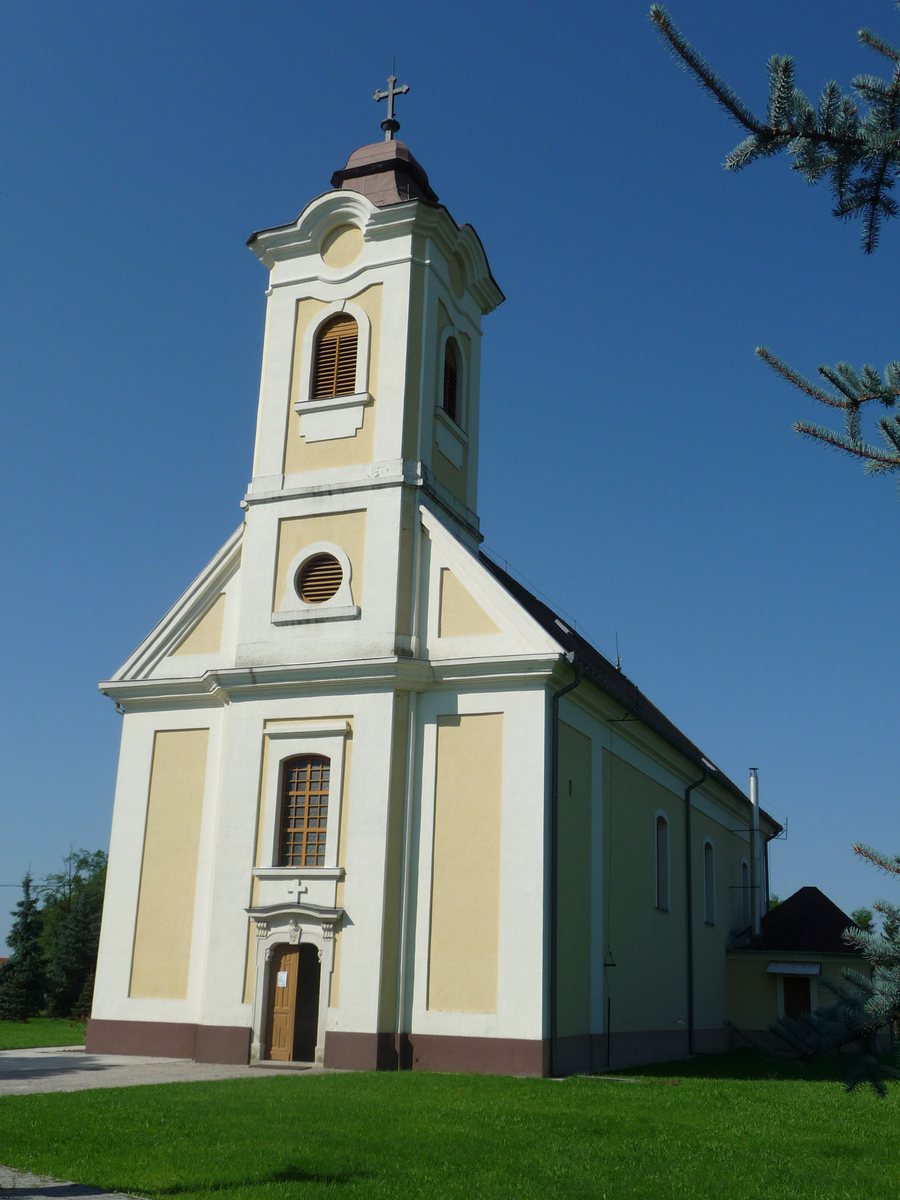 File:Péter-Pál templom homlokzata (Palotás).jpg
Photo: Pásztörperc at Hungarian Wikipedia via Wikimedia Commons, CC BY-SA 3.0
File:Péter-Pál templom homlokzata (Palotás).jpg
Photo: Pásztörperc at Hungarian Wikipedia via Wikimedia Commons, CC BY-SA 3.0
Key facts about Palotás
- The baroque church in Palotás was built by Eszterházy Pál in 1743.
- The Palotási Reservoir lies between Palotás and Kisbágyon. It is an average of 4–5 m deep, 2.5 km long and 30 m wide on average.
- The reservoir and its immediate surroundings are among the most species-rich areas of Cserhátalja.
- Ice fishing is also permitted at Palotási-tó. Before fishing, check the current rules and whether ice conditions are suitable.
What story does the baroque church tell?
The church gives Palotás a clear historical landmark: Eszterházy Pál had it built in 1743. Its story, however, did not end with that construction. In 1806, lightning struck the church, after which it had to be completely rebuilt. The original construction and the rebuilding mark two distinct chapters: its beginnings in the 18th century and the necessary restoration after the lightning strike.
For your travel plans, this is a specific cultural facet of the town, distinct from the landscape around the reservoir. If historic buildings interest you, you can take this story into account when deciding whether to visit Palotás.
What makes the Palotási Reservoir and its surroundings distinctive?
The measurements give a detailed picture of the body of water: its average depth is 4–5 m, while it extends for 2.5 km and is 30 m wide on average. Water conditions can vary. The Palotási Reservoir lies between the municipalities of Palotás and Kisbágyon.
The surroundings are another focus in their own right. The reservoir and its immediate surroundings are among the most species-rich areas of Cserhátalja. Several habitat types can be found in a small area, most of which have largely disappeared elsewhere in the landscape. This means that the focus is not only on the body of water itself, but also on its diverse habitats. For nature-minded travelers, this offers a different perspective on Palotás from the church’s history.
What should you know about ice fishing?
Ice fishing is permitted at Palotási-tó. Keep two practical conditions in mind: before fishing, find out about the current rules and check that ice conditions are suitable. This keeps this seasonal activity distinct from the topics of the church and biodiversity.
What other topics does the wider destination of Neuburg offer?
The wider destination of Neuburg offers additional cultural and nature-related topics. The old village of Hollókő is a Palóc settlement in Nógrád County in northern Hungary and is considered a deliberately preserved, living example of rural life before the agricultural revolution of the 20th century. In Csesztve, the Madách Imre Memorial House presents a permanent exhibition on the history of the Madách family, focusing on “Az ember tragédiája”.
Geology and industrial history add their own distinctive features. The Boszorkány-kő educational trail in the Karancs-Medves Landscape Protection Area illustrates basalt volcanism from 2.4 to 5.2 million years ago. The formations on display include sediment inclusions from deep underground, curved lava plates and basalt columns formed by weathering. The Pásztó Museum, meanwhile, is housed in a baroque Cistercian monastery building rebuilt in 1717–1718. It also presents a medieval glassworks and smithy as an open-air exhibition and as an industrial heritage monument unique in Hungary.
These examples help you consider the wider destination of Neuburg’s offerings separately by culture, geology and industrial history. When choosing accommodation, you can first weigh up whether Palotás’s local history and landscape suit your interests, or whether you would also like to include other topics from the wider destination in your search.
Discover more destinations: Garáb, Bér, Alsótold, Vanyarc, Szirák, Szurdokpüspöki, Felsõtold and Jobbágyi.
FAQ
Who had the baroque church in Palotás built?
Eszterházy Pál had the church built in 1743. After being struck by lightning in 1806, it had to be completely rebuilt.
What are the dimensions of the Palotási Reservoir?
The reservoir is an average of 4–5 m deep, 2.5 km long and 30 m wide on average. Water conditions can vary.
Is ice fishing permitted at Palotási-tó?
Yes, ice fishing is permitted there. Before fishing, check the current rules and whether ice conditions are suitable.
Go to the wider travel overview: Pásztói.

.jpg)