
Bárna: Basalt Cones, Hiking Trails and Culture
Accommodation in Bárna
Bárna brings together a distinctive basalt landscape, hiking trails and a cultural stop in the village. When planning your trip, summit views, geological features and the history of the Roman Catholic church offer different points of interest.
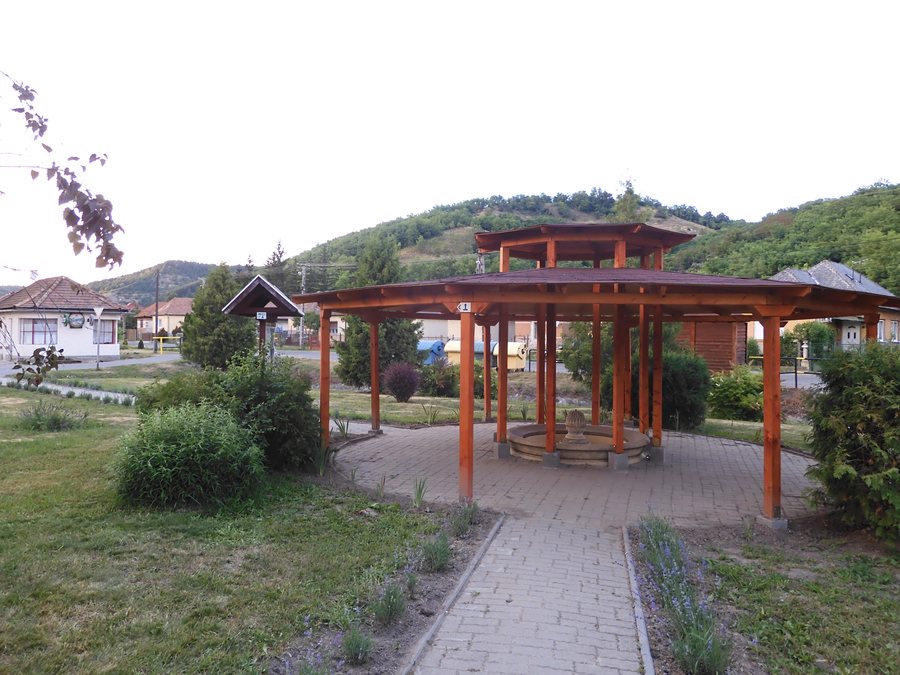 File:Kohászok Útja igazolópont Bárna KU03 1.JPG
Photo: Kucsera Ákos via Wikimedia Commons, CC BY-SA 4.0
File:Kohászok Útja igazolópont Bárna KU03 1.JPG
Photo: Kucsera Ákos via Wikimedia Commons, CC BY-SA 4.0
Quick Facts About Bárna
- At 520 m, Nagy-kő is the highest and most massive basalt cone in the area.
- From the peaks around Bárna, views extend to the Cserhát, Mátra, Bükk region, and the Low and High Tatras.
- Bárna’s Roman Catholic church was built in 1822.
What shapes the landscape around Bárna?
Nagy-kő rises above the village and is a striking landmark in the landscape. Panoramic views from the peaks extend across several mountain ranges to the Low and High Tatras. In Bárna, both the immediate basalt landscape and the distant horizon take center stage.
Another geological feature is Szerkő: its cross-bedded sandstone wall stands above the valley of the Bárna stream. The basalt cones and sandstone wall give the surrounding area different forms. Those interested in rocks and natural landscape features will find two specific subjects to focus on.
Which hiking trails start in Bárna?
From the village, Nagy-kő can be reached through the Zához Valley along the blue-bar trail or via a blue-triangle-marked trail. This route description gives Nagy-kő’s elevation as 519 m. Trail details and conditions can change; check the markings before setting out.
A short hike to Szér-kő also starts in Bárna and follows the blue-triangle-marked trail. Along a blue-triangle-marked hike from Bárna, several information boards point out the region’s geological features and natural environment. This lets you combine nature observation with a focus on specific landscape features, without requiring the trails to share the same destination.
When choosing, you can first decide whether to head for Nagy-kő as a distinctive peak or focus on the short hike to Szér-kő. Both descriptions name Bárna as the starting point; the trail markings provide additional guidance. Plan your trip using the appropriate route and check its current conditions.
What cultural attractions complement the nature experiences?
In Bárna, the Roman Catholic church provides a historical counterpoint to the hikes. Its construction date, 1822, gives your visit a clear point of reference in time. When planning your trip, you can therefore consider nature and local history side by side, rather than focusing your stay solely on the trails around the peaks.
What cultural attractions does the wider destination of Neuburg offer?
The wider destination of Neuburg offers other distinct cultural attractions. The old village of Hollókő is a Palóc settlement in Nógrád County in northern Hungary and a deliberately preserved, living example of rural life before the 20th-century agricultural revolution. It offers a different focus from Bárna’s geological attractions.
In Csesztve, the Madách Imre Memorial House has a permanent exhibition on the history of the Madách family, focusing on The Tragedy of Man. In Pásztó, permanent and temporary exhibitions are housed in a Baroque Cistercian monastery building that was rebuilt in 1717–1718. These examples can help you weigh nature and cultural interests separately when planning a trip in the wider destination of Neuburg.
When planning your accommodation, consider whether Bárna’s landscape and hiking trails or the diverse cultural attractions of the wider destination of Neuburg are your main focus. This will help you search more purposefully for a suitable hotel or other accommodation, without treating the individual places as one and the same.
Discover more destinations: Somoskőújfalu, Karancsalja, Salgótarján, Cered, Ipolytarnóc and Egyházasgerge.
FAQ
How do you reach Nagy-kő from Bárna?
The routes described lead through the Zához Valley along the blue-bar trail or via a blue-triangle-marked trail. Check trail conditions before setting out.
What is known about the hike to Szér-kő?
It starts in Bárna, follows the blue-triangle-marked trail and is described as a short hike.
What geological features can be found near Bárna?
Distinctive features include the basaltic Nagy-kő and Szerkő’s cross-bedded sandstone wall above the valley of the Bárna stream.
See the wider travel overview: Salgótarján.

