
Discover Salgótarján: Geology, Mining and Nature
Accommodation in Salgótarján
Salgótarján can be explored through its geology, mining and trails across a volcanically shaped landscape. The sights in the town each focus on different things, ranging from interactive presentations on the history of the Earth to accessible areas of a mine. This lets you choose between nature, geology and industrial history for your trip.
Key facts about Salgótarján
- Geocsodák Háza, in the Novohrad-Nógrád Geopark visitor centre, offers interactive presentations and talks on geology and the history of the Earth. Check the current visitor arrangements before your trip.
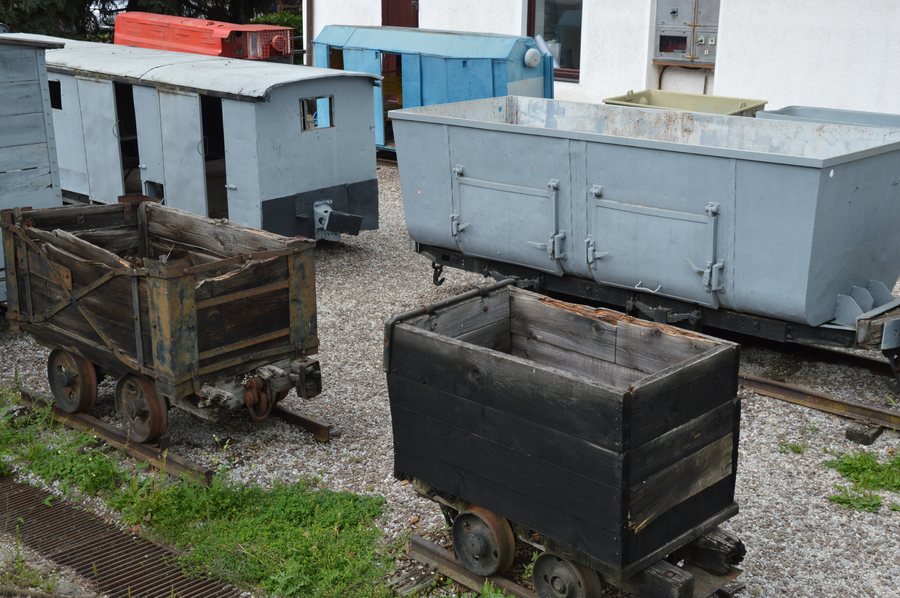
- The open-air exhibition at Salgótarján (Főtéri) railway station is behind the stairs at the southern exit. Check your bearings at the station before arriving.
- The visitor centre park includes a locally protected natural area with the volcanic basalt cliff of Baglyaskő.
- The yellow-marked Petőfi sétány passes the Eresztvényi Látogatóközpont and follows the route of a former narrow-gauge stone transport railway. Check local trail conditions before setting out.
- At the Bányászati Kiállítóhely, visitors can walk through developed mine workings and learn about extraction methods, from manual cutting and drilling-and-blasting to longwall mining with a shearer.
- Nearby Salgó Castle was built towards the end of the 13th century or at the beginning of the 14th century.
Which experiences offer different points of focus?
Geocsodák Háza focuses on geological connections and the history of the Earth; its interactive presentations and talks offer an explanatory introduction to these subjects. Bányászati Kiállítóhely, by contrast, turns the focus to the extraction of raw materials. Walking through the developed mine workings gives visitors a sense of how the extraction methods described evolved, from manual work and drilling-and-blasting to longwall mining with a shearer. The two sites therefore offer different points of focus, even though geology and mining are related topics.
The railway station offers another historical connection: the open-air exhibition is located at a specific spot behind the stairs at the southern exit. It is therefore helpful to get your bearings at Salgótarján (Főtéri) railway station before visiting. Salgó Castle complements the industrial and geological themes with a historic building; its date of construction is deliberately given as a range, from the late 13th to the early 14th century.
What shapes the nature and trail experiences?
Baglyaskő is a volcanic basalt cliff in a locally protected natural area that forms part of the visitor centre park. This explicitly links a geological feature to the centre’s grounds. Petőfi sétány offers a different perspective on the landscape: its yellow markings, route past Eresztvényi Látogatóközpont and course along the former narrow-gauge stone transport railway give the trail a clear historical connection. This is about more than the trail’s route: it also reflects the railway’s former use for transporting stone.
Nearby Salgó Castle offers another historical point of reference, but it should be distinguished from the sights located within the town itself. When planning, it is therefore helpful to ask two different questions: are you mainly interested in the geology of the basalt cliff and the exhibitions, or would you also like to explore the trail and its connection to the former stone transport railway? If you plan to walk Petőfi sétány, take local trail conditions into account before setting out.
What geological and cultural contrasts does Neuburg offer?
In the wider Neuburg destination, the geology is explored further along the Boszorkány-kő educational trail. It illustrates basalt volcanism from 2.4 to 5.2 million years ago and showcases rocks from a small fissure volcano, including deep-seated sediment inclusions, curved lava slabs and basalt columns formed through weathering. These examples add a wider variety of geological formations to the view of the single basalt cliff at Baglyaskő.
Neuburg’s cultural attractions have their own distinct focus. The Pásztó Museum is housed in a Baroque Cistercian monastery building rebuilt in 1717–1718; it features permanent and temporary exhibitions. An open-air exhibition at the museum presents a medieval glassworks and blacksmith’s workshop as an industrial heritage site. Hollókő, in turn, is a Palóc settlement and a deliberately preserved, living example of rural life before the 20th-century agricultural revolution. Thus, the wider destination brings together geological formations, industrial history and the story of a living settlement, while offering different kinds of visitor experiences.
Discover more destinations: Ipolytarnóc, Cered, Bárna, Egyházasgerge, Karancsalja, Somoskőújfalu.
FAQ
Where is the open-air exhibition at the railway station?
It is behind the stairs at the southern exit of Salgótarján (Főtéri) railway station. Check your bearings at the station before arriving.
What subjects does Geocsodák Háza cover?
The Novohrad-Nógrád Geopark visitor centre offers interactive presentations and talks on geology and the history of the Earth. Find out about the current visitor arrangements before your trip.
What is characteristic of Petőfi sétány?
The trail is marked in yellow, passes Eresztvényi Látogatóközpont and follows the route of a former narrow-gauge stone transport railway. Check local trail conditions before setting out.
When was Salgó Castle built?
It was built towards the end of the 13th century or at the beginning of the 14th century.
To the wider travel overview: Salgótarjáni.

