
Discover Solymár: Castle, nature and local history
Accommodation in Solymár
Solymár can be considered for your travel plans according to your cultural and nature interests: the castle, pilgrimage church and local history sit alongside named natural areas and seasonal blooms on Szél-hegy. This can help you decide early which themes you want to shape your stay.
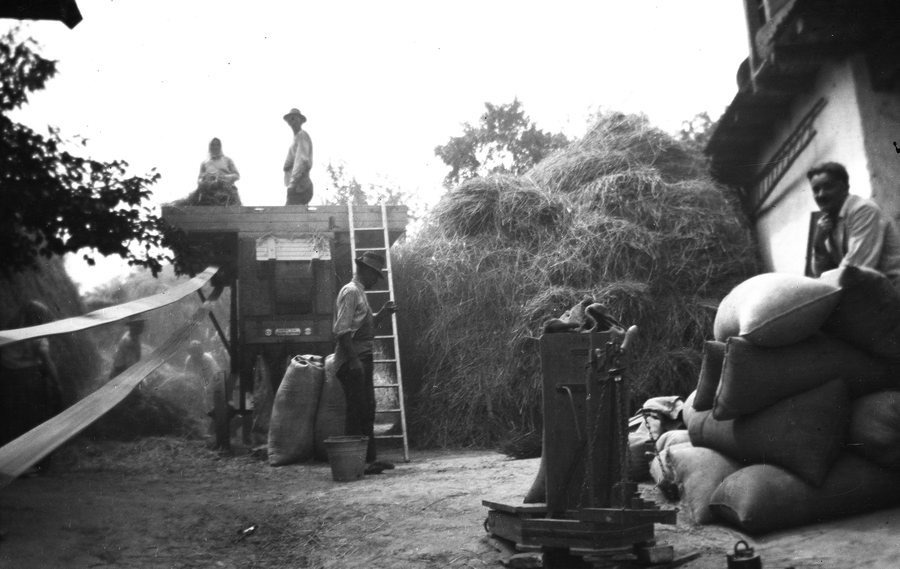 File:Threshing machine, scale, sack, 1936 Solymár Fortepan 44524.jpg
Photo: FOTO:Fortepan — ID 29447 : Adományozó/Donor: Korenchy László. archive copy at the Wayback Machine via Source, CC BY-SA 3.0
Solymár at a glance
- In a planning document for 2019–2024, the municipality describes Solymári Vár (Solymár Castle) as its most important tourist attraction.
- The municipality lists Jegenye-völgy and Rózsika-forrás as natural areas of tourist importance.
- Solymár’s present-day pilgrimage church was built between 1777 and 1784.
- In early spring, common pasqueflowers and spring pheasant’s-eye bloom on the northern slope of Szél-hegy.
- In the wider area lies Solymári-ördöglyuk Cave, a strictly protected cave in Duna–Ipoly National Park. It is located in the Zsíros-hegy group; Solymár is the nearest settlement.
- The local history collection “Pilisvölgye Helytörténeti Gyűjtemény” was ceremonially opened in Solymár on 19 August 1972.
Which themes can help with your travel planning?
The places and stories mentioned appeal to different interests. If architecture and local history are your priorities, the castle, pilgrimage church and local history collection offer different points of interest. Nature lovers, on the other hand, can focus on the natural areas named by the municipality, the spring blooms on Szél-hegy and the cave in the wider area. This comparison can help you decide what to focus on before comparing accommodation for your trip.
There is also a specific seasonal distinction within the nature theme: the information about the plants on Szél-hegy refers explicitly to early spring. Jegenye-völgy and Rózsika-forrás, by contrast, are identified as places of tourist importance, without any particular visiting season specified. So if the blooms matter to your travel plans, early spring is the relevant time of year.
What do the buildings and local history tell us?
The dates highlight different aspects: the pilgrimage church was built between 1777 and 1784, while the local history collection was ceremonially opened on 19 August 1972. Thus, a late-18th-century building and a 20th-century collection about local history sit side by side. These dates mark different historical milestones and can serve as a timeline for exploring Solymár’s cultural history.
Solymári Vár (Solymár Castle) adds another perspective: in its 2019–2024 plan, the municipality describes it as its most important tourist attraction. The historical points of interest therefore differ in kind: the church has a construction period, the collection an opening date, and the castle a designation by the municipality. If local history and culture are your main interests, you can consider these different perspectives side by side rather than reducing them to a single event.
Which nature themes and seasons are mentioned?
Jegenye-völgy and Rózsika-forrás are two separately named natural areas in the municipality’s list. A further, seasonal highlight is on the northern slope of Szél-hegy: common pasqueflowers and spring pheasant’s-eye bloom there in early spring. For visitors interested in plants, this is a specific indication of the season; it differs from the natural areas named in general terms, for which no particular flowering period is given.
Solymári-ördöglyuk Cave is a natural point of interest in the wider region. It lies in the Zsíros-hegy group within Duna–Ipoly National Park and is strictly protected; Solymár is the nearest settlement. This distinguishes the cave geographically from the places listed as natural areas of tourist importance in Solymár. Together, these offer nature-related points of interest at different geographical scales, as well as a plant highlight with a clear seasonal connection.
Discover more destinations: Üröm, Tök, Pilisborosjenő, Pilisjászfalu, Nagykovácsi, Tinnye, Piliscsaba, Pilisvörösvár.
FAQ
When did the local history collection open?
The collection “Pilisvölgye Helytörténeti Gyűjtemény” was ceremonially opened in Solymár on 19 August 1972.
When do the plants on Szél-hegy bloom?
Common pasqueflowers and spring pheasant’s-eye bloom on the northern slope of Szél-hegy in early spring.
Where is Solymári-ördöglyuk Cave?
It lies in the wider area around Solymár, in the Zsíros-hegy group within Duna–Ipoly National Park. The cave is strictly protected; Solymár is the nearest settlement.
Go to the main travel overview: Pilisvörösvári.

