
Gyékényes: Quarry Lake, Forest and Churches
Accommodation in Gyékényes
Gyékényes brings together two clearly distinct themes: Kotró and Lankóci Forest on one hand, and Neoclassical and Gothic architectural history on the other. This lets you decide whether you are primarily interested in the landscape or the culture when choosing your destination.
Gyékényes at a glance
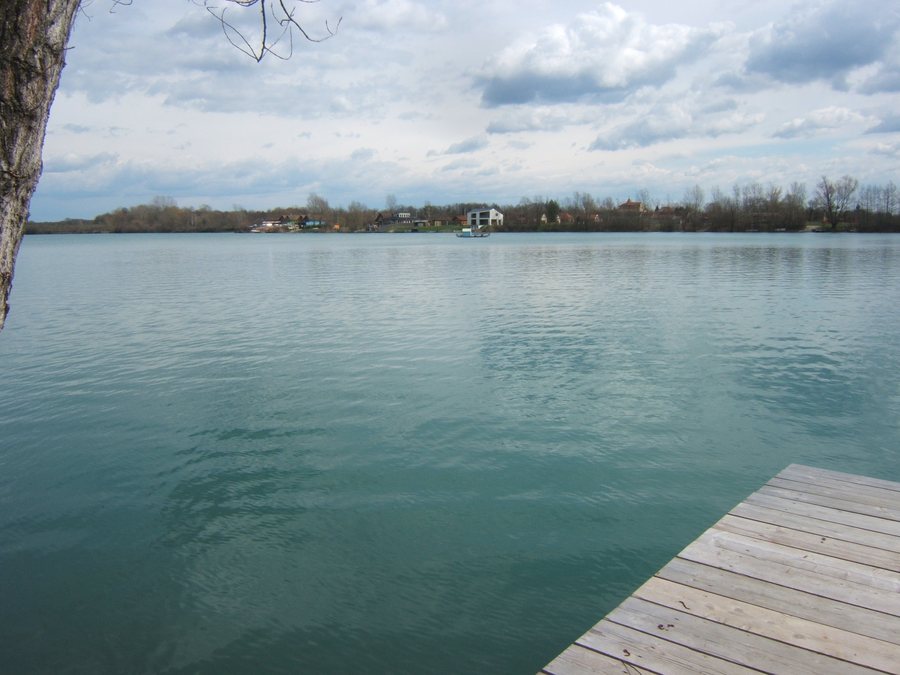
- Kotró is the largest quarry lake in Gyékényes and features islands, peninsulas and bays.
- Lankóci Forest lies on the edge of the village and consists mainly of hardwood floodplain forests, as well as hornbeam and pedunculate oak stands.
- The Roman Catholic church in the centre was built in the Neoclassical style between 1830 and 1835.
- The Evangelical church was built in the Gothic style in 1887, to designs by Valentin Morandini.
What landscapes define Gyékényes?
Lankóci Forest and Kotró lend different character to the landscape of Gyékényes. The forest on the edge of the village is characterised by its predominantly hardwood floodplain forests, as well as hornbeam and pedunculate oak stands. These specific forest types and tree species are distinct natural features of the village, alongside the quarry lake.
Kotró is not only the largest of Gyékényes’s quarry lakes, but also features islands, peninsulas and bays. It is part of a landscape protection area. This makes for a clear contrast with Lankóci Forest: here, forests and stands of trees define the natural character, while there, a quarry lake and its varied landforms take centre stage. Travellers who factor nature into their decision can weigh up these different features.
What is known about Kotró and diving?
Kotró is popular with divers. Diving is therefore one of the activities associated with the quarry lake. Along with its status as the largest quarry lake in Gyékényes and its islands, peninsulas and bays, this gives it a distinctive appeal for travellers interested in bodies of water and their landscapes.
How do the churches differ?
The two churches are easy to compare by their construction dates and styles. The Roman Catholic church in the centre of Gyékényes was built in the Neoclassical style between 1830 and 1835 and has the character of a listed monument.
The Evangelical church in Gyékényes was built in the Gothic style in 1887, to designs by the Italian Valentin Morandini, and likewise has the character of a listed monument. Its architectural history includes the architect’s name as well as the construction date and style. For a look at the village’s cultural history, these two different architectural styles and periods offer distinct examples rather than churches that should be treated as alike.
What natural attractions are part of the wider Lake Balaton – South destination?
The wider Lake Balaton – South destination extends beyond Gyékényes. In 2009, Zselic Landscape Protection Area was awarded the title of International Dark Sky Park because of its low light pollution; Zselic Star Park was established in the heart of this protected area. Somogy County also includes Kis-Balaton, Barcsi Ősborókás and Babócsai Basakert, as well as Zselic Landscape Protection Area.
Another natural attraction in the region is Baláta, located between Kaszó and Szenta and considered one of Somogy’s most valued natural assets. These examples offer a broader regional perspective alongside Gyékényes’s specific features. If you would also like to compare other destinations: Csurgónagymarton, Iharos, Berzence and Szenta.
FAQ
What makes Kotró distinctive?
Kotró is the largest quarry lake in Gyékényes, is part of a landscape protection area, and features islands, peninsulas and bays. It is also popular with divers.
How do the two churches differ?
The Roman Catholic church was built in the Neoclassical style between 1830 and 1835. The Evangelical church was built in the Gothic style in 1887, to designs by the Italian Valentin Morandini.
Which natural attractions are mentioned in the wider Lake Balaton – South destination?
These include Zselic Landscape Protection Area and Zselic Star Park, as well as Baláta between Kaszó and Szenta.
See the wider travel overview: Csurgói.

