
Szatmárcseke: Carved Grave Markers, Kölcsey and Hiking Trails
Accommodation in Szatmárcseke
For your trip planning in Szatmárcseke, you can choose from specific cultural attractions and a marked hiking route: carved grave markers in the Reformed Cemetery offer clues about the deceased, while the Kölcsey Ferenc Memorial Room focuses on the poet’s life and the hymn he wrote in 1823. The Szatmár-Bereg Heritage Tour also passes through the village.
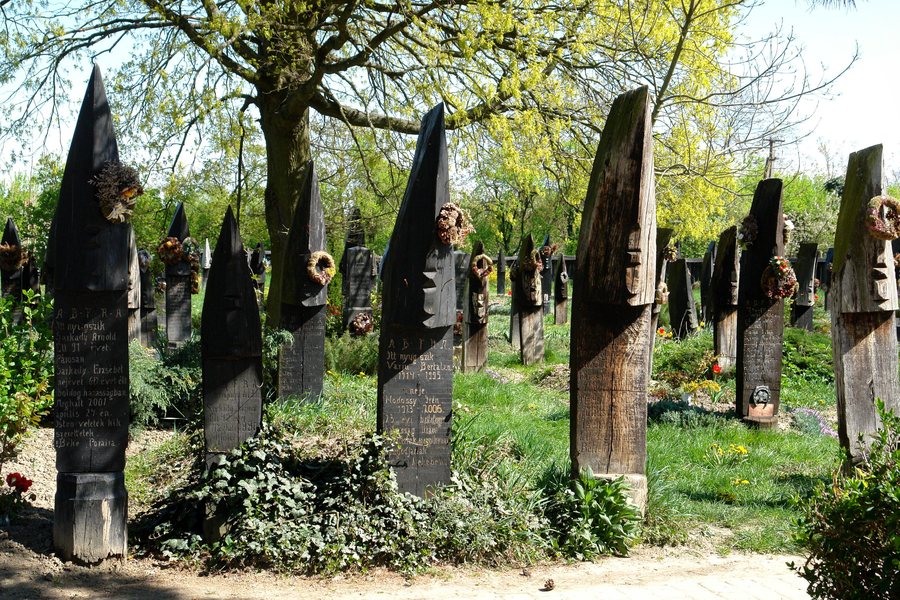 Szatmarcsekei csónakos fejfás református temető
Photo: Thaler Tamas via Wikimedia Commons, CC BY-SA 4.0
Szatmárcseke at a glance
- In the Reformed Cemetery, the size, shape and decoration of the grave markers indicate the age, gender and wealth of the deceased.
- The Kölcsey Ferenc Memorial Room is located in the cultural centre at 46 Kölcsey Ferenc Street. Visits are possible by prior arrangement.
- The signposted Szatmár-Bereg Heritage Tour follows marked hiking trails 32 and 33 through Szatmárcseke and other places in the region.
What do the grave markers in the cemetery reveal?
The carved grave markers in the Reformed Cemetery are both individual objects and bearers of social clues through their size, shape and decoration: they provide information about the age, gender and wealth of the deceased. When viewing them, you can therefore consider not only their design but also the differences expressed through the markers.
The headboards are made of oak or acacia wood, and occasionally turkey oak. They are usually 80 to 150 centimetres long; some reach 200 to 300 centimetres. The typical dimensions and larger individual examples give a concrete sense of the range, without any one marker standing for all the others. Anyone particularly interested in regional commemorative culture and carved grave markers will find a distinctive focus for a trip to Szatmárcseke here.
What does the Kölcsey Ferenc Memorial Room show?
The permanent exhibition in the Kölcsey Ferenc Memorial Room covers Kölcsey’s life, his years in Cseke and the circumstances surrounding the composition of the hymn written in 1823, a Magyar nép Zivataros századaiból. Biographical themes sit alongside surviving objects: visitors can see Kölcsey’s original furniture, including tables, chairs and a chest of drawers, as well as his books and personal belongings.
These everyday objects include a razor, a sand shaker and an inkpot. The room thus combines an exploration of Kölcsey’s life with tangible objects that belonged to him. It is located in the cultural centre at 46 Kölcsey Ferenc Street. Visits are possible by prior arrangement; arrange your visit before travelling. The exhibition is listed as a permanent exhibition, but you should check local arrangements before your visit.
How does the hiking route fit in?
The Szatmár-Bereg Heritage Tour follows marked hiking trails 32 and 33 through Szatmárcseke and other places in the region. It complements the cultural attractions within the village with a hiking route that extends across the region. This gives you two distinct interests to consider when planning: the cemetery markers and the memorial room in Szatmárcseke on the one hand, and the signposted route on the other. Check the current route conditions before setting out.
What else does Szabolcs-Szatmár-Bereg have to offer?
The wider destination of Szabolcs-Szatmár-Bereg offers other distinctive cultural attractions. In Vaja, the Vay Ádám Museum Collection of the Hungarian National Museum is housed in the Renaissance Vay Castle. The Báthori Castle in Nyírbátor features a permanent exhibition and a wax museum, where members of the Báthori family are depicted in period settings.
Andrássy Castle in Tiszadob offers another architectural landmark: former Prime Minister Gyula Andrássy commissioned it between 1880 and 1885 in the French Gothic style, to designs by Ignác Alpár. The northern Hungarian section of the Route of Medieval Churches links 37 churches in the medieval church landscape of Szabolcs-Szatmár-Bereg.
The regional landscape ranges from protected marshes to other natural areas. The Bátorliget Primeval Marsh covers about 53 hectares and is strictly protected; it preserves the different stages of vegetation and landscape history on the Great Hungarian Plain particularly well. Nyíres-tó and Báb tava near Csaroda are distinctive peat bogs whose formation dates back to the Ice Age. These examples place Szatmárcseke within the wider cultural and landscape context of the overall destination without suggesting that the places are the same.
Discover more destinations: Tiszabecs, Tunyogmatolcs, Túristvándi, Panyola, Fehérgyarmat, Kisar.
FAQ
What do the grave markers in Szatmárcseke show?
The size, shape and decoration of the carved grave markers in the Reformed Cemetery indicate the age, gender and wealth of the deceased.
How can I visit the Kölcsey Ferenc Memorial Room?
Visits are possible by prior arrangement. The memorial room is located in the cultural centre at 46 Kölcsey Ferenc Street. Arrange your visit before travelling.
Which hiking trails pass through Szatmárcseke?
The signposted Szatmár-Bereg Heritage Tour follows marked hiking trails 32 and 33 through the village and other places in the region. Check the current route conditions before setting out.
For the wider travel overview: Fehérgyarmat.

