
Szakcs: Church and Local History
Accommodation in Szakcs
Explore Szakcs through its church and local history: at the center of the village, a church on a hill and its enclosed garden take center stage. This gives your trip planning a clear cultural focus; nature, bathing and other cultural topics are part of the broader destination of Tolna County.
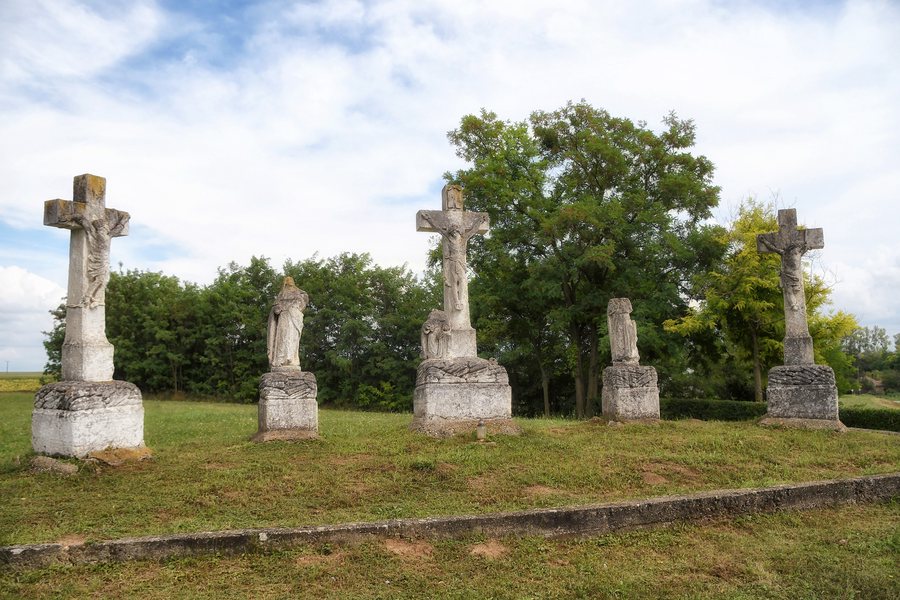 File:Szakcs, Golgota-szoborcsoport 2020 02.jpg
Photo: Pasztilla aka Attila Terbócs via Wikimedia Commons, CC BY-SA 4.0
Szakcs at a glance
The Church of the Finding of the Holy Cross (Szent Kereszt megtalálása) is in the center of the village on a hill. Its garden contains a Trinity column and Stations of the Cross set into the perimeter wall.
- A predecessor church on this site was probably built in the late 13th or early 14th century, with pointed-arch windows.
- In 1544, the predecessor church was set on fire by the Ottomans.
- The Roman Catholic church in Szakcs was destroyed by the Ottomans in 1563.
- The Trinity column dates from 1873, and the Stations of the Cross from 1916.
What historical traces shape Szakcs?
The history of the predecessor church combines an early, though only probable, date with a specific architectural feature: pointed-arch windows. Its destruction by fire in 1544 marked a turning point in the building’s history. Another date in the village’s history is 1563: that was when the Roman Catholic church in Szakcs was destroyed by the Ottomans. The date of construction, architecture and destruction offer different clues to the religious history of the place.
The village’s civic status, apart from its religious buildings, is also part of Szakcs’s history. The village regained its market-town status, which it had previously acquired, 42 years later; it was also granted the right to hold four nationwide fairs. Its status and market privilege add a legal and economic perspective to the church history. The fairs should be understood as a historical right.
What details can you find in the church garden?
The Church of the Finding of the Holy Cross (Szent Kereszt megtalálása) stands on a hill in the center of the village, in an enclosed garden. The garden also contains the Trinity column, dating from 1873. The Stations of the Cross, dating from 1916, are set into the perimeter wall. The two dates are 43 years apart, and the features also differ: a column and stations located in the wall. Together, the location, garden and religious features form a clearly defined historical focus.
What else does Tolna County have to offer?
The broader destination of Tolna County offers other, different kinds of attractions. Tamási Thermal Bath has a sauna complex, leisure pools and medicinal water. As facilities and opening arrangements can change, check the latest information before your visit. The Pacsmag Lakes are an important Hungarian habitat for the strictly protected ferruginous duck.
In Szekszárd, the Babits Mihály Memorial House is housed in the more than 200-year-old Kelemen House; it is a literary history memorial site. Also in Szekszárd, the Wosinsky Mór Museum is open daily from 10:00 to 17:00, except Mondays. Opening hours may differ on public holidays. The region’s castle heritage includes Pipo Castle, built by Filippo Scolari, who came from Florence.
Discover more destinations: Dombovar, Döbrököz, Kaposszekcső, Kapospula
FAQ
Where is the Church of the Finding of the Holy Cross (Szent Kereszt megtalálása)?
It stands on a hill in the center of Szakcs, in an enclosed garden.
What historical dates are associated with the churches?
A predecessor church was probably built in the late 13th or early 14th century and was set on fire by the Ottomans in 1544. The Roman Catholic church in Szakcs was destroyed in 1563.
When is the Wosinsky Mór Museum open?
The museum in Szekszárd is open daily from 10:00 to 17:00, except Mondays. Opening hours may differ on public holidays.
For the broader travel overview: Dombóvári.

