
Kalaznó: Architecture and Local History
Accommodation in Kalaznó
In Kalaznó, traditional Swabian architectural forms meet places of remembrance and a collection on local history. The details range from patterned veranda pillars to 180 catalogued objects. They offer you specific topics to consider when planning your trip and help you understand the town’s cultural character.
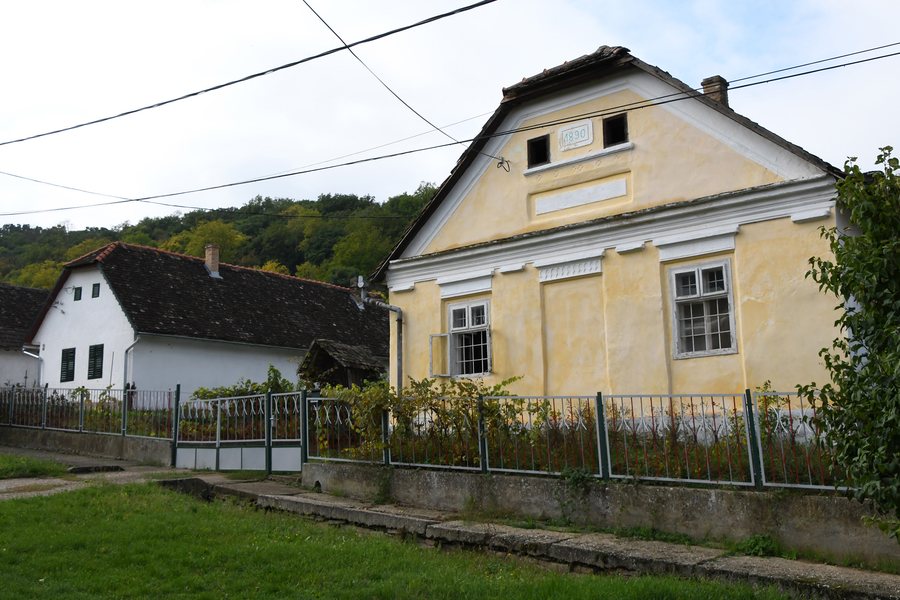 File:Kalaznó, népi lakóházak 2021 03.jpg
Photo: Pasztilla aka Attila Terbócs via Wikimedia Commons, CC BY-SA 4.0
File:Kalaznó, népi lakóházak 2021 03.jpg
Photo: Pasztilla aka Attila Terbócs via Wikimedia Commons, CC BY-SA 4.0
Quick facts about Kalaznó
- Traditional buildings include Swabian longhouses and half-timbered barns.
- The Kalaznói Helytörténeti Gyűjtemény displays 180 catalogued objects, including clothing, furniture and tools.
- A memorial to those who fell in the First World War stands in the garden of the Lutheran church. It was inaugurated in 1934 and created by sculptor László Schmidmann.
What architecture defines Kalaznó?
Several design features come together in the traditional Swabian longhouses and half-timbered barns: patterned pillars on the verandas, Art Nouveau stucco ornaments and windows with shutters. The architecture offers a variety of details to look out for as you explore the town. The forms and decorations each tell a different part of the story of local building culture: the veranda pillars create a pattern, the stucco draws on Art Nouveau forms, and the shutters shape the façades.
If you are interested in architectural heritage, these specific features can draw your attention to Kalaznó’s traditional buildings. Rather than categorising the town only by a general style label, you can look at the details described here individually. Together, they offer a vivid picture of local architecture, without presupposing a particular route or itinerary.
What do the memorial and collection tell us about the town?
The memorial in the garden of the Lutheran church commemorates those who fell in the First World War. It was inaugurated in 1934 and is a work by sculptor László Schmidmann. This site of remembrance thus has both a specific historical context and a named artist. For travellers interested in history, it connects a tangible reference to the First World War with a named work of sculpture.
The Kalaznói Helytörténeti Gyűjtemény offers another perspective. Its 180 catalogued items include clothing, furniture, tools and other everyday objects. The collection is organised into German, Székely and Upper Hungarian room displays. These sections provide a thematic context for the objects; the range covers everything from clothing and living spaces to work and everyday use. Together with the memorial, the collection offers a broader view of cultural history, encompassing both tangible objects and remembrance of a historic war.
How can you fit Kalaznó into your travel plans?
Kalaznó’s local features and the regional examples below are different points of interest; regional facilities are not features of Kalaznó itself.
In the wider destination of Tolna, Tamási Termálfürdő offers a sauna world, leisure pools and medicinal waters. Facilities and opening arrangements may change, so check the operator’s latest information before visiting. The Pacsmag Lakes are an important Hungarian habitat for the strictly protected ferruginous duck, also known as cigányréce. Those interested in literary history can also visit the Babits Mihály Memorial House in Szekszárd, in the wider destination of Tolna. It is located in the more than two-hundred-year-old Kelemen House and is a literary history memorial site. The Wosinsky Mór Museum in Szekszárd is open daily from 10:00 to 17:00, except Mondays; opening hours may differ on public holidays. Pipo Castle, built by Filippo Scolari, who came from Florence, is also among the cultural attractions of the wider destination of Tolna.
Discover more destinations: Nagykónyi, Hőgyész, Kisszékely, Simontornya, Magyarkeszi, Miszla, Tamasi and Regöly.
FAQ
Which architectural details are described for Kalaznó?
The traditional Swabian longhouses and half-timbered barns feature patterned veranda pillars, Art Nouveau stucco ornaments and shutters.
What does the Kalaznói Helytörténeti Gyűjtemény display?
The collection comprises 180 catalogued objects, including clothing, furniture, tools and other everyday items. They are organised into German, Székely and Upper Hungarian room displays.
When was the memorial to those who fell in the First World War inaugurated?
The memorial in the garden of the Lutheran church was inaugurated in 1934. It is a work by sculptor László Schmidmann.
To the wider travel overview: Tamási.

