
Discover Velemér
Accommodation in Velemér
Velemér combines a nature trail named after a protected rare plant with remarkable church art. These details can help you balance your interests in nature and culture when planning your trip.
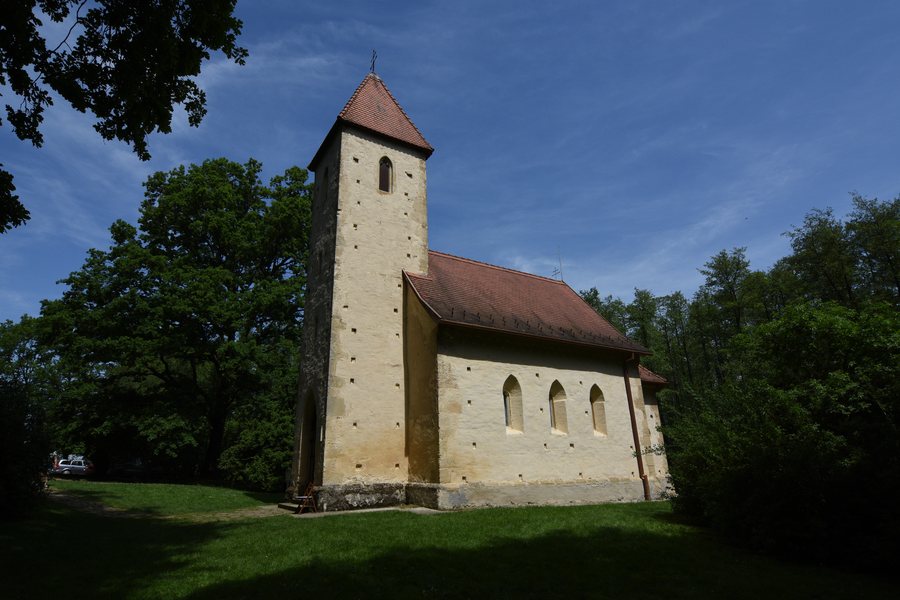 Holy Trinity and Saint Stephen of Hungary church in Velemér 02
Photo: Nxr-at via Wikimedia Commons, CC BY-SA 4.0
Holy Trinity and Saint Stephen of Hungary church in Velemér 02
Photo: Nxr-at via Wikimedia Commons, CC BY-SA 4.0
Velemér at a glance
- The Sárgaliliom nature trail is named after a protected rare plant of the Inner Őrség; its largest population is in Velemér.
- The trail ends at the Fazekas ház in Magyarszombatfa.
- In 1378, Aquila János painted the interior of the Fények temploma with scenes from the Bible and legends of the saints.
- The Szentháromság-Templom dates from the 13th century and combines Romanesque and Gothic elements.
What does the Sárgaliliom nature trail offer?
The trail’s name points to a specific feature of the Inner Őrség: a protected rare plant whose largest population is in Velemér. This allows you to connect the route with an interest in regional nature without losing sight of the plant itself as more than just the source of the trail’s name. Its endpoint is also important for planning: the Sárgaliliom nature trail does not end in Velemér, but at the Fazekas ház in Magyarszombatfa. When considering your route, keep in mind both its connection to Velemér and this destination outside the village.
What church art and architecture define the village?
The frescoes in the Fények temploma depict biblical scenes and legends of the saints. Aquila János painted the church interior in 1378. The building features a single-nave church, a tower and a polygonal-ended chancel; the fresco fragments are of exceptional value. The architecture and paintings thus offer different points of interest for a visit: the form of the church building and its surviving subject matter.
The Szentháromság-Templom in Velemér also dates from the 13th century and combines Romanesque and Gothic elements. This gives the trip a clear cultural focus alongside the nature theme of the trail. A version by Papp Vilmos, associated with the Sindümúzeum, uses “ü” (Üdő) in place of “ly”; the character stands for the radiant sun. Those interested in language, symbols and their interpretation will find another cultural point of interest here.
The Fények temploma is listed as open year-round from Tuesday to Sunday, 10 a.m. to 4 p.m., and closed on Mondays. Check the opening hours before your visit.
How does Velemér fit into the wider Vas destination?
The wider Vas destination includes other nature-related attractions that should not be confused with Velemér’s own features. Őrség National Park was established on March 1, 2002, to preserve and present the natural, ethnographic and cultural-historical values of Őrség. The Írottkő Nature Park offers another regional setting: it lies in the northwestern part of Vas County and includes the 4,303-hectare Kőszeg Landscape Protection Area. These details describe the wider Vas destination, not the Sárgaliliom nature trail or the churches in Velemér.
Other themes in the wider Vas destination range from cycling to museums and thermal baths. The Termál Kerékpáros Túraút (Thermal Cycling Route) leads to five thermal bath complexes in Vas County and combines cycling with visits to architectural and natural attractions. Bükfürdő and Sárvár are home to two internationally recognized thermal baths, 25 kilometers apart. Those interested in culture can discover rural life and folk architecture from the past two centuries at the Vasi Skanzen; the Nádasdy Ferenc Museum includes, among other things, an exhibition on the history of the Hussars described as unique in Hungary.
Discover more destinations: Hegyhátszentjakab, Kercaszomor, Magyarszombatfa, Pankasz, Kerkáskápolna, Őriszentpéter, Nagyrákos, Kondorfa.
FAQ
Where does the Sárgaliliom nature trail end?
It ends at the Fazekas ház in Magyarszombatfa, not in Velemér.
What can you see in the Fények temploma?
In 1378, Aquila János painted the church interior with scenes from the Bible and legends of the saints. Fresco fragments of exceptional value have survived.
What opening hours are listed for the Fények temploma?
It is listed as open Tuesday to Sunday, 10 a.m. to 4 p.m., and closed on Mondays. Check the hours before your trip.
Go to the wider travel overview: Őriszentpéteri.

