
Nagyrákos: Railway Bridge, Meadows and Village History
Accommodation in Nagyrákos
Nagyrákos can be explored through several distinct themes: the railway viaduct and tunnel, butterflies in the meadows from May to September, and the history of thatched-roof buildings. These details can help you match your travel interests with the right time to visit.
Nagyrákos at a Glance
- Nagyrákos is a Szer-type settlement on both banks of the Zala and comprises Nemesszer, Alsószer, Devecserszer, Belsőszer and Csárdaszer.
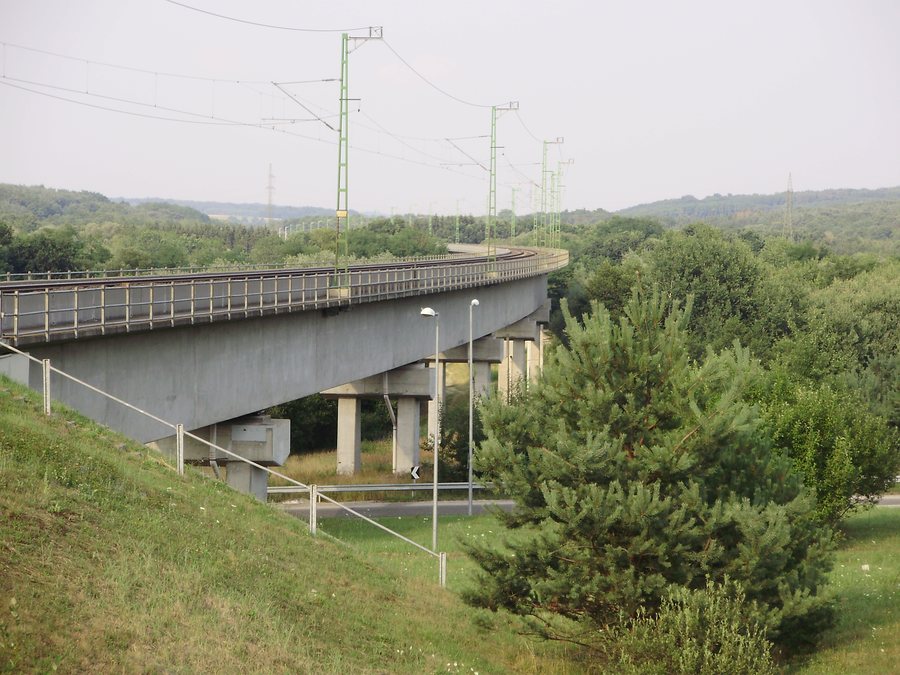
- The 1,400-metre-long viaduct was completed in 2001 and spans the Zala and its valley.
- Butterflies can be observed in the meadows from May to September; sightings may vary.
- The Völgyhídi Vásár takes place every year on the third weekend of July.
What defines the settlement and its railway structures?
The Szer settlement pattern extends across both banks of the Zala. Nagyrákos comprises five named parts: Nemesszer, Alsószer, Devecserszer, Belsőszer and Csárdaszer. This gives you a concrete sense of how the settlement is laid out, without attributing additional characteristics to its individual parts.
A striking structure is the viaduct on the Hungarian–Slovenian railway line. At 1,400 metres long, it spans the Zala and its valley. The bridge was completed in 2001; it is Hungary’s longest and Europe’s fourth-longest railway viaduct. The 375-metre-long Zsuzsa Tunnel complements this railway theme: it begins just beyond Nagyrákos station, was built in 1999–2000 and is named after Göncz Árpádné. Their different dates and structures make the bridge and tunnel two clearly distinct points of reference in the settlement’s history.
When can you observe butterflies?
Butterflies can be observed in the meadows of Nagyrákos from May to September. These include blues and skippers; swallowtails, painted ladies, fritillaries and small tortoiseshells are also seen occasionally. The list describes possible sightings, not a guarantee that you will see any particular species.
The scarce Apollo also occurs along the edges of streamside woodland. Its wingspan is 5–6 cm. Another noteworthy butterfly in the meadows is the dusky large blue. Its last refuges are the hay meadows and wet meadows of Őrség. The information about the season and habitats provides nature enthusiasts with a time frame and landscape context for planning a trip.
What do the museum and church reveal about village history?
The thatched-roof local history museum in the town centre is housed in a building erected through the residents’ shared efforts at the end of the 19th century. It originally served as the blacksmith’s residence. Everyday objects used about a hundred years ago are displayed in the kitchen. Next to the local history museum is a blacksmith’s workshop with historical tools. Together, the building, objects and workshop offer different insights into local craft history.
The local history museum is also on the cycling route from Őriszentpéter to Nagyrákos. Nagyrákos Reformed Church was completed by 1801 and houses a concert organ. The museum and church offer different points of focus: one tells the story of a house and its former use, while the other is a religious building with an organ.
Which dates should you keep in mind when planning?
The Völgyhídi Vásár takes place in Nagyrákos every year on the third weekend of July. If the market matters to your travel plans, check the details for the relevant year in advance.
When looking for hotels, you can first decide what you want your trip to focus on: seasonal nature observation, railway structures or village history.
Discover more destinations: Viszák, Kisrákos, Ispánk, Őriszentpéter, Szalafo, Kondorfa, Magyarszombatfa, Pankasz.
FAQ
When can butterflies be observed in the meadows?
The observation season runs from May to September. Which species you can see may vary; swallowtails, painted ladies, fritillaries and small tortoiseshells, among others, are occasionally observed.
How long are the Völgyhíd and the Zsuzsa Tunnel?
The Völgyhíd is 1,400 metres long, and the Zsuzsa Tunnel is 375 metres long. The bridge was completed in 2001; the tunnel was built in 1999–2000.
When does the Völgyhídi Vásár take place?
The market takes place in Nagyrákos every year on the third weekend of July. Check the details for the relevant year if you are planning your trip around it.
Go to the main travel overview: Őriszentpéteri.

